Why Our Brains Love Finding Faces
Humans are hard-wired to recognize faces. It’s a survival feature. Our brains evolved to quickly spot other humans—friend or threat—even when the information is incomplete. Because of that, we often detect faces where none were intentionally placed.
This phenomenon is called pareidolia. It’s the same reason we see faces in clouds, cars, tree bark, or the moon. When shapes loosely resemble eyes, a nose, and a mouth, your brain jumps in and completes the picture.
Think of it like autocorrect for vision—your brain fills in the blanks automatically.
What Makes Faces “Hidden” in Photos
Hidden faces usually appear because of patterns, shadows, and symmetry. Common places they show up include:
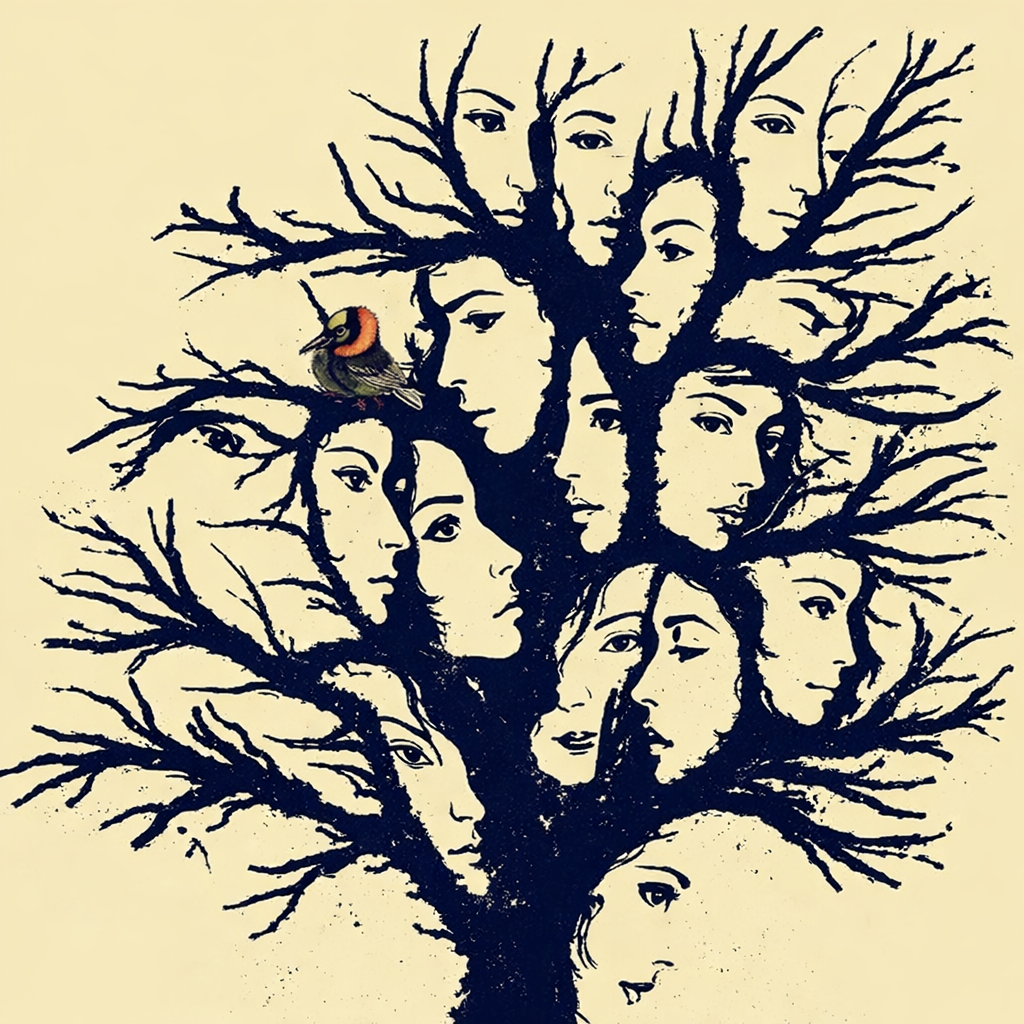
- Tree branches forming profiles
- Rock formations with eye-like holes
- Reflections in windows or water
- Wrinkles, folds, or textures in fabric
- Negative space between objects
The face isn’t always the object—it’s often the space around it. Once you start looking for negative space instead of solid objects, everything changes.
Why Some People Spot Them Faster Than Others
Ever notice how some people instantly say, “Oh wow, I see a face!” while others stare blankly? That comes down to perception style.
People who are more visually creative, artistic, or detail-oriented often spot hidden faces faster. They’re used to breaking images down into shapes instead of labels. Instead of seeing “tree,” they see lines, curves, and contrast.
The good news? This skill can be trained.
How to Train Yourself to See Hidden Faces
If you want to get better at spotting hidden faces in photos, try this:
1. Stop Naming Objects
The moment you label something as “a tree” or “a wall,” your brain stops exploring. Look at shapes instead.
2. Look for Eye Pairs
Two similar shapes near each other often trigger face recognition. Holes, knots, shadows—these are prime suspects.
3. Tilt or Flip the Image
Changing orientation breaks your brain’s expectations and reveals new patterns.
4. Soften Your Focus
Don’t stare hard. Let your eyes relax. Faces often appear when you’re not forcing it.
It’s a lot like those old Magic Eye images—effortless attention beats intense focus.
Why Hidden Face Images Feel So Satisfying
Spotting a hidden face creates a tiny dopamine hit. It’s the same feeling as solving a puzzle or finding something lost. Your brain goes, Aha!
That’s why people love illusion art, surreal photography, and hidden-object images. They turn passive viewing into active discovery. You’re not just looking—you’re participating.
And because everyone sees something slightly different, the experience feels personal.
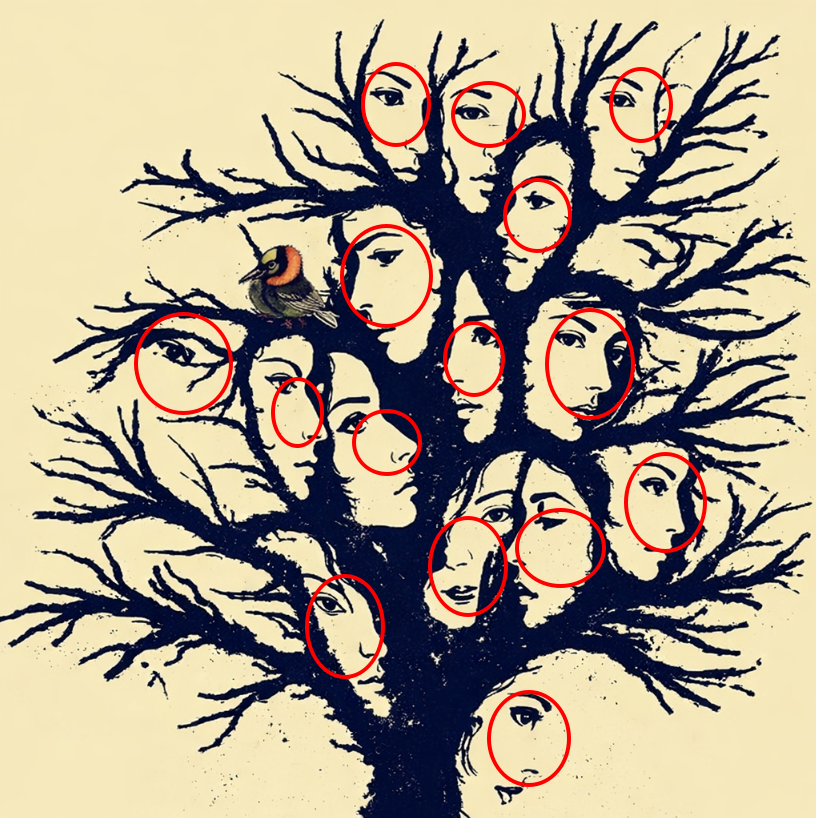
Hidden Faces in Art vs. Real Photos
In art, hidden faces are often intentional. Artists use composition, contrast, and symbolism to guide your eye. Faces may represent emotions, memories, or identities.
In real photos, hidden faces are usually accidental—but no less fascinating. Nature and randomness create patterns that just happen to align with our perception system.
That contrast—intentional vs. accidental—is part of the fun.
Why This Matters More Than You Think
Finding hidden faces isn’t just a visual trick. It strengthens observation, mindfulness, and creative thinking. It teaches you to slow down and look beyond the obvious.
In a fast, scroll-heavy world, that ability is rare—and valuable.
Sometimes, the most interesting things in an image aren’t what the photographer pointed at… but what your brain discovers on its own.