The Mystery of Hidden Faces: An Optical Illusion That Tests Your Mind
A Strange Rock or a Cluster of Faces?
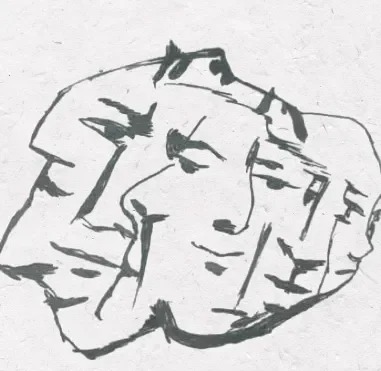
At first glance, the image looks like nothing more than an oddly shaped rock sketched on a plain background. But take a second look, and suddenly you notice eyes, noses, and lips emerging from the rough lines. What once looked like stone transforms into a collection of human-like faces staring back at you. This is the power of optical illusions—they trick your perception, challenge your focus, and remind you that reality isn’t always what it seems.
The Fascination Behind Optical Illusions
Why do images like this captivate us so much? The answer lies in how our brains are wired. Human beings are naturally drawn to faces—we spot them in clouds, shadows, or even in the patterns on toast. Psychologists call this phenomenon pareidolia, and it’s the very thing that makes an image like this so intriguing.
Our minds are constantly scanning for familiar shapes, and when a pattern even slightly resembles a face, our brains lock onto it instantly. That’s why a simple rock sketch becomes a mind game of “How many faces can you find?”
Why This Puzzle Feels So Addictive
Hidden face illusions are more than just fun—they keep our brains active in ways that ordinary images don’t. Here’s why puzzles like this pull us in so easily:
- They engage our curiosity: Once you spot one face, you can’t stop searching for the rest.
- They challenge focus: You have to slow down and analyze the lines instead of glancing quickly.
- They reward persistence: Each hidden discovery sparks a little victory in your brain.
Think of it like a treasure hunt. The “gold” here isn’t a chest of coins but the thrill of realizing that the ordinary can transform into something extraordinary when you really look at it.
How Many Faces Can You Spot?
That’s the question everyone asks when they see this illusion. Some people immediately see three or four, while others claim to find over ten. The beauty of it is that there isn’t one definitive answer—it all depends on your perspective.
Look closely at the edges and corners of the rock. Notice the way lines overlap, creating noses and mouths. Some faces are large and obvious, while others are tiny and tucked into the crevices of the sketch. Your eyes might skim over them at first, but with patience, the hidden expressions begin to emerge.
The Science of Seeing What Isn’t There
What makes this illusion particularly fascinating is how it plays with the brain’s ability to organize chaos. Our visual system is designed to create order out of randomness. When confronted with a messy sketch or abstract drawing, the brain fills in the blanks, often producing recognizable forms like faces.
This is why some people spot many faces right away while others only see one or two. It’s not about eyesight—it’s about how each brain processes patterns. In a way, it’s like a fingerprint. Your perception is uniquely yours.
Tips for Finding All the Hidden Faces
If you’re struggling to spot more faces, don’t worry—you just need to adjust your viewing strategy. Here are a few simple tricks:
- Change your angle: Tilt the image slightly or step back from it. Different perspectives reveal different shapes.
- Look for symmetry: Faces often hide in balanced shapes—two small lines for eyes and a curve for a mouth.
- Focus on negative space: Sometimes the “face” isn’t drawn at all—it’s created by the space between lines.
- Take breaks: Give your eyes a rest and come back later. Suddenly, the hidden faces will pop out more clearly.
Why Hidden Face Illusions Are Good for the Brain
Besides being fun, puzzles like this one actually have mental benefits. They keep your brain active and encourage flexible thinking. By forcing you to see beyond the obvious, they:
- Improve observation skills: You learn to notice details that most people overlook.
- Strengthen problem-solving abilities: Finding hidden elements requires patience and strategy.
- Boost creativity: When you spot unexpected faces, you’re training your imagination to think outside the box.
It’s no wonder these kinds of puzzles are used in both classrooms and cognitive training exercises—they combine entertainment with mental exercise.
Conclusion: The Faces Behind the Stone
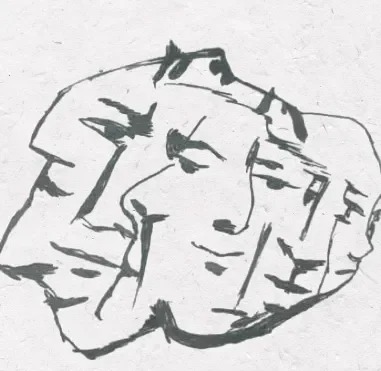
What seems like a simple rock drawing is actually a playground for the mind. Every face you uncover is proof of how powerful your brain is at creating meaning from shapes and shadows. This illusion doesn’t just test your vision—it invites you to slow down, observe carefully, and appreciate the hidden beauty in what at first looks ordinary.
So, how many faces did you find? Whether it’s three, five, or more, the real win is the reminder that life often hides its wonders in plain sight—you just have to look a little closer.