The Optical Illusion of Serenity: A Mind-Bending Art Piece That Challenges Perception
Not Just a Tree—Look Again
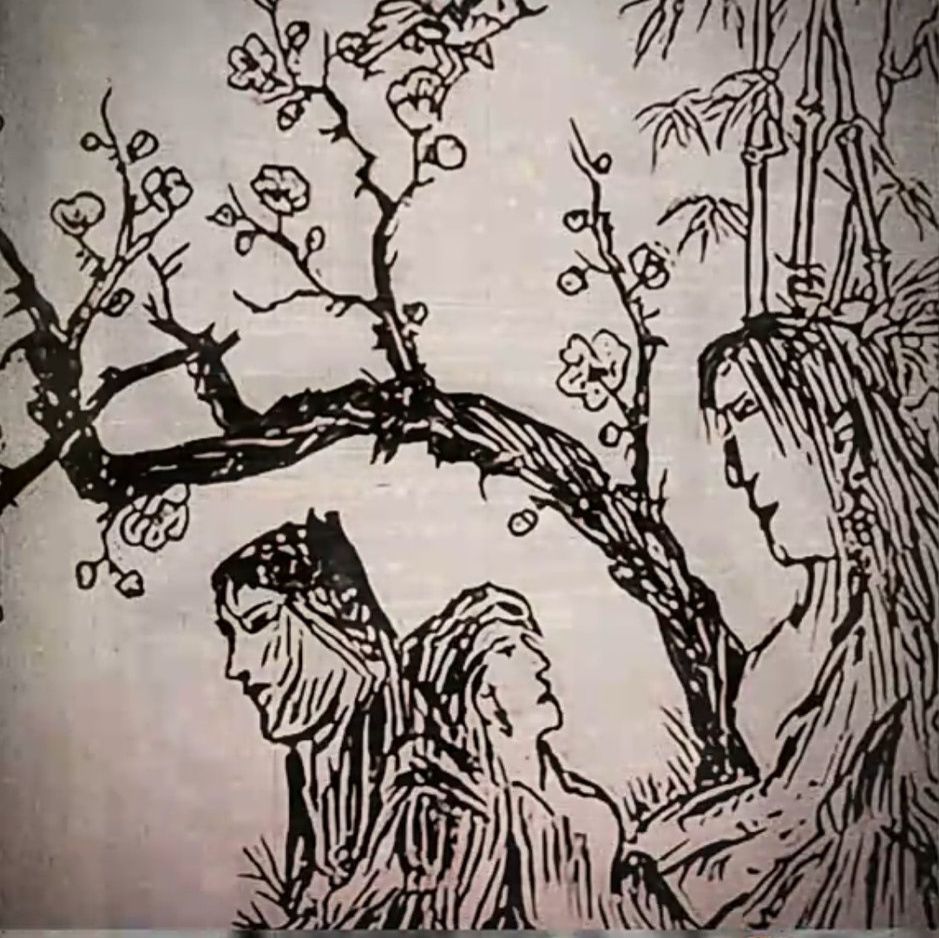
At first glance, this image might seem like an elegant ink drawing of a flowering tree branch, drifting gracefully across a muted backdrop. Soft blossoms bloom against stark branches, and delicate strokes suggest bamboo in the distance. But the longer you stare, the more your eyes begin to betray you. Faces emerge—human figures start to surface from within the bark, petals, and shadows. Suddenly, the whole composition transforms from peaceful nature to complex narrative.
This is the magic of optical illusion art—where what you see isn’t always what’s truly there. And this piece? It’s a visual riddle wrapped in aesthetic calm.
The Secret Within the Branches
So what exactly are we looking at?
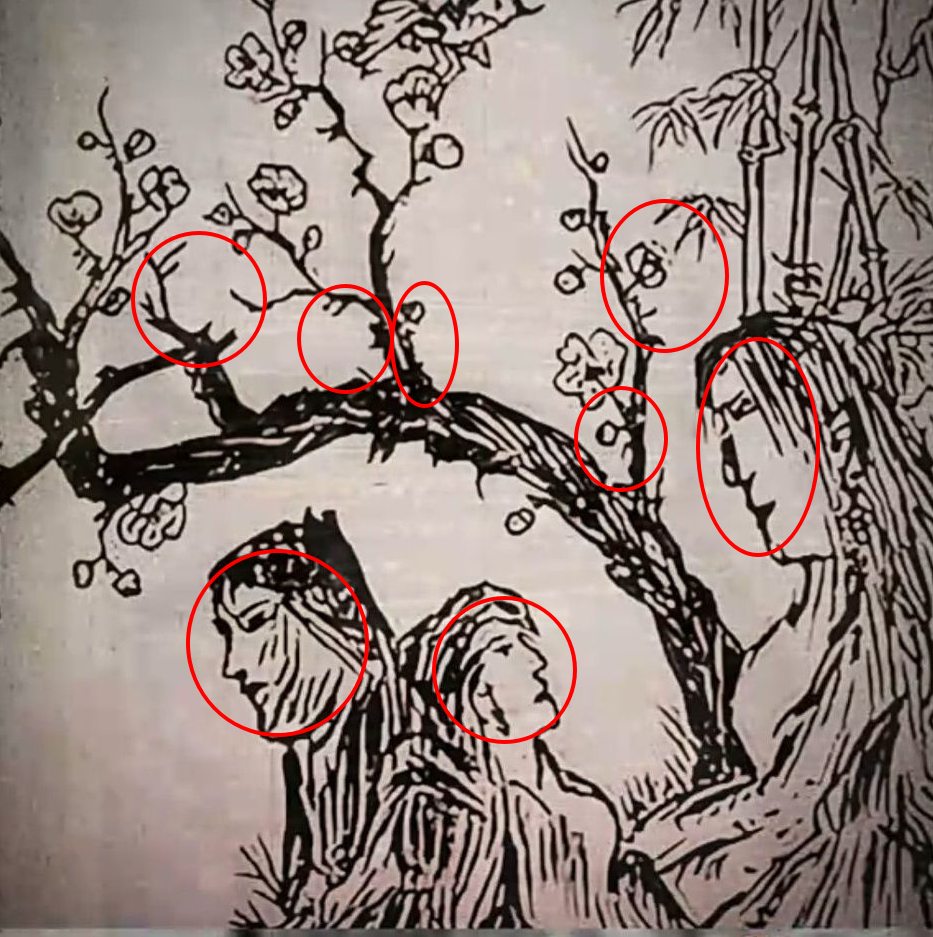
Hidden among the blooming trees are multiple human faces and figures, camouflaged so seamlessly within the brushwork that you might overlook them entirely at first. On the right, a tall, serene face gazes to the left—formed by curves of the tree and soft outlines. Below and to the left, you’ll find three more figures, their profiles overlapping with one another, their outlines created by the flow of bark, robes, and floral lines.
This isn’t just clever—it’s masterful.
Optical Illusions as Storytelling Tools
Art like this does more than entertain. It tells layered stories—each figure, branch, and petal pulling you into a deeper narrative.
This particular piece whispers of:
- Connection between humanity and nature
- Ancient traditions and spiritual symbolism
- The way we see versus what we want to see
And just like that, you’re no longer just observing a tree. You’re unraveling the psychology of sight.
The Psychology Behind Seeing the Hidden
Why do some people see the faces instantly, while others might only notice them after a few hints? It comes down to perceptual priming and visual bias. Our brains are wired to seek out familiar shapes—especially faces. But when those familiar shapes are masked by natural elements, your brain struggles to interpret them as more than just part of the background.
It’s like nature playing hide-and-seek with the human form.
What’s wild is that once you see the hidden figures, you can’t unsee them. The illusion is shattered—but the beauty remains.
Cultural Echoes in Visual Illusion Art
There’s something deeply Eastern in the style of this piece—perhaps a nod to traditional Chinese or Japanese ink wash painting. Yet it carries the universal language of duality—nature vs. human, seen vs. unseen, foreground vs. background.
And that’s where the genius lies. This artwork becomes a bridge between cultures, styles, and ideas. You don’t need a background in art history to feel its impact. It’s visual poetry that speaks in silence.
Why We’re Drawn to Art That Challenges Us
Let’s be real—there’s plenty of pretty art out there. But art that makes you stop, squint, and stare? That’s rare. And valuable.
Optical illusion art like this hits differently because:
- It’s interactive—your brain is part of the process.
- It’s unexpected—you’re not just admiring, you’re investigating.
- It’s rewarding—the “aha!” moment feels earned.
It’s like cracking a code, except the answer is beauty itself.
How to Truly Appreciate a Visual Illusion
Want to get the most out of art like this? Don’t just glance—immerse.
Here’s how:
- Zoom in and out: Changing perspective often reveals more.
- Tilt your head: Sometimes, new angles unlock hidden forms.
- Cover parts of the image: Blocking out sections can help isolate key shapes.
- Switch focus: Stare at the tree. Now stare at the space around it. The shift in attention will start unveiling new layers.
You don’t have to be an art expert. You just need curiosity—and patience.
Conclusion: A Silent Masterpiece That Speaks Volumes
This image isn’t loud. It doesn’t demand attention. But it earns it.
With every glance, it reveals more—pulling you deeper into a dance between sight and meaning. It’s not just a tree. It’s not just faces. It’s an experience. One that reminds us that what we see on the surface often hides more than we expect.
And maybe that’s the biggest takeaway: the real beauty is in what’s hidden—waiting for you to notice.
So the next time you pass a piece of art that seems simple, stop. Tilt your head. Look twice. You never know what might be hiding in plain sight.