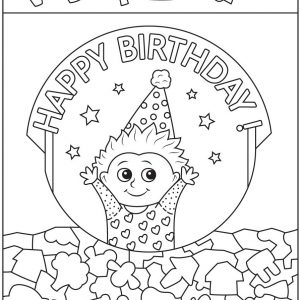
At first glance, this cheerful black and white illustration looks like a simple children’s coloring page. Two kids sit happily on a picnic blanket outdoors, enjoying snacks and fruit. A basket full of food sits between them. Plates, spoons, and a drink rest neatly on the blanket. Behind them, soft bushes and a small house create a peaceful backyard setting.
Everything seems friendly and calm.
But this picture hides something more exciting.
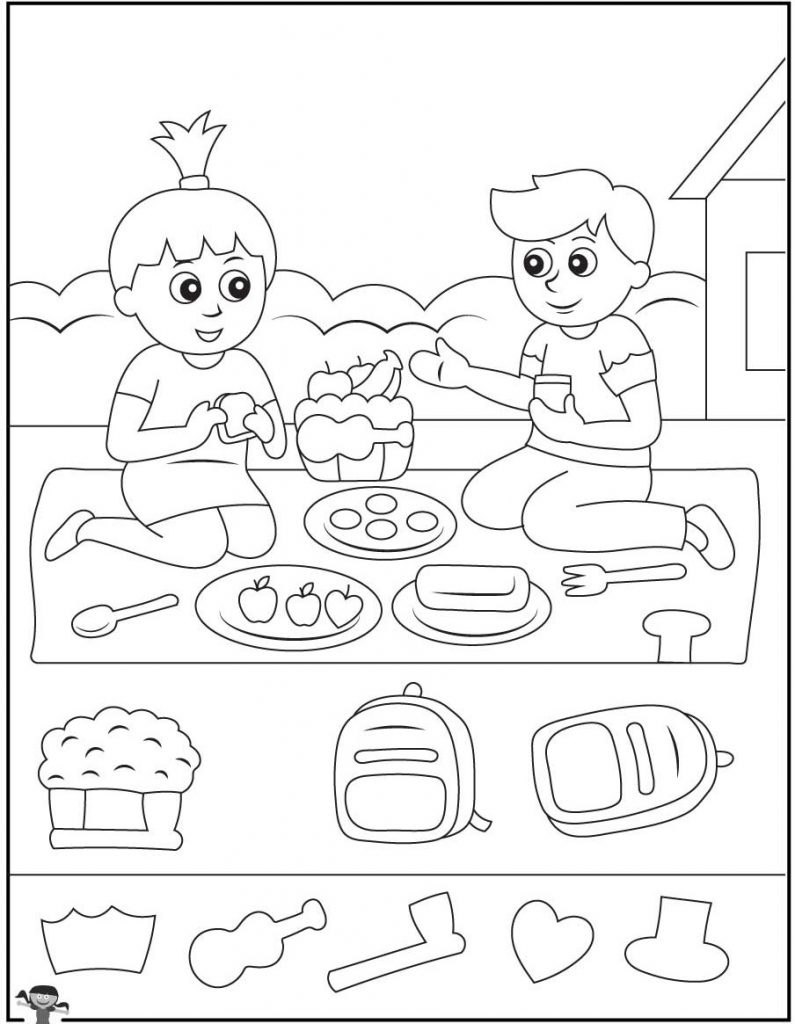
It is actually a hidden object puzzle designed to challenge your attention to detail. Beneath the picnic scene, several unusual shapes appear. These shapes are not random decorations. They represent objects secretly hidden somewhere inside the illustration above.
Your mission is simple but surprisingly tricky. Carefully examine the picnic scene and locate each hidden shape blended into the drawing.
The challenge turns a normal picture into a visual treasure hunt.
Why hidden object puzzles are so engaging
Hidden object puzzles have a special kind of magic. At first, they appear easy. The scene looks clear and familiar. Two children. A picnic. Plates of fruit and snacks.
But once you know hidden shapes are present, your brain begins to shift gears. You stop seeing the picture as a story and start seeing it as a puzzle.
Instead of asking what is happening in the scene, you start asking different questions.
Where do these lines connect
Which curves resemble the hidden shapes
What parts of the drawing could disguise an object
This mental shift activates curiosity. Suddenly every line and outline matters. The search becomes a game of patience, observation, and discovery.
The cheerful picnic scene creates a clever disguise
The artist intentionally designed the scene to feel simple and playful. Two children sit facing each other on a picnic blanket. One child holds a piece of fruit while the other appears to be talking and sharing food.
Between them sits a picnic basket overflowing with fruit. Plates display apples and snacks. A spoon and fork lie beside the dishes.
These familiar objects create a comfortable visual environment. When we recognize familiar items quickly, our brains stop examining them closely. That is exactly how hidden shapes remain unnoticed.
The curves of fruit can hide other rounded objects. The edges of plates may form unexpected outlines. Even the folds of the blanket or the shapes of nearby bushes may disguise part of a hidden item.
Understanding the hidden shapes
At the bottom of the image, several silhouettes show the objects you need to find. Each one has a distinctive outline. Some have smooth curves while others contain straight edges or unusual angles.
One shape resembles a crown with pointed tips. Another looks like a chicken drumstick with a rounded end and narrow handle. A third object forms an L shaped tool or pipe like figure. There is also a heart shape and a tall hat silhouette.
Your task is not to search for the literal objects themselves. Instead, you must find those shapes hidden inside the outlines of other elements in the scene.
This is the key idea behind hidden object puzzles.
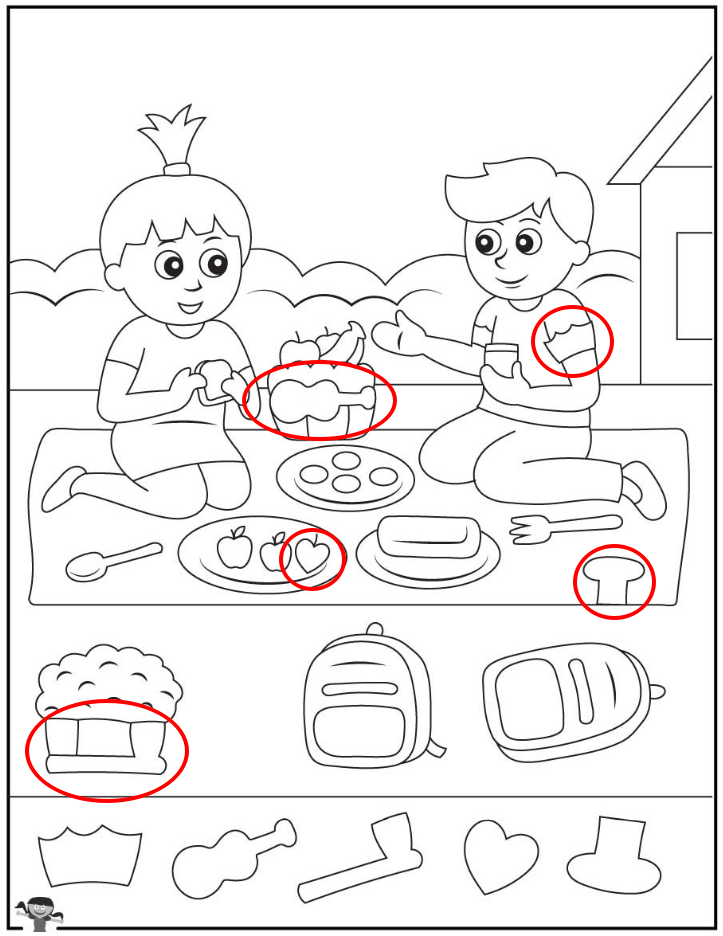
Artists rarely draw the item directly. They embed its outline into something else. A bush might form the crown shape. A fruit might resemble the heart. The edge of a plate might disguise the drumstick silhouette.
How to search the image effectively
Many people approach hidden object puzzles by scanning randomly across the picture. This method often leads to frustration because the brain becomes overwhelmed by details.
A better strategy is to search methodically.
Start by dividing the picture into sections. Focus on one area at a time. Begin with the top left corner and slowly move across the scene. Examine each object carefully before moving on.
Look closely at edges and outlines rather than colors or characters. Hidden shapes usually appear where lines intersect or where two objects overlap.
Another helpful technique is to visualize the silhouette of the object you are searching for. Imagine its shape clearly in your mind. Then compare that outline with the lines you see in the illustration.
This approach helps your brain filter out unnecessary details.
Why this puzzle is perfect for children
This picnic themed hidden object puzzle works especially well for kids. The characters are friendly and the scene feels familiar. Children instantly recognize the idea of sharing food outdoors.
At the same time, the puzzle encourages careful observation. Kids must slow down and analyze shapes rather than jumping to quick conclusions.
This strengthens visual discrimination skills. Visual discrimination helps children notice small differences between shapes and patterns, which is important for reading and learning.
The puzzle also encourages patience. Instead of giving up quickly, children learn to keep searching and exploring the image.
Turning a simple drawing into a learning activity
Teachers and parents can easily turn puzzles like this into interactive activities. Children can work individually or in small groups to locate each hidden object. Each discovery becomes a small victory.
Adults can ask guiding questions during the search.
Where do you see a shape that looks like the crown
Which fruit might hide a heart outline
Do any edges of the basket resemble the drumstick shape
These questions encourage children to think more deeply about the picture.
The puzzle also sparks creativity. Kids may begin imagining new shapes inside the illustration that were not originally intended.
The satisfaction of finding the hidden shapes
Every hidden object puzzle contains a special moment. You look carefully at the drawing for several minutes. Nothing seems obvious. Then suddenly a shape stands out clearly.
It feels almost surprising.
The crown shape appears within a bush. The heart outline emerges from the curve of fruit. A simple line that once looked ordinary suddenly matches the silhouette perfectly.
This moment of discovery is what makes puzzles so enjoyable. It proves that careful observation reveals details that casual viewing often misses.
Conclusion
This cheerful picnic hidden object puzzle transforms a simple outdoor scene into an engaging visual challenge. Two children enjoying snacks and fruit create the perfect disguise for several cleverly hidden shapes.
By focusing on outlines instead of objects, dividing the picture into sections, and searching patiently, viewers can uncover each hidden silhouette. The activity sharpens observation skills, encourages concentration, and provides a satisfying sense of discovery.
Take another careful look at the picnic blanket, the fruit basket, and the plates of food. Study the curves and edges of every object.
The hidden shapes are already there.
All you need to do is notice them.