At first glance, this charming illustration looks like a scene pulled straight from a fairy tale. A cheerful queen wearing a golden crown stands proudly in her royal kitchen. Her arms are raised in excitement as if she has just completed something wonderful. In front of her, a little girl wearing a bunny hood reaches up eagerly toward a tall jar filled with colorful cookies. The room is filled with baking tools, candy decorations, bowls, and rolling pins scattered across a wooden table.
The scene feels playful and warm, almost like a magical moment during a royal baking day.
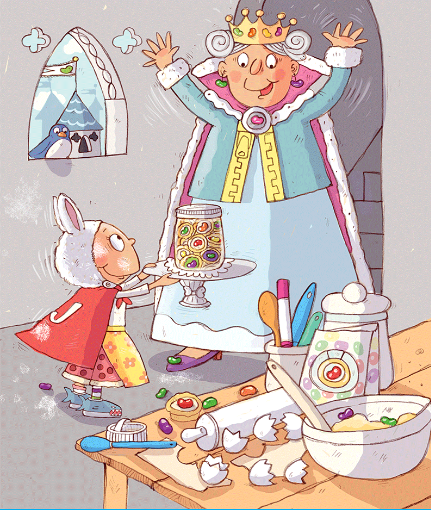
But if you look closely, this picture is not just a storybook illustration. It is also a hidden object puzzle. The entire scene invites viewers to examine every corner, every outline, and every shape carefully. Hidden objects blend seamlessly into the artwork, turning a simple kitchen scene into a visual adventure.
This kind of puzzle transforms ordinary observation into an exciting challenge.
Why hidden object puzzles are so addictive
Hidden object puzzles capture attention because they challenge the way our brains naturally process images. When we first look at the illustration, we immediately recognize the main characters. We see a queen, a child, baking tools, and a jar of sweets. Our brain quickly labels these elements and assumes we understand the picture completely.
However, the puzzle hides small shapes and objects within those familiar outlines. Suddenly the task becomes more complex. Instead of seeing only the story, you must begin examining every curve and every line.
Your brain shifts from casual viewing into investigative mode.
That transformation is what makes hidden object puzzles so engaging. Each discovery feels like solving a miniature mystery hidden inside the artwork.
A magical kitchen filled with visual clues
The royal kitchen scene contains countless details designed to hide objects cleverly. The table is covered with baking supplies such as bowls, spoons, and cookie dough. A rolling pin rests beside a tray of pastries. Candy decorations scatter across the surface like colorful jewels.
The tall jar of cookies becomes the focal point of the scene. Its glass walls reveal layers of colorful treats stacked inside. These shapes can easily disguise hidden outlines that resemble other objects.
Even the queen’s dress and crown create opportunities for clever visual tricks. The curved edges of her gown, the patterns in her clothing, and the shapes of her jewelry can hide familiar silhouettes.
Meanwhile, the little girl reaches upward with excitement, holding a tray toward the jar. Her costume, especially the bunny ears on her hood, introduces additional shapes that blend naturally into the scene.
Every part of the image contributes to the puzzle.
Understanding how hidden shapes work
The secret to solving hidden object puzzles lies in recognizing silhouettes rather than literal items. Artists rarely draw the hidden object directly. Instead, they embed the shape inside something else.
For example, a curve in the queen’s sleeve might resemble the outline of another object. The edge of the rolling pin might align with a different shape entirely. Even negative space between objects can create a recognizable silhouette.
Negative space refers to the empty area surrounding objects. Sometimes the hidden object is not drawn directly but appears where two shapes meet.
This technique encourages viewers to examine the illustration slowly and thoughtfully.
How to search the image effectively
When people first attempt a hidden object puzzle, they often scan the entire picture quickly. Unfortunately, this approach rarely works. The brain becomes overwhelmed by details, making it harder to notice subtle shapes.
A more effective strategy involves breaking the image into smaller sections.
Start at the top of the illustration. Examine the queen’s crown, her raised arms, and the background walls. Study the window carefully, paying attention to the shapes created by the frame and the scenery outside.
Next move toward the center where the cookie jar sits. Observe each cookie inside the glass carefully. Look at the outlines of the jar lid and the decorative patterns around it.
Finally explore the table area. The baking tools, bowls, and scattered candies contain numerous shapes that may disguise hidden objects.
Working methodically helps your brain focus on one area at a time.
Why puzzles like this are great for children
This royal kitchen puzzle works especially well for children because it combines storytelling with problem solving. Kids naturally enjoy fairy tale themes, especially those involving castles, queens, and magical kitchens.
While searching for hidden objects, children develop important cognitive skills. They improve their ability to recognize patterns and shapes. They also strengthen concentration and patience.
Unlike fast paced digital games, hidden object puzzles encourage slow and careful observation. Children learn that success often comes from persistence rather than speed.
Parents and teachers can also turn the puzzle into a fun group activity. Children can work together to spot hidden shapes and explain how they discovered them.
Turning a simple picture into a learning adventure
The beauty of hidden object puzzles lies in their simplicity. With only a single illustration, you can create an engaging mental exercise that encourages curiosity.
Teachers often use puzzles like this to introduce observational skills in classrooms. Students practice describing shapes, identifying patterns, and analyzing visual information.
Even adults enjoy the challenge. In a world filled with constant digital distractions, spending a few minutes studying a detailed illustration can feel surprisingly relaxing.
It reminds us to slow down and pay attention.
The joy of discovery
Every hidden object puzzle contains a moment when everything suddenly clicks. You might stare at the same area of the image for several minutes without noticing anything unusual.
Then suddenly a shape becomes obvious.
A curve aligns perfectly with a silhouette you recognize. An outline hidden within another object suddenly reveals itself. The discovery feels almost magical, as if the image decided to reveal its secret.
That moment is what keeps people coming back to puzzles again and again.
Conclusion
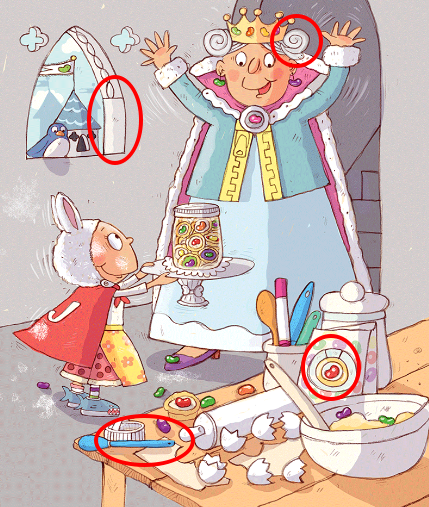
This delightful royal kitchen illustration transforms a charming fairy tale scene into an exciting hidden object adventure. A queen celebrating her baking success and a little helper reaching for a jar of cookies create the perfect backdrop for a clever visual challenge.
Within the details of the kitchen tools, decorations, and clothing, several hidden shapes wait patiently to be discovered. By studying outlines carefully and exploring the image section by section, viewers can uncover each cleverly disguised object.
Hidden object puzzles like this do more than entertain. They strengthen observation skills, encourage patience, and spark curiosity.
Take another careful look at the queen’s crown, the cookie jar, and the busy baking table.
You may be surprised by how many secrets are hiding in plain sight.