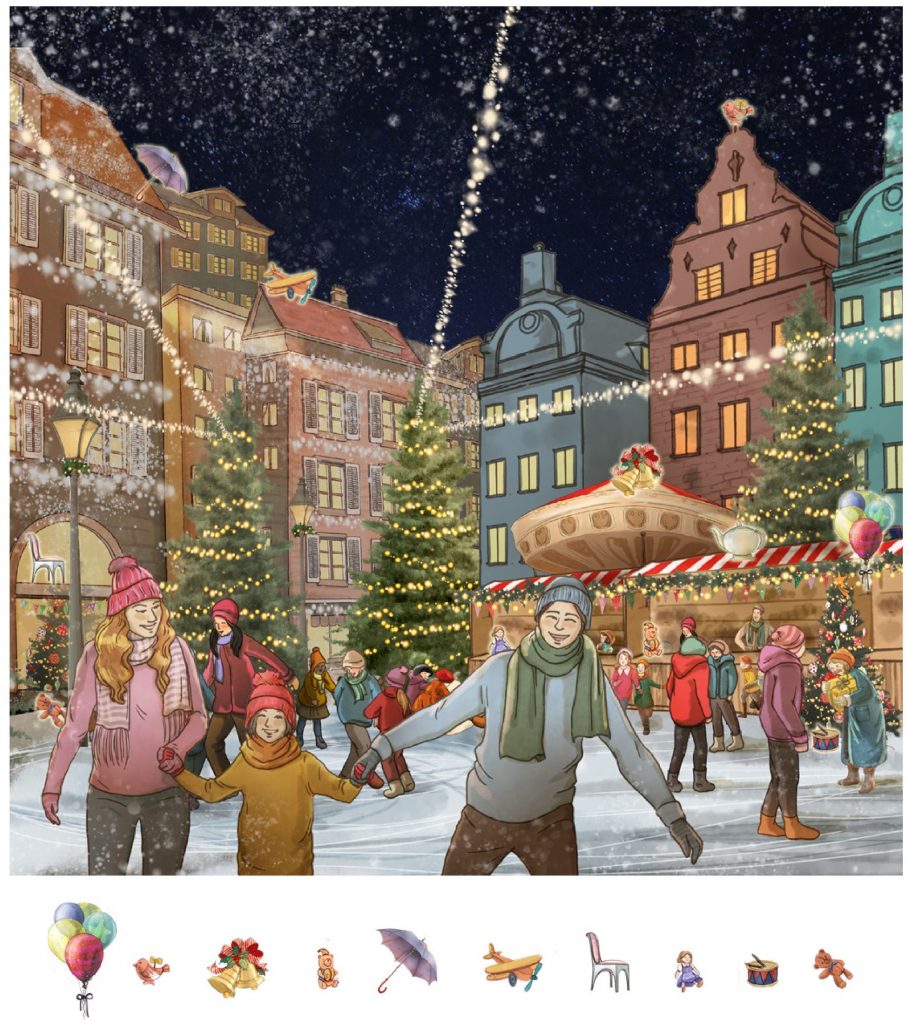
One look at this winter scene and you can almost hear the music floating through the cold night air. Snow falls gently under a dark starry sky. Strings of lights stretch across the town square like glowing ribbons. Families glide across an ice rink, hands linked, laughter frozen in motion. A cozy Christmas market glows in the background, surrounded by tall evergreen trees dressed in warm golden lights. At first, it feels like a peaceful holiday postcard. Then you notice the small icons at the bottom. Balloons. A bell. A teddy bear. An umbrella. A chair. A toy airplane. Suddenly, this charming winter festival transforms into a hidden picture puzzle that invites you to slow down and look closer.
This image does more than decorate a page. It pulls you into a playful challenge that blends emotion, curiosity, and focus into one deeply engaging experience.
Why winter festival scenes are perfect for hidden picture puzzles
Winter scenes naturally encourage lingering. Snow softens everything. Lights create warmth against the dark. People gather closer together. Your brain associates these visuals with comfort and nostalgia.
That emotional response lowers mental resistance. Instead of rushing, you relax. When you relax, you observe more carefully. That is exactly what hidden picture puzzles need to thrive.
This festive ice skating scene is full of layered detail. Buildings rise in the background with varied shapes and windows. Trees sparkle with tiny lights. Crowds move in every direction. Each layer offers countless places for objects to hide without feeling forced.
How storytelling keeps attention locked in
This puzzle tells a story even before the search begins. A family skates hand in hand at the center. Children laugh. Adults balance carefully. Behind them, people gather at market stalls, sipping warm drinks and chatting under festive canopies.
Your mind fills in the gaps. You imagine the cold air on your face. The scrape of skates on ice. The smell of sweets and pine.
While that story plays in your head, your eyes continue to scan. You are not just hunting objects. You are exploring a moment. That narrative layer keeps you engaged far longer than a plain puzzle ever could.
Why hidden objects feel harder in joyful scenes
Joyful scenes trick the brain. When you feel good, you pay less attention to detail at first. You take in the whole image instead of the small parts.
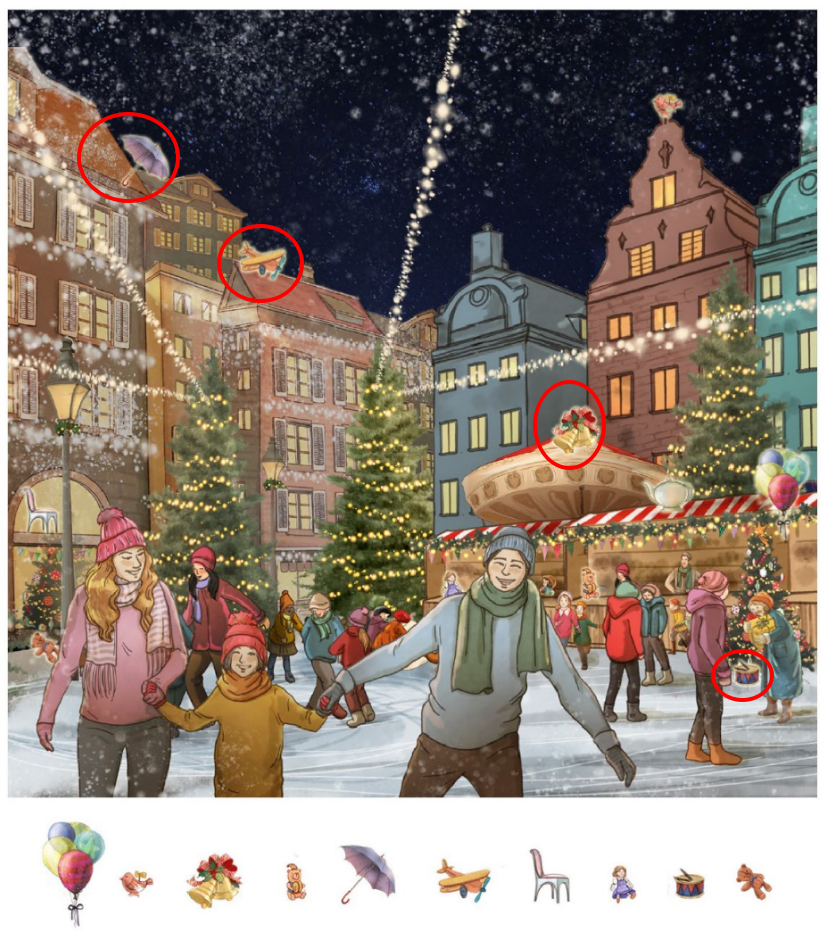
That is why the hidden objects here feel so sneaky. A teddy bear blends into warm colors. Balloons echo the round glow of lights. An umbrella hides among dark shapes and shadows. A chair disguises itself as part of the background structure.
Your brain expects harmony, not disruption. Hidden objects exploit that expectation, turning comfort into challenge.
The visual rhythm that slows scrolling
Unlike fast content that demands quick reactions, this image rewards stillness. You cannot scroll past it easily. Your eyes want to settle.
Snowflakes create visual texture that encourages careful inspection. Light strings guide your gaze across the scene. The ice rink pulls focus to the center, then pushes it outward again.
This visual rhythm creates a natural loop. You scan wide. You zoom in mentally. You return to the center. Each loop increases engagement without effort.
Why these puzzles work for all ages
Children see magic first. They notice the skaters, the lights, the festive energy. Finding objects becomes a game layered on top of a winter story they already love.
Adults appreciate the challenge and the calm. It feels like a break from noise and speed. Searching for objects becomes a mindful exercise that sharpens attention without stress.
Seniors enjoy the gentle stimulation. The scene feels familiar and safe. The puzzle encourages focus and memory without pressure.
That broad appeal makes winter hidden picture puzzles ideal for family friendly content that attracts diverse audiences.
How hidden picture puzzles increase dwell time naturally
This image does not beg for attention. It earns it.
Viewers stop. They search. They hesitate. They recheck areas they already scanned. Time stretches without frustration.
That behavior sends strong engagement signals. Longer dwell time. Deeper interaction. More meaningful focus. These are exactly the signals that platforms and advertisers value.
Instead of chasing clicks, this type of content invites presence.
Why holiday themes boost emotional engagement
Holiday imagery taps into shared memories. Ice skating with family. Visiting markets. Holding hands in the cold. These experiences feel universal.
When people connect emotionally, they stay longer. They forgive difficulty. They enjoy the process.
That emotional cushion is why users keep searching even when only one object remains unfound. They want to stay in the scene a little longer.
How object variety keeps the challenge fresh
The hidden objects in this puzzle vary in size, shape, and meaning. Some are playful. Some are ordinary. Some feel unexpected.
This variety forces the brain to shift strategies. You cannot rely on one scanning method. You must look for curves, straight lines, familiar silhouettes, and abstract shapes.
Each shift refreshes attention and prevents boredom. The puzzle stays engaging from the first find to the last.
Why calm difficulty builds satisfaction instead of frustration
This puzzle challenges without punishing. Objects hide cleverly, not cruelly. They belong in the scene even when you cannot see them right away.
When you finally spot a difficult item, the reaction is delight, not relief. You feel clever. You feel rewarded.
That positive feedback loop encourages repeat engagement and return visits.
Conclusion
This hidden picture puzzle winter ice skating festival captures everything that makes visual challenges so powerful. It blends warmth, storytelling, and clever design into a scene that invites viewers to slow down and truly look. Snow, lights, laughter, and movement create a joyful backdrop where hidden objects quietly test focus and patience. Each discovery feels earned. Each moment spent searching feels calm and rewarding. More than a puzzle, this image becomes an experience, one that keeps people engaged, relaxed, and happily searching long after the first glance.