Hidden object puzzles become especially powerful when they tell a story people recognize. The image in front of you captures one of those universal moments. Moving day. Boxes everywhere. Friends helping friends. Kids turning chaos into play. Pets peeking out from unexpected places. At first glance, the scene feels warm, busy, and full of life. But look closer and a deeper challenge reveals itself. Small everyday objects hide throughout the illustration, blended seamlessly into the movement and emotion of the moment.
This is not just a colorful picture of a neighborhood in motion. It is a thoughtfully designed hidden object puzzle that rewards patience, attention, and curiosity. And because the scene feels so real, the challenge feels even more satisfying.

Why everyday life scenes make the best hidden object puzzles
Hidden object puzzles work best when they lower your guard. Fantasy scenes excite the imagination, but familiar settings invite deeper focus. Moving day is something most people understand instantly. The boxes, the stairs, the teamwork, the mild chaos. Your brain recognizes the environment and relaxes.
That relaxation is the trick. When the mind feels comfortable, it becomes more open to careful observation. You start scanning faces, boxes, steps, and background details without pressure. That is when hidden objects become harder to spot and more fun to find.
This puzzle uses familiarity as camouflage. Objects hide inside things you expect to see. A ruler might echo the edge of a step. A key might blend into shadows. A cup might disappear among boxes and bags. Because everything feels normal, nothing stands out immediately.
A lively illustration filled with story and emotion
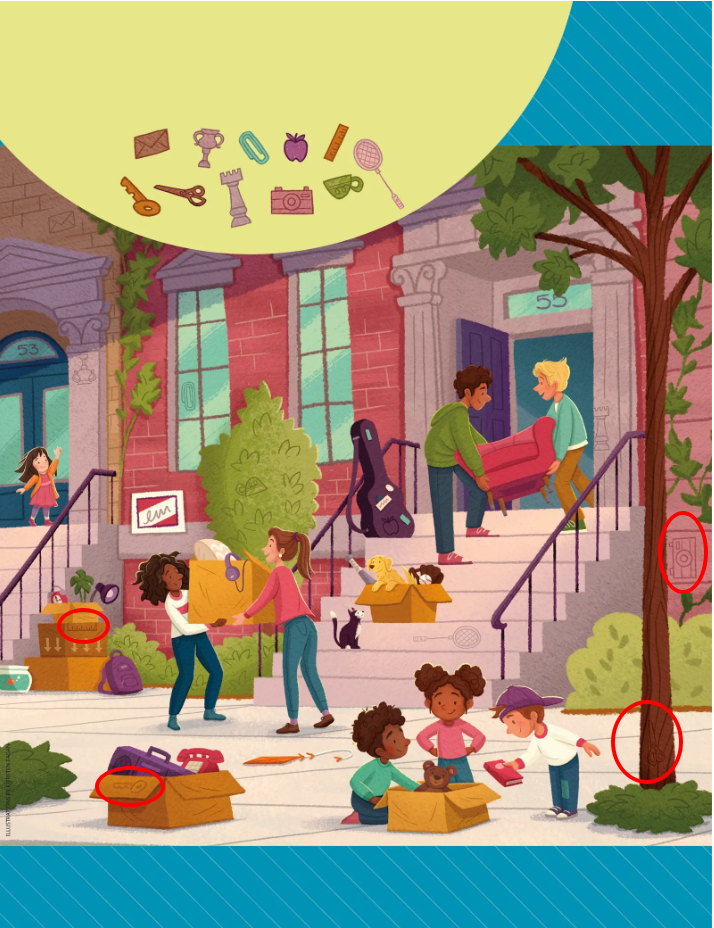
This image feels alive. Two adults carry a couch up the stairs with focused teamwork. Another pair lifts a heavy box, sharing effort and trust. Kids turn unpacking into a game, opening boxes like treasure chests. A pet peeks out from inside a box, curious and calm. Even the building itself feels welcoming, with warm colors and leafy trees framing the scene.
Storytelling matters in hidden object puzzles. When viewers feel emotionally connected, they slow down naturally. They want to explore the scene, not rush through it. They look at expressions. They follow actions. That deeper engagement makes the puzzle more effective and more memorable.
This moving day scene also highlights cooperation and community. Those themes add warmth that keeps users comfortable and engaged longer.
Hidden objects woven into motion and detail
At the top of the image, a row of small icons shows what you need to find. A key. Scissors. A chess rook. A camera. An apple. A ruler. A tennis racket. A cup. Each item feels simple on its own. Finding them inside a busy moving scene is another story.
The brilliance of this puzzle lies in how naturally the objects blend in. A chess rook may echo architectural shapes. A tennis racket might align with rails or shadows. A camera could borrow lines from bags or boxes. The apple might disguise itself among warm colors and rounded forms.
Because the scene is full of movement, the eye struggles to settle. That forces systematic searching. Left to right. Top to bottom. Shape by shape. Every discovery feels earned, not handed to you.
How this puzzle strengthens focus and observation
Hidden object puzzles train the brain quietly. They improve visual discrimination, attention span, and patience without feeling like work. This moving day puzzle adds another layer by placing objects inside a story filled with action.
Your brain must separate movement from shape. Emotion from outline. Familiar from hidden. That mental sorting strengthens focus in a natural way.
For children, this builds early problem solving skills and patience. They learn to slow down and look carefully. For adults, it offers a mindful break from fast scrolling and constant noise. For families, it becomes a shared activity that encourages cooperation and conversation.
Why users spend more time on puzzles like this
From a content performance perspective, hidden object puzzles are extremely effective. Users do not skim them. They pause. They interact visually. They stay.
Longer time on page increases ad viewability naturally. Because the content feels safe, family friendly, and positive, it attracts a wide range of advertisers. The moving day theme feels wholesome and relatable, which improves brand suitability.
The illustration style also matters. Soft colors, expressive characters, and clear lines reduce visual fatigue. Users feel comfortable staying longer, which supports stronger engagement signals.
Evergreen value with real world relevance
Moving day is timeless. People move homes every year. Kids grow up. Neighborhoods change. This scene never feels outdated.
That evergreen quality makes the puzzle valuable long term. It performs well across seasons and demographics. Parents, teachers, and casual puzzle fans all find something to enjoy.
Because the scene reflects real life, it also sparks conversation. People point out details. They relate to moments. That emotional resonance increases sharing and repeat visits.
Why illustrated puzzles build trust and loyalty
Illustrated hidden object puzzles feel intentional. They show care in design. Users sense that care.
This image balances detail with clarity. It does not overwhelm. It invites exploration. That respectful design builds trust.
When users trust content, they return. They look for more puzzles from the same source. They spend more time exploring other pages. That loyalty grows slowly but steadily.
A smart addition to a high value content strategy
Hidden object puzzles like this moving day adventure offer rare balance. They combine storytelling, cognitive value, and broad appeal. They work for kids and adults alike.
They do not rely on trends or shock. They rely on curiosity and satisfaction. Those qualities never expire.
When paired with warm descriptive writing and clean layout, these puzzles become experiences rather than distractions. They encourage presence instead of rushing.
For publishers, this means longer sessions, stronger engagement metrics, and better monetization potential without compromising user trust.
Conclusion
The hidden object puzzle set on a lively moving day transforms a familiar life moment into a focused and rewarding visual challenge. Through thoughtful illustration, emotional storytelling, and cleverly hidden everyday items, it invites users to slow down and look closer. Each object found feels like a small win. Each moment spent searching strengthens attention and patience. More than just a game, this puzzle shows how ordinary scenes can create extraordinary engagement when curiosity leads the way.