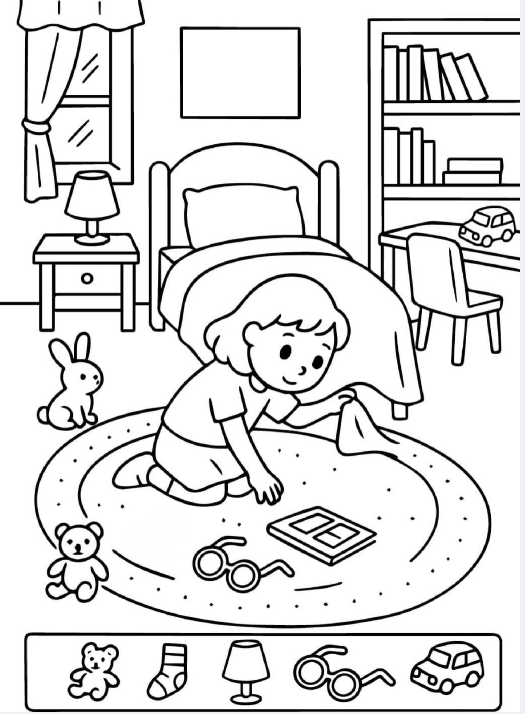
Hidden object puzzles shine brightest when they feel familiar, safe, and quietly inviting. The image in front of you captures that feeling perfectly. A child kneels on a soft round rug in a tidy bedroom, lifting a corner of fabric with curious focus. Toys rest nearby. A bookshelf stands neatly in the background. Everything feels calm, balanced, and gently playful. This is the kind of scene that does not rush you. It welcomes you in and asks you to look a little closer.
At first glance, the illustration feels simple. Clean lines. Friendly shapes. A peaceful room where nothing seems out of place. But hidden object puzzles are never as simple as they look. Somewhere inside this quiet moment, familiar items blend into the environment, waiting for careful eyes to spot them. That contrast between calm atmosphere and mental challenge is what makes this puzzle so effective.
Why simple scenes create the strongest hidden object experiences
Busy images can overwhelm the brain. Simple scenes do the opposite. They slow the mind down and encourage careful observation. This kids bedroom puzzle uses space intentionally. Every object has room to breathe, which makes each hidden item harder to notice, not easier.
Your eyes move gently across the room. The bed. The nightstand. The lamp. The toys on the floor. You begin to notice shapes, curves, and outlines. What seemed obvious suddenly deserves a second look. That shift in attention is where focus strengthens.
This kind of puzzle works like a quiet conversation. It does not shout for attention. It earns it.
The emotional comfort of a familiar bedroom setting
Bedrooms feel safe. They represent rest, routine, and personal space. When a puzzle takes place in a bedroom, it instantly lowers mental resistance. Viewers feel relaxed before they even start searching.
The child in the image looks calm and engaged, not rushed or stressed. That emotion transfers to the viewer. You feel encouraged to take your time. To search slowly. To enjoy the process rather than race toward the finish.
This emotional comfort is especially powerful for children. It makes the activity feel like play instead of a task. For adults, it creates nostalgia and warmth that invites longer engagement.
Hidden objects that blend naturally into the scene
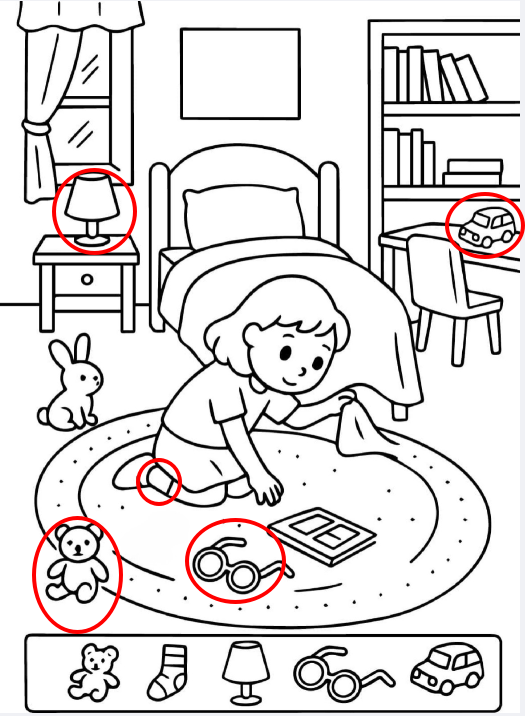
At the bottom of the image, a row of items waits to be found. A teddy bear. A sock. A lamp. A pair of glasses. A toy car. Each object feels perfectly ordinary. That is what makes them tricky.
The teddy bear might echo the shape of another toy. The sock may blend into fabric folds. The lamp could disguise itself among straight lines. The glasses might hide within curved outlines on the rug.
Nothing feels forced. The objects belong to the room, even when they hide. That natural integration makes each discovery feel satisfying. You are not spotting something random. You are uncovering something that was always part of the scene.
How this puzzle supports early learning and attention
Hidden object puzzles are powerful learning tools when designed thoughtfully. This image encourages visual discrimination, patience, and memory without pressure.
Children practice identifying shapes and objects. They learn to scan systematically. They build confidence with each find. All of this happens quietly, without instructions or correction.
Because the puzzle feels calm, children stay engaged longer. They do not feel overwhelmed. They feel capable. That positive experience builds a healthy relationship with problem solving.
For adults, the puzzle offers a mindful break. It slows racing thoughts and brings attention back to the present moment. Even a few minutes of focused searching can feel refreshing.
Why users stay longer on pages like this
From a content performance perspective, simple hidden object puzzles perform exceptionally well. Users do not skim. They pause. They interact visually. They stay.
Longer time on page increases ad visibility naturally. Because the content feels safe and family friendly, it attracts a wide range of advertisers. The calm tone encourages relaxed browsing rather than fast exits.
The clean black and white style also plays a role. It reduces visual noise and keeps attention anchored on the puzzle. That clarity supports deeper focus and longer sessions.
Evergreen content with broad appeal
This type of puzzle does not depend on seasons or trends. A kids bedroom scene feels relevant any time of year. Parents, teachers, and caregivers look for calm activities year round.
The image works well as printable content, screen based play, or quiet classroom activity. That flexibility expands its audience and increases repeat value.
Because the puzzle appeals to both children and adults, it encourages shared engagement. Parents often solve alongside kids. Teachers use it in learning environments. That shared experience builds trust and loyalty.
Why illustration based puzzles build long term connection
Illustrated puzzles feel personal. They carry personality and warmth that photos sometimes lack. Users begin to recognize the style and associate it with positive experiences.
When people trust the tone of the content, they return. They look for more puzzles from the same source. They recommend it to others.
This slow, steady loyalty is more valuable than quick clicks. It builds sustainable traffic and stronger engagement over time.
A smart addition to a high value content strategy
Hidden object puzzles like this one offer rare balance. They are simple yet challenging. Calm yet engaging. Educational yet entertaining.
They support long session times without manipulation. They encourage focus without stress. They work quietly in the background while delivering strong performance.
When paired with gentle descriptive text, they create an experience rather than just a page. That experience keeps users present, curious, and comfortable.
Conclusion
The cozy kids bedroom hidden object puzzle proves that calm scenes can create powerful engagement. Through simple design, familiar surroundings, and thoughtfully hidden items, it builds focus while inviting relaxation. Each discovery rewards patience. Each detail encourages a closer look. Whether used for learning, quiet play, or mindful breaks, this puzzle shows that sometimes the most effective content is the kind that whispers instead of shouts and gently invites us to slow down and see what we almost missed.