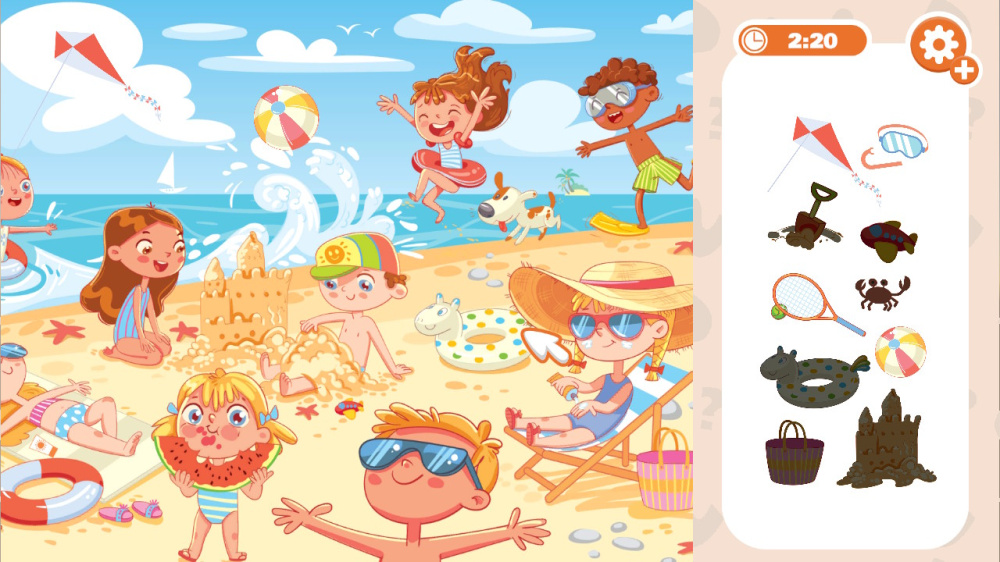
Hidden object puzzles feel even more magical when they take place under a bright blue sky with sand between your toes and laughter in the air. The image in front of you captures that joyful energy perfectly. A group of children plays on a sunny beach, building sandcastles, splashing in the water, flying kites, and soaking up summer fun. At first glance, it feels like a carefree holiday snapshot. But look a little closer and the real challenge reveals itself. Everyday objects hide cleverly inside the scene, waiting for sharp eyes to spot them all.
This is not just a picture. It is a playful brain workout wrapped in sunshine, movement, and color. And that combination is exactly why hidden object puzzles like this one hold attention so effortlessly.
Why summer themed hidden object puzzles work so well
Summer scenes naturally spark happiness. Bright colors, smiling faces, and outdoor play trigger positive emotions almost instantly. When people feel happy, they slow down and engage more deeply. This beach puzzle uses that emotional shortcut beautifully.
Children run across the sand. Water splashes into the air. A dog jumps with excitement. Beach toys scatter everywhere. The scene feels busy, yet balanced. That balance matters. It creates just enough visual noise to hide objects without overwhelming the viewer.
Because the setting feels fun instead of stressful, users want to stay. They do not rush. They explore. That relaxed curiosity is the foundation of strong engagement.
A lively beach scene that feels alive
Every part of this illustration tells a story. One child proudly shows off a sandcastle. Another bites into a slice of watermelon. Someone else jumps mid air with pure joy. The ocean rolls gently in the background while clouds float above.
This sense of motion makes the puzzle more challenging. When everything moves, the eye struggles to settle. That forces slower scanning and closer inspection.
Storytelling through illustration keeps users emotionally invested. They are not just hunting for objects. They are exploring a moment. That emotional connection encourages longer focus and deeper interaction.
Hidden objects blended into playful chaos
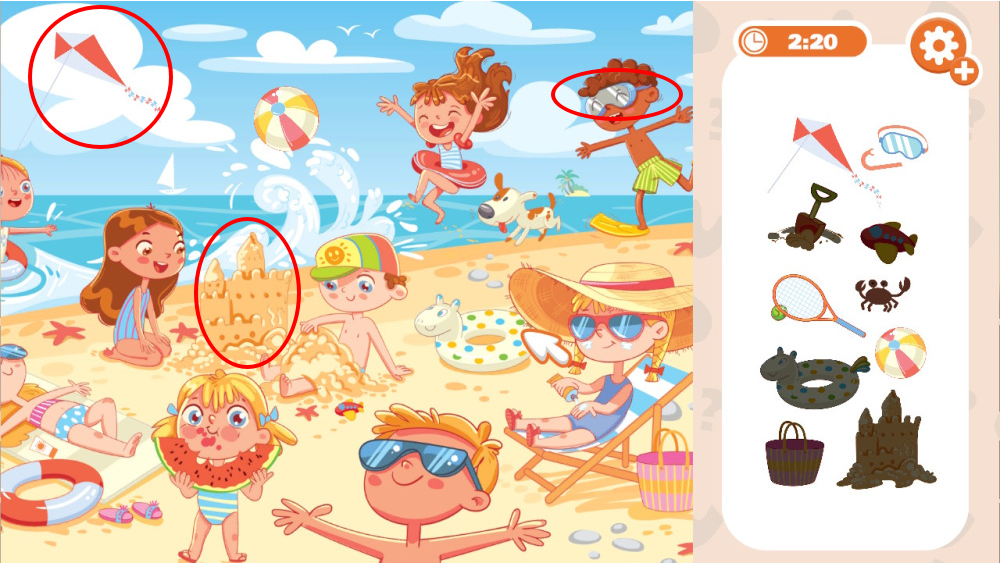
On the side of the image, a list of objects waits to be found. A kite. A snorkel mask. A shovel. A hat. A crab. A beach ball. A swim ring. A basket. A sandcastle.
Each object belongs on the beach, which makes the challenge harder. When everything fits the theme, nothing stands out easily. A shovel might blend into sand shapes. A crab may hide among footprints. A beach ball could disguise itself among splashes and toys.
This natural integration is what makes hidden object puzzles satisfying. You are not spotting something random. You are discovering something cleverly disguised within the story.
Every find feels like a small victory. That sense of progress keeps users engaged until the very end.
How this puzzle sharpens focus without feeling like work
Hidden object puzzles train the brain quietly. They strengthen visual discrimination, attention span, and patience. But because the activity feels like play, users do not resist it.
In this beach scene, the challenge lies in separating similar shapes and colors. Sand against sand. Blue against blue. Round objects hiding among other round objects.
The brain learns to slow down and compare details. That kind of focused attention is rare in fast digital environments. Yet here, it feels natural and enjoyable.
For children, this supports early cognitive development. For adults, it provides a refreshing mental break. For families, it creates shared moments of calm problem solving.
Why kids stay longer with puzzles like this
Kids love pictures that feel alive. Bright colors, smiling characters, and playful scenes pull them in immediately. But what keeps them engaged is the challenge.
This puzzle does not tell kids what to do step by step. It invites exploration. Children feel in control of the search, which builds confidence.
Because the scene feels friendly and familiar, kids do not get frustrated easily. They take their time. They try again. That persistence is a valuable skill built through play.
Why this content performs well on websites
From a content performance perspective, hidden object puzzles are extremely strong. Users spend more time on the page. They interact visually instead of skimming text. They stay focused.
Longer time on page increases ad visibility naturally. Because the content is family friendly and positive, it attracts a wide range of advertisers.
Summer themed content also performs well seasonally. During school breaks and holidays, parents look for engaging activities. A beach puzzle feels timely and useful.
Even outside summer, the image offers escapism. People enjoy revisiting sunny scenes during colder months. That makes the content evergreen.
Evergreen value with repeat visit potential
A well designed hidden object puzzle does not lose value after one visit. Users often return to check if they missed something. They share it with friends. They challenge others.
This beach puzzle encourages that behavior. The scene is rich enough that each viewing reveals new details. That replay value is incredibly valuable for long term engagement.
Websites that build collections of themed puzzles often see strong loyalty. Visitors come back because they trust the experience. They know they will feel relaxed, challenged, and entertained.
Why illustration style matters
Illustrated puzzles feel warm and intentional. They carry personality that photos sometimes lack. This beach illustration uses soft lines, expressive faces, and playful exaggeration.
That style makes the puzzle approachable. Users feel invited, not tested. That emotional tone is critical for keeping engagement positive.
When people associate content with fun and comfort, they return willingly. They explore more pages. They stay longer.
Conclusion
The summer beach hidden object puzzle transforms a joyful seaside moment into a focused and rewarding visual challenge. Through playful storytelling, bright colors, and cleverly hidden objects, it keeps users engaged while sharpening attention. Each discovery feels satisfying. Each moment spent searching feels fun and relaxed. Whether enjoyed by children, families, or anyone craving a sunny mental escape, this puzzle proves that when learning and play come together, engagement follows naturally and lasts longer than expected.