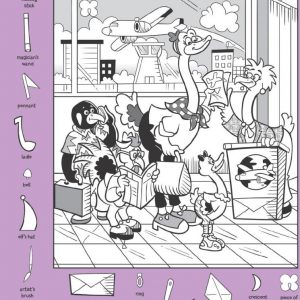
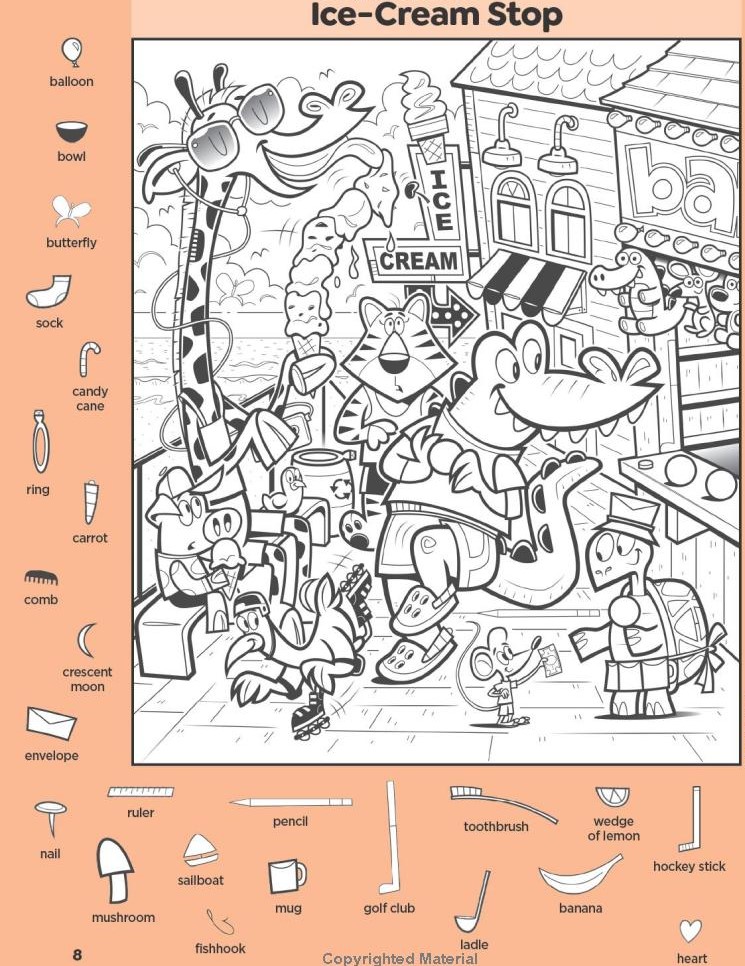
At first glance, this lively illustration looks like a joyful afternoon at a neighborhood ice cream shop. Cartoon animals crowd the sidewalk. A giraffe towers above the scene wearing oversized sunglasses. A crocodile strolls past with a grin. A turtle stands near the counter. A monkey clutches a treat. Scoops of ice cream swirl high above the storefront sign.
It feels playful, busy, and full of personality.
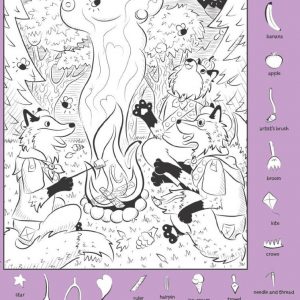
But look along the borders of the image and you realize something important. This is not just a charming street scene. It is a hidden object puzzle packed with everyday items waiting to be discovered.
A balloon. A bowl. A butterfly. A sock. A candy cane. A ring. A carrot. A comb. A crescent moon. An envelope. A ruler. A pencil. A toothbrush. A wedge of lemon. A hockey stick. A banana. A heart. And many more.
Your task is simple. Find them all.
And once you start looking, you will not want to stop.
Why Hidden Object Puzzles Capture Attention Instantly
Hidden object puzzles succeed because they transform casual viewing into active exploration. Instead of glancing at the ice cream shop and moving on, you lean in. You search every corner. You examine each character, each sign, each scoop of ice cream.
Your brain shifts gears.
Suddenly, you are not just enjoying the artwork. You are analyzing shapes. You are comparing outlines to the object list. You are questioning whether that curved line belongs to a character’s tail or hides a crescent moon.
This shift from passive consumption to active participation increases focus and engagement naturally.
The Psychology Behind Visual Search Games
Your brain is wired for patterns. When you see a bustling street scene, you quickly categorize elements. Storefront. Characters. Signs. Sidewalk. Trees.
You process the image as a whole before noticing details.
Hidden object puzzles disrupt that process. They force you to zoom in on individual lines and shapes. A ruler might align with the edge of a building. A pencil could disguise itself as part of a sign. A ring might hide in a circular design.
Your brain must override its initial assumptions.
This is where the fun begins.
How the Ice Cream Shop Setting Increases the Challenge
The ice cream shop environment is perfect for camouflage. Scoops of ice cream form rounded shapes. Cones create triangular outlines. Decorative signage includes bold letters and patterns. Animal characters add curves, stripes, and layered details.
Every one of these elements offers hiding spots.
A wedge of lemon might blend into decorative trim. A toothbrush could mimic a small textured pattern. A carrot might merge with a cone or a character’s accessory. A hockey stick could hide within straight architectural lines.
Because the illustration uses consistent line work and monochrome shading, nothing stands out with color cues. You rely entirely on form recognition.
This increases the difficulty while keeping the puzzle fair and solvable.
Why This Puzzle Appeals to All Ages
One of the greatest strengths of this hidden object puzzle is its universal appeal. The characters are friendly and exaggerated. The setting feels lighthearted and safe. There is no complicated backstory.
Children enjoy the playful animals and the challenge of finding simple shapes. Adults appreciate the clever disguises and the mental exercise. Families can turn it into a collaborative game by dividing the object list and racing to complete it.
This makes hidden object puzzles ideal for family friendly platforms, educational blogs, and casual entertainment sites.
They offer wholesome engagement without controversy.
The Engagement Power of Interactive Visual Content
From a digital publishing perspective, puzzles like this increase time on page dramatically. Readers cannot skim through them. They must stay, search, and think.
Instead of scrolling quickly, users linger. They revisit sections they thought they had already examined. They compare the object icons with different parts of the scene multiple times.
This extended attention enhances the overall browsing experience. People feel invested. They experience small victories as they spot each hidden item.
Interactive content like this creates organic engagement without relying on sensational headlines or disruptive tactics.
Why Camouflage Works So Well in Busy Scenes
Camouflage thrives in complexity. The more visual information an image contains, the easier it becomes to hide additional shapes within it.
In this ice cream stop puzzle, overlapping characters and detailed backgrounds create countless opportunities for disguise. A mushroom might blend into decorative elements. A sailboat could hide in a pattern. A fishhook might align with curved signage.
Your brain initially accepts these shapes as part of the environment.
To succeed, you must challenge that instinct.
The Satisfaction of Completing the Object List
As you work through the hidden object list, each discovery provides a small burst of accomplishment. You find the balloon tucked into a curve. You identify the envelope hidden in a sign. You finally spot the elusive heart.
When you complete the list, the sense of achievement feels real.
You slowed down. You concentrated. You looked beyond the obvious.
In a world filled with rapid scrolling and endless notifications, that focused attention feels refreshing.
How Hidden Object Puzzles Strengthen Observation Skills
Beyond entertainment, hidden object games sharpen visual awareness. They encourage patience. They reward careful examination.
When you train yourself to notice subtle differences in shape and line, you improve your ability to detect details in everyday life. Whether reading, designing, or solving problems, this skill matters.
The ice cream shop setting reinforces this lesson in a playful way. Just as customers must choose flavors carefully, you must choose where to focus your eyes.
Conclusion
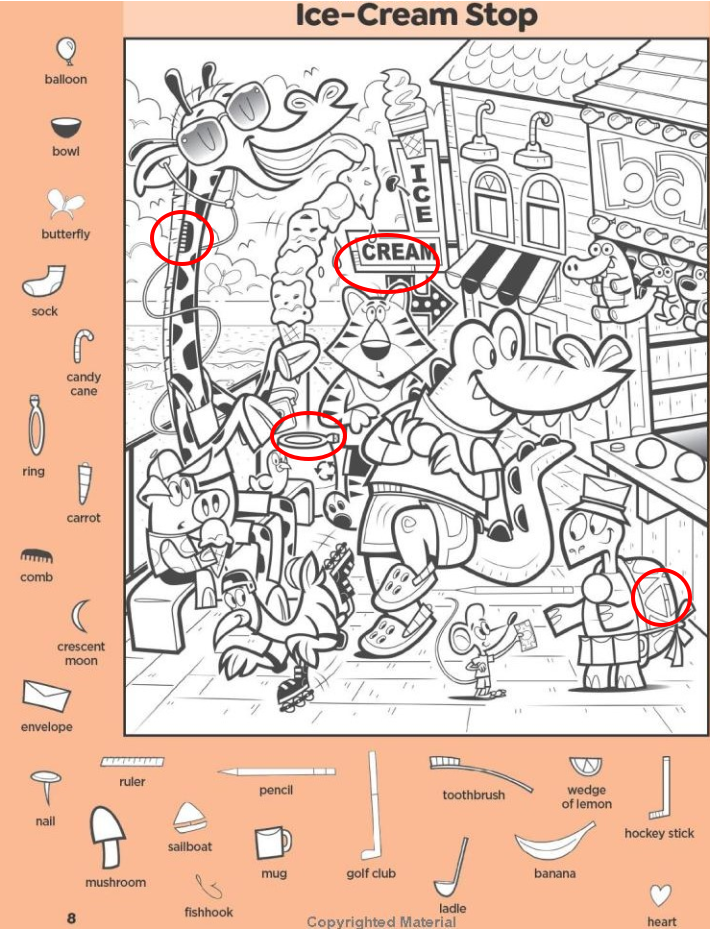
This Ice Cream Stop hidden object puzzle proves that engaging content does not need flashy colors or dramatic effects. It relies on thoughtful design and a deep understanding of human perception.
By blending a cheerful street scene with cleverly disguised everyday objects, the illustration transforms into an interactive challenge. It invites readers of all ages to slow down, search carefully, and enjoy the thrill of discovery.
You begin with curiosity. You continue with concentration. You finish with satisfaction.
And along the way, you realize that sometimes the sweetest rewards are not in the ice cream cones themselves, but in the details hidden quietly in plain sight.