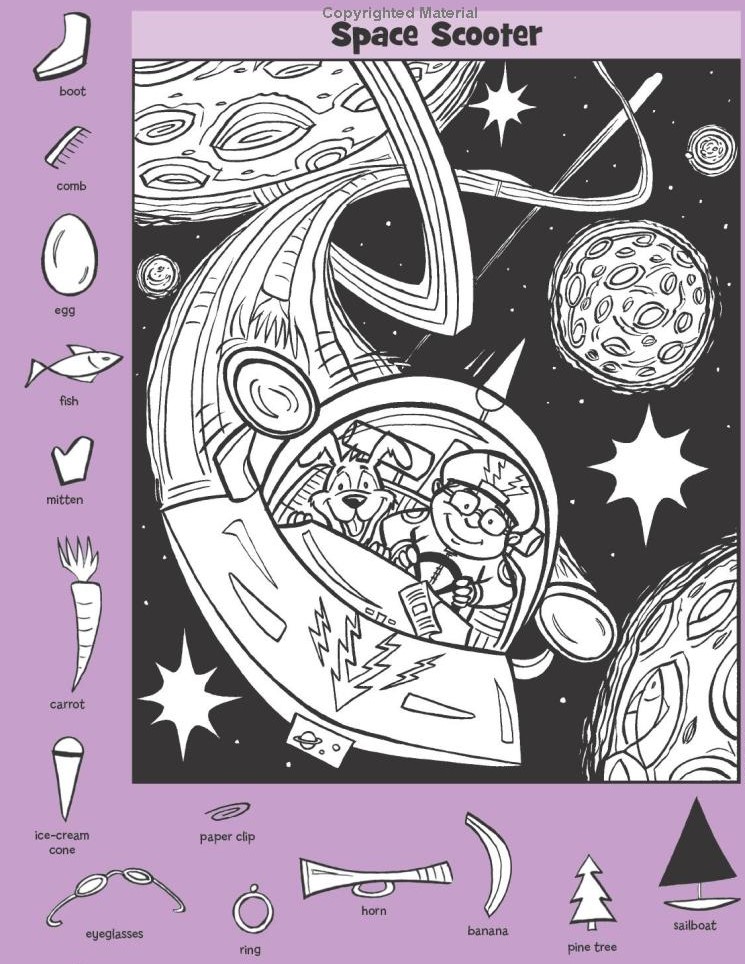
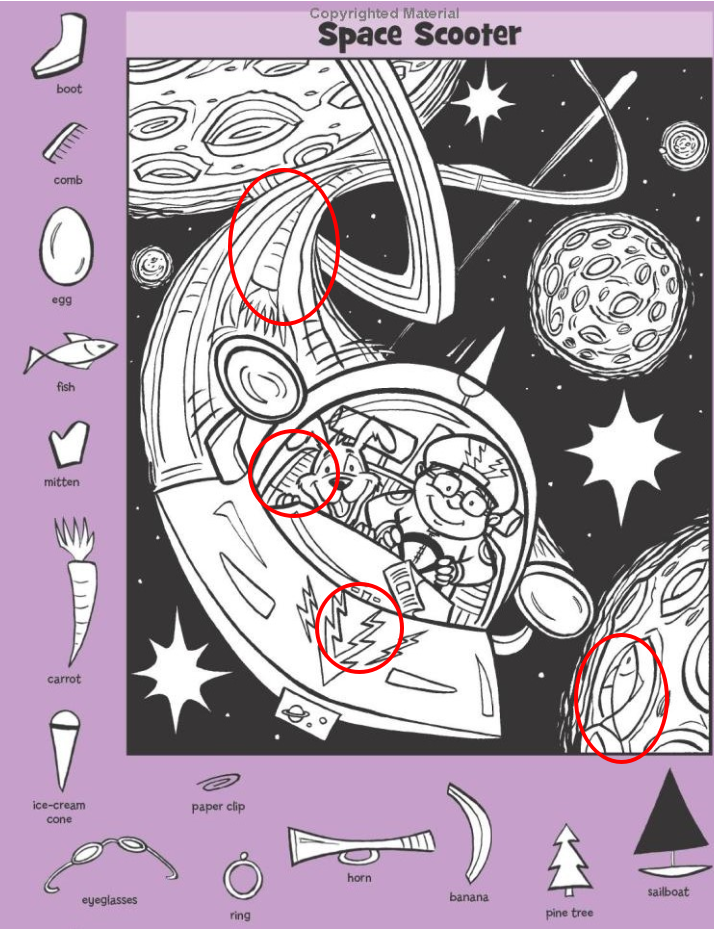
At first glance this image feels like a joyful trip through outer space. A cartoon spacecraft zooms between planets stars and swirling cosmic shapes while two cheerful characters ride inside like space explorers on a mission. It looks playful lighthearted and fun. But look closer and the real challenge reveals itself. This is not just a space scene. It is a hidden object puzzle that quietly dares you to slow down sharpen your focus and explore every corner of the universe on the page.
This kind of image works because it blends curiosity with challenge. You are not just looking at space. You are searching through it.
A space adventure that pulls you in instantly
Space has always captured the human imagination. Stars planets and endless darkness spark curiosity in both kids and adults. When a hidden object puzzle uses a space theme it immediately feels bigger than life.
Your brain switches into exploration mode. You are not just observing. You are traveling.
That sense of movement and discovery keeps attention locked in far longer than a static scene ever could.
Why the scooter style spaceship feels approachable
Instead of a complex realistic spacecraft the artist chose a friendly scooter like design. Rounded shapes smiling characters and playful lines remove intimidation and invite everyone in.
This makes the puzzle feel accessible even to young viewers while still offering enough complexity to challenge adults.
The design says this is fun not stressful.
Hidden objects that contrast with the cosmos
One of the smartest choices in this puzzle is the object list itself. A boot a comb an egg a fish a mitten a carrot an ice cream cone and more. These everyday items do not belong in space.
That contrast forces your brain to work harder.
You are not just spotting shapes. You are spotting something that feels out of place yet cleverly disguised.
Why black and white artwork raises the difficulty
Without color clues your eyes rely entirely on line shape and texture. The swirling patterns of planets and space debris create visual noise that hides objects in plain sight.
A banana curve might blend into an orbit. A horn shape might disguise itself as part of the ship. A pine tree could hide among abstract space forms.
This trains true observation rather than quick scanning.
How this puzzle builds visual intelligence
Hidden object puzzles like this strengthen pattern recognition and spatial awareness. You learn to separate foreground from background. You learn to rotate shapes mentally. You learn patience.
And because the scene feels playful your brain stays relaxed while working hard.
That combination is ideal for learning.
Why space themes work across age groups
Children love the adventure. Adults appreciate the cleverness. Teens enjoy the challenge without feeling talked down to.
Space is a neutral theme that does not exclude anyone.
That broad appeal makes this type of puzzle perfect for classrooms family activities or quiet solo time.
The joy of spotting the impossible
There is a special satisfaction in finally spotting an ice cream cone floating in outer space or a carrot hiding among stars. It feels like solving a visual joke.
Your brain rewards you with a small rush of delight.
That feeling keeps people going until every item is found.
Why puzzles like this encourage focus in a distracted world
Modern life trains us to skim. This image asks you to stop.
You cannot rush a hidden object puzzle. You must commit your attention fully. Even a few minutes of focused searching can calm the mind and reduce mental clutter.
It becomes a quiet break from noise and notifications.
A story hidden inside the image
Beyond the objects the illustration tells a story. Two characters traveling through space together. Smiling confident enjoying the ride.
It suggests teamwork curiosity and courage.
That subtle narrative adds emotional depth and makes the puzzle more memorable.
Why educators love hidden object scenes
Teachers and parents often use puzzles like this to support attention skills without pressure. There are no wrong answers only discoveries.
Children practice persistence without realizing it.
That makes learning feel natural and rewarding.
The design invites repeated play
Most people will miss at least one object on the first attempt. They step away then return with fresh eyes.
Suddenly the object appears where it always was.
That delayed success strengthens memory and satisfaction.
Why this puzzle feels timeless
There is nothing trendy or dated here. Space scooters playful explorers and simple line art age well.
This image will still feel engaging years from now.
That timeless quality increases its long term value.
A perfect balance of chaos and structure
The background feels busy with stars planets and curves. The object list provides structure and purpose.
That balance keeps the puzzle challenging but never overwhelming.
You feel guided not lost.
Why hidden object puzzles perform so well online
They invite interaction without requiring instructions. Viewers naturally lean in zoom in and engage.
They increase time spent on page and encourage sharing.
People love to challenge friends with a simple question like can you find them all.
Conclusion
This Space Scooter hidden object puzzle turns a playful cosmic illustration into a focused and rewarding visual adventure. By blending imaginative space imagery with cleverly disguised everyday objects it challenges attention builds patience and sparks curiosity across all ages. The friendly art style invites exploration while the black and white detail demands careful observation. In the end this puzzle proves that sometimes the best journeys are not about speed or distance but about slowing down looking closer and enjoying the joy of discovery one hidden object at a time.