A Charming Hidden Object Puzzle with Playful Rabbits That Trains Focus and Sparks Joy
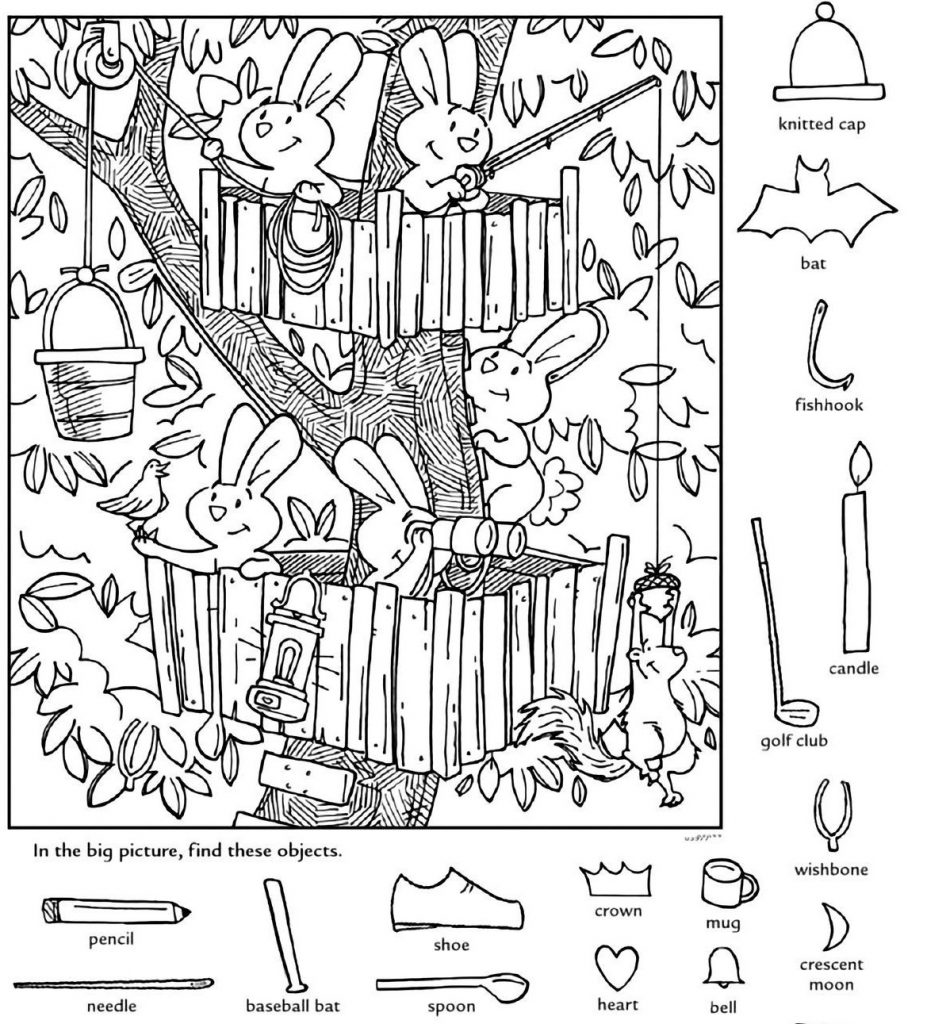
At first glance, this black-and-white illustration feels like it jumped straight out of a classic children’s storybook. Cute rabbits climb, peek, fish, and explore a tall tree filled with wooden platforms, ropes, buckets, and leafy branches. Everything looks cheerful, busy, and full of movement.
But this picture isn’t just a sweet scene—it’s a hidden object puzzle designed to challenge your eyes, stretch your attention, and reward patience. Tucked cleverly into the illustration are familiar objects that don’t quite belong, waiting for sharp eyes to notice them.
This combination of cuteness and challenge is exactly why hidden picture puzzles like this keep readers engaged, relaxed, and coming back for more.
A Lively Treehouse Scene Full of Bunny Adventures
The heart of the image is a tall tree transformed into a multi-level playground. Wooden platforms wrap around the trunk like steps in a spiral tower. Rabbits pop up everywhere—some fishing, some watching birds, others peeking through binoculars or climbing with excitement.
The leaves create a natural frame, filling the image with texture and movement. Buckets hang from ropes, small animals appear in unexpected places, and every corner feels alive.
It’s busy—but in a fun, story-driven way. And that busyness is exactly what makes it perfect for hiding objects.
Why Hidden Object Puzzles Are So Addictive
Hidden picture puzzles aren’t just games—they’re psychological magnets.
Your Brain Loves the Search
Every time you recognize a familiar shape hidden inside a complex scene, your brain gives you a small hit of satisfaction. It’s the same feeling you get when you solve a riddle or spot something others missed.
They Turn Looking Into Doing
You’re not passively viewing an image. You’re actively scanning, comparing, and analyzing. The picture becomes an experience, not just an illustration.
They Slow You Down in a Good Way
In a fast-scrolling world, hidden object puzzles encourage patience. You stop rushing. You start noticing details. And that shift feels surprisingly calming.
The Cleverly Hidden Objects That Test Your Observation
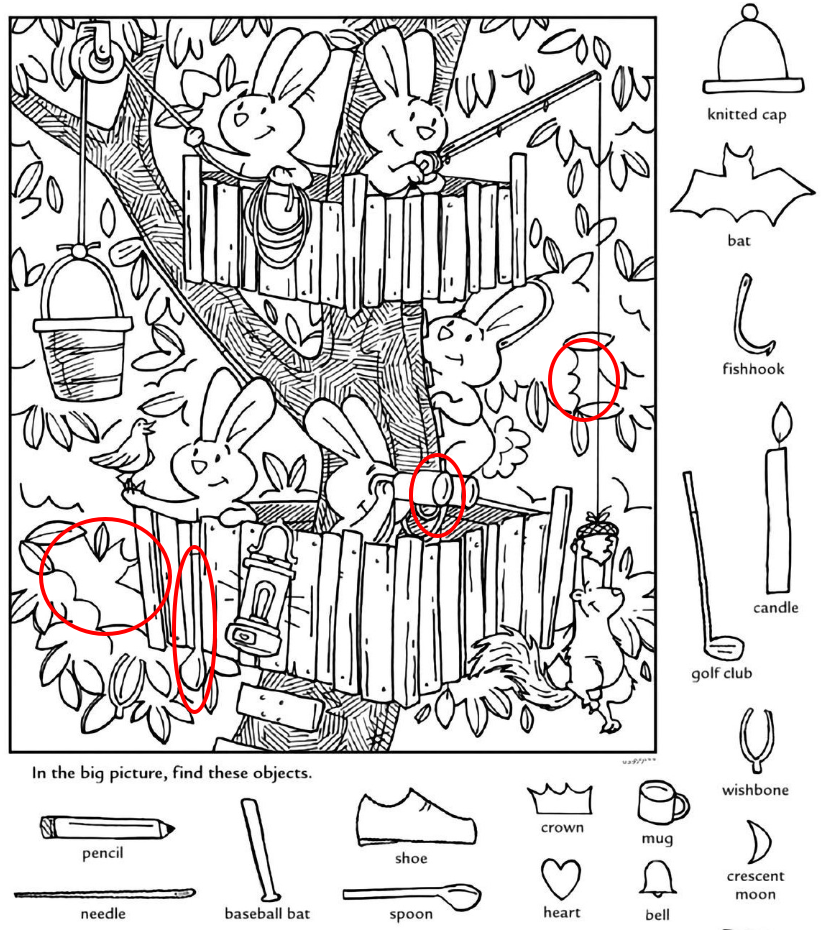
This puzzle challenges you to find a variety of everyday items hidden within the scene. These objects are familiar, but they’ve been carefully disguised using lines, shadows, and natural shapes.
Everyday Items in Disguise
Objects like a pencil, needle, shoe, spoon, mug, crown, and bell blend into wooden planks, branches, or ropes. Their outlines remain just recognizable enough to spark that “wait a second…” feeling.
Playful Shapes That Blend with Nature
Items such as a heart, crescent moon, bat shape, wishbone, and knitted cap echo the curves of leaves and bark. They feel like they belong—even when they don’t.
Designed to Challenge, Not Frustrate
Nothing feels impossible. Each object becomes clear once you truly see it, which makes the discovery satisfying rather than stressful.
Why This Puzzle Works for Both Kids and Adults
This image isn’t just cute—it’s smart.
For Kids: Learning Through Play
- Improves attention to detail
- Builds patience and focus
- Strengthens visual recognition
- Encourages problem-solving
Kids feel like they’re exploring a bunny world, not practicing skills—and that’s when learning sticks.
For Adults: A Gentle Mental Workout
- Sharpens concentration
- Reduces stress
- Encourages mindfulness
- Provides a relaxing break
It’s like a quiet walk in the woods for your brain.
The Role of Storytelling in Hidden Picture Puzzles
What makes this image especially engaging is its sense of story.
Characters Create Distraction—and Fun
The rabbits aren’t just decoration. Their actions pull your attention away from the hidden objects, making the puzzle more challenging in a playful way.
The Scene Feels Alive
Fishing lines, ropes, binoculars, birds, and buckets all suggest movement. Your eyes naturally follow these mini stories, which helps hide objects in plain sight.
This storytelling layer turns the puzzle into an adventure instead of a test.
Tips to Enjoy Hidden Object Puzzles More
If you want to get better—or just enjoy the process more—try these simple strategies.
Scan in Sections
Break the image into small areas and explore one section at a time. This keeps your search organized and less overwhelming.
Look for Familiar Outlines
Forget the object name. Focus on shapes—curves, straight lines, symmetry—that feel slightly out of place.
Change Perspective
Step back, zoom in, or take a short break. A fresh look often reveals objects instantly.
Color as You Search
Adding color can separate shapes visually and make hidden objects easier to spot.
Why Hidden Picture Content Performs So Well Online
From an SEO and monetization perspective, puzzles like this are incredibly effective.
High Time-on-Page
Readers don’t skim. They stay, search, and re-check the image—sending strong engagement signals to search engines.
Family-Friendly and Advertiser-Safe
This content appeals to kids, parents, teachers, and casual readers, making it ideal for high-value advertising.
Encourages Interaction
People love sharing how many objects they found or which ones were hardest. That interaction boosts reach and return visits.
Evergreen Value
Hidden object puzzles never go out of style. This content remains relevant and engaging year after year.
Conclusion: A Whimsical Rabbit Puzzle That Rewards Curiosity
This charming hidden object puzzle transforms a simple bunny-filled illustration into a rich, engaging experience. With its playful characters, cleverly disguised objects, and storybook atmosphere, it invites viewers to slow down and truly explore.
Whether you’re sharing it with kids, using it as a relaxing brain break, or enjoying the quiet challenge on your own, this puzzle proves that the best discoveries often hide in plain sight—waiting patiently for curious eyes to find them.