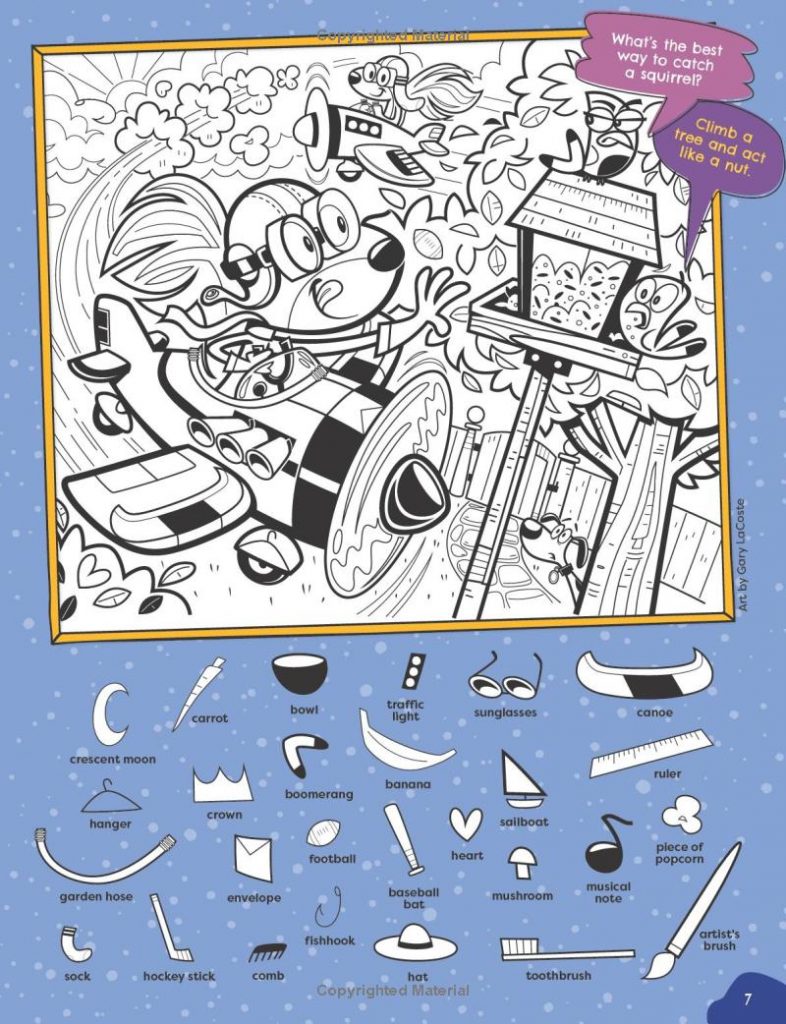
One look at this image and your brain instantly perks up. A wild cartoon scene explodes with motion, personality, and playful chaos. A squirrel zips through the air. A dog pilots a roaring contraption. Trees bend, leaves fly, and tiny details hide everywhere. At the same time, a bold challenge quietly dares you to find dozens of cleverly hidden objects scattered across the scene. This is not just a picture. It is a full blown hidden picture puzzle adventure designed to grab attention and refuse to let it go.
This kind of puzzle works because it blends humor, storytelling, and visual complexity into one irresistible experience. You do not just look at it. You enter it.
Why action packed cartoon scenes work so well for hidden picture puzzles
Busy scenes are a gift to puzzle designers. Motion creates distraction. Distraction creates opportunity. In this image, everything feels alive. The squirrel leaps. The vehicle twists through the air. Characters react with exaggerated expressions. Leaves and clouds swirl in every direction.
Your eyes try to follow the action first. That is natural. But while your attention tracks movement, hidden objects quietly camouflage themselves inside curves, shadows, and repeated shapes. A banana might echo a tail. A ruler could blend into a fence. A musical note might hide among leaves.
This constant competition for attention forces your brain to slow down and switch strategies. Instead of watching the story, you start scanning the details. That shift is where the puzzle truly begins.
The power of humor in keeping users engaged longer
This image does not take itself seriously. That is a huge advantage. The humor is visual, light, and universal. A dog chasing a squirrel in a flying machine feels absurd in the best way. Speech bubbles add playful jokes. Characters react dramatically.
Humor lowers frustration. When you miss an object three times in a row, you do not feel annoyed. You smile and keep going. That emotional safety net keeps users engaged far longer than serious or sterile puzzles.
When people enjoy the tone, they forgive the difficulty. They lean in instead of backing out.
How hidden object variety increases challenge without overwhelm
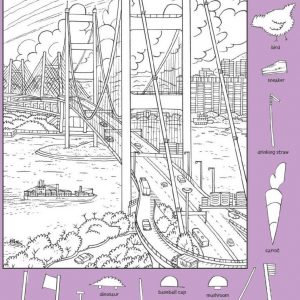
Look at the object list and you will notice something smart. The items vary wildly in shape and meaning. Crescent moon. Crown. Canoe. Toothbrush. Popcorn. Baseball bat. Heart.
This variety prevents pattern fatigue. Your brain cannot lock into one search style. You have to stay flexible. Curved objects require a different scan than straight ones. Familiar items trick your expectations. Unusual items hide in plain sight.
Because each object demands a slightly different way of looking, the puzzle stays fresh even after several minutes of searching.
Why line art plus selective color boosts visual disguise
The main scene uses detailed line art with selective shading and color accents. This hybrid style is perfect for hiding objects. Lines overlap. Shapes repeat. Visual noise increases just enough to challenge the eye without causing confusion.
Hidden objects often share the same line thickness and texture as the environment. That makes them feel native to the scene instead of pasted on. Your brain registers them as background instead of targets.
That subtle camouflage is what separates satisfying puzzles from frustrating ones.
Why this puzzle appeals to both kids and adults
Kids love the story. The squirrel, the flying machine, the expressive characters all feel like a cartoon they want to watch. Finding objects becomes a game layered on top of that story.
Adults love the challenge. The sheer number of hidden items turns this into a real test of observation. It feels like a mental workout disguised as entertainment.
Parents and children can sit together and search side by side. Teachers can use it for quiet focus activities. Adults can enjoy it alone as a playful brain reset.
That cross generational appeal is incredibly powerful for content performance.
How puzzles like this naturally increase dwell time
You cannot rush this image. The more you find, the more you want to find. Each discovery delivers a small dopamine hit that pushes you forward.
People zoom in mentally even if they do not physically zoom. They revisit areas they already checked. They second guess shapes. They compare outlines.
This behavior creates long session times without any tricks. The content earns attention instead of demanding it.
Why advertisers love this type of content environment
From an advertising perspective, this is premium territory. The content is family friendly. The tone is positive. The engagement is deep and voluntary.
Users stay focused and relaxed, which increases ad viewability and interaction potential. Because the puzzle appeals to a wide audience, advertisers from multiple categories feel comfortable placing ads alongside it.
That combination often leads to higher RPM without sacrificing user trust.
The storytelling layer that turns a puzzle into an experience
This image tells a story even before you start searching. Who is chasing who. Why is the squirrel airborne. What is about to happen next.
While you search for objects, that story keeps playing in your head. You notice new details. A character expression you missed before. A hidden joke in the background.
That layered experience makes users more likely to return for similar puzzles. They do not just want another challenge. They want another world to explore.
Why difficulty feels fair instead of punishing
This puzzle is challenging, but it feels honest. Objects hide cleverly, not cruelly. They blend with intention, not deception.
When you finally spot a difficult item, the reaction is satisfaction, not relief. You feel clever, not lucky. That emotional payoff matters.
Fair difficulty builds trust. Trust builds loyalty.
Conclusion
This hidden picture puzzle squirrel chase adventure delivers everything great visual content should. It tells a story, sparks laughter, challenges perception, and rewards patience. Through energetic cartoon action, clever object camouflage, and playful humor, it transforms a single image into a long lasting interactive experience. Whether you approach it for fun, focus, or family time, this puzzle proves that the best content does not shout for attention. It invites you in, keeps you searching, and leaves you smiling long after the final object is found.