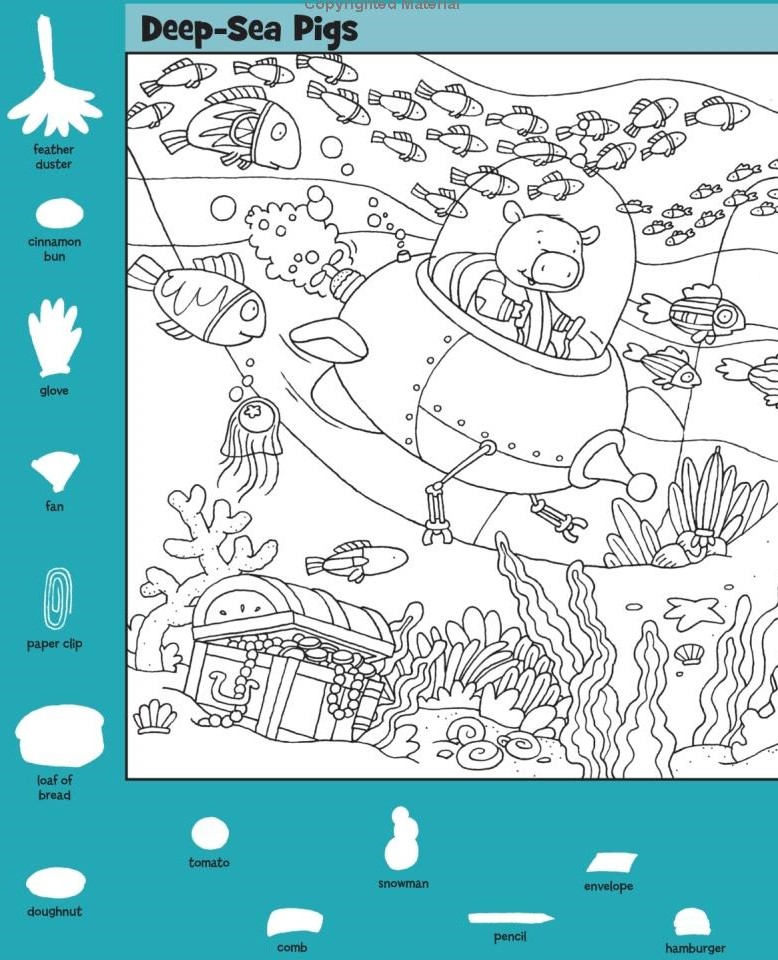
At first glance, this image feels like a playful underwater dream. A cheerful pig pilots a tiny submarine through a bustling ocean world filled with fish, coral, treasure, and motion. But the longer you look, the more the scene reveals its secret. This is not just an illustration. It is a visual puzzle. A hidden object adventure disguised as a whimsical deep sea journey.
This image invites you to slow down, lean in, and explore every corner of the ocean floor. What starts as a cute cartoon quickly turns into a challenge for your eyes and your imagination.
A whimsical twist on deep sea exploration
The idea of a pig exploring the deep ocean already sets a lighthearted tone. It flips expectations in the best way possible. Instead of a serious submarine pilot or a scientific expedition, we get a smiling pig calmly navigating underwater currents.
That playful contrast instantly makes the scene approachable. It lowers the barrier for engagement. You do not need to understand marine biology or deep sea technology. You just need curiosity.
This sense of fun pulls viewers in before they even realize they are part of a puzzle.
A world packed with detail
The ocean in this illustration is alive. Schools of fish swim in patterns. Jellyfish drift by like floating lanterns. Coral and sea plants twist and stretch across the seabed. Even the treasure chest peeks out with quiet mystery.
Nothing feels empty. Every inch of the image carries visual information. That density is intentional. It creates the perfect environment for hidden objects to blend in naturally.
Your eyes bounce from one detail to another, never quite settling, always searching.
The thrill of hidden objects
Hidden object scenes tap into a deep and satisfying human instinct. We love to find things. We love the moment when chaos suddenly makes sense.
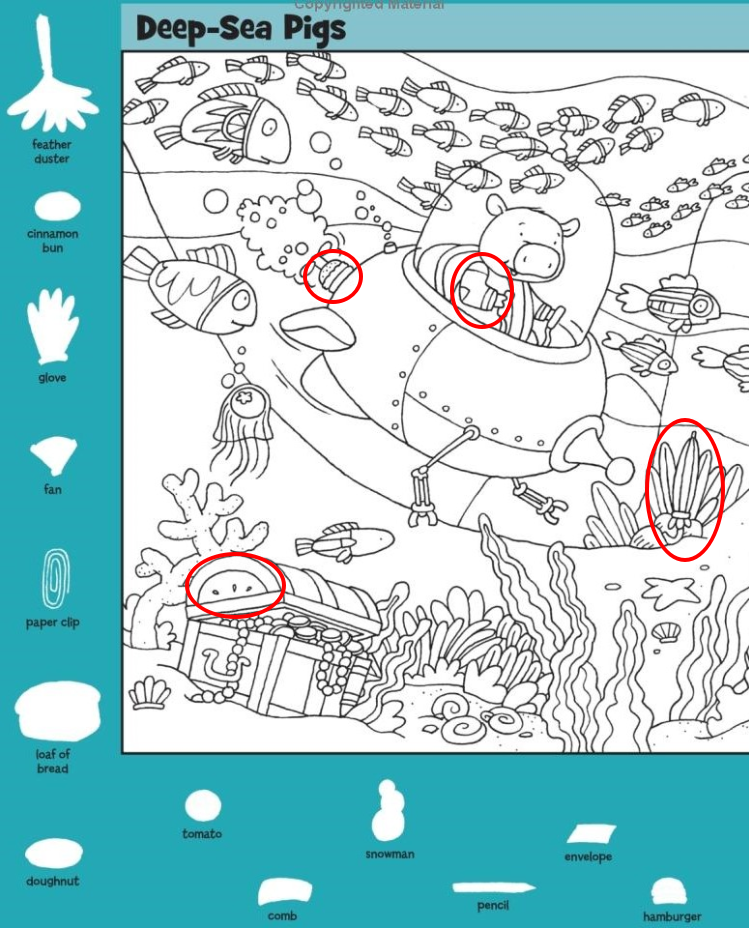
In this image, everyday items like a comb, a pencil, or a doughnut hide among sea creatures and underwater shapes. They do not scream for attention. They whisper.
That whisper is what keeps you engaged. You know something is there, but you have to earn the discovery.
Why the brain loves puzzles like this
Your brain treats visual puzzles like a game. Each found object releases a small sense of reward. It feels good. It feels calming. It feels focused.
This underwater scene encourages sustained attention without pressure. There is no timer. No score. Just exploration.
That makes the experience relaxing instead of stressful, which is why scenes like this appeal to both kids and adults.
A gentle blend of learning and play
While the image is playful, it also introduces viewers to ocean elements. Fish varieties, coral structures, and underwater movement all appear naturally.
Children absorb these details without effort. Adults appreciate the craftsmanship. Learning happens quietly in the background, wrapped in fun.
This balance between entertainment and subtle education gives the image lasting value.
The submarine as a storytelling anchor
The pig in the submarine is more than a character. It is a guide. Your eyes often return to it before branching out again to search nearby areas.
The round shape of the submarine contrasts with the organic curves of the ocean, making it a visual anchor. It grounds the scene and helps organize the visual chaos.
From there, the story expands outward, like ripples in water.
Treasure and curiosity go hand in hand
The treasure chest on the ocean floor adds another layer of intrigue. It hints at discovery beyond the puzzle itself. It suggests stories untold.
Treasure has always symbolized curiosity, reward, and exploration. Including it reinforces the idea that searching is worthwhile, even if the reward is simply the joy of finding.
It mirrors the experience of the viewer perfectly.
Why underwater scenes feel magical
The ocean represents mystery. We know less about the deep sea than we do about outer space. That sense of the unknown makes underwater imagery endlessly fascinating.
When you combine that mystery with playful art and puzzles, the effect multiplies. You feel like an explorer in a safe, colorful world.
The scene gives permission to wonder without fear.
Simple lines, strong imagination
The illustration style uses clean lines and clear shapes. Nothing feels overly complicated, yet everything feels intentional.
This simplicity leaves room for imagination. Your mind fills in movement, sound, and emotion. You can almost hear bubbles rising and fish darting past.
That balance between clarity and creativity is what makes the image so effective.
A shared experience across ages
Children love the silly pig and the challenge of finding objects. Adults enjoy the calm focus and clever design.
This makes the image ideal for shared moments. A parent and child can search together, pointing things out, laughing, and celebrating small victories.
Those shared moments are often what people remember most.
Why scenes like this hold attention longer
Images that ask something of the viewer always perform better than images that simply display information. This scene invites participation.
Instead of scrolling past, you stop. You look. You search. Time stretches a little.
That extended engagement is not accidental. It is the result of thoughtful visual storytelling.
Imagination beneath the surface
Beyond the puzzle, the image reminds us of something important. Wonder still exists in simple things. A drawing can become a journey. A pig can become an explorer. An ocean can hide a comb.
You just have to look closely enough.
Conclusion
This deep sea pig illustration transforms a simple underwater scene into a captivating experience of discovery and imagination. Through playful characters, rich detail, and cleverly hidden objects, it invites viewers to slow down and engage fully. The image blends curiosity, relaxation, and fun into a single visual story that appeals across ages. By turning exploration into a gentle game, it reminds us that even the most whimsical scenes can spark focus, joy, and a sense of adventure when we take the time to truly look.