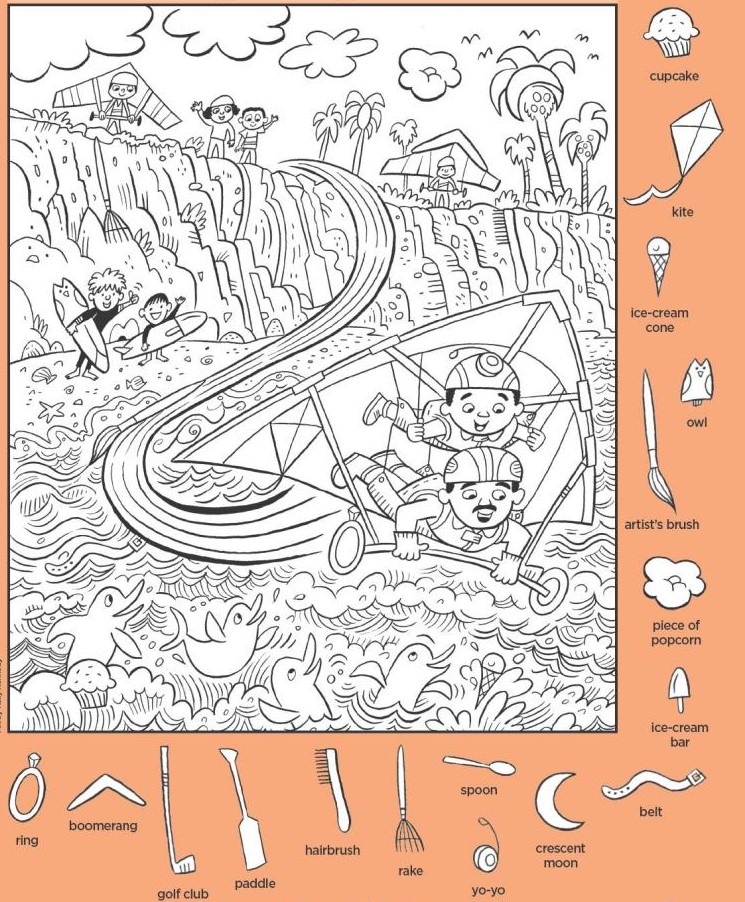
At first glance, this image explodes with motion. Water crashes. A raft tilts. Kids paddle hard while dolphins leap nearby and cliffs tower above. It feels loud even in silence. This is not a calm scene. It is a visual adrenaline rush. And hidden inside that rush is a clever find it puzzle that challenges the eyes and rewards patience.
This white water rafting find it illustration turns adventure into a brain game. It blends excitement with focus, chaos with structure, and fun with skill building. That balance is exactly why puzzles like this keep kids and adults hooked longer than expected.
Why action packed scenes make better hidden object puzzles
Busy scenes raise the difficulty naturally. When everything moves, nothing stands still. The eye cannot relax. It has to work.
In this rafting scene, the water swirls in layered lines. Characters overlap. Objects hide inside motion. A paddle might echo the curve of a wave. A crescent moon shape might disguise itself as foam. The brain must slow down and sort signal from noise.
That challenge is the magic.
Why adventure themes keep kids engaged longer
Adventure triggers curiosity. It asks what happens next even in a still image.
Kids love scenes where something big is happening. Rafting down rapids feels daring and playful. It sparks imagination and emotional involvement. When kids care about the scene, they care about solving it.
That emotional hook increases focus without feeling like work.
Why black and white line art sharpens visual skills
Without color, shape becomes everything.
This image relies on outlines, curves, and negative space. The brain cannot lean on color shortcuts. It must analyze form and placement. That strengthens visual discrimination and attention to detail.
This style works especially well for learning activities because it forces deeper processing.
Why water is the perfect hiding place
Water patterns are repetitive but unpredictable. That makes them ideal for hiding objects.
A spoon shape can disappear into a ripple. A ring can blend into a bubble. A brush can hide among splashes. The water becomes both distraction and camouflage.
The more you look, the more you realize how clever the hiding really is.
Why cliffs and background details matter
The cliffs are not just scenery. They are part of the puzzle.
Textures in the rock create false edges. Small shapes hide in cracks. Background characters add visual noise that distracts the eye from the object list.
Great puzzles use the entire canvas. Nothing is wasted.
Why this puzzle encourages persistence
This is not a one glance win.
Kids may find one or two objects quickly. Then the hunt slows. They must revisit areas they already scanned. That teaches persistence and flexible thinking.
They learn that success sometimes requires starting over with fresh eyes.
Why object variety increases difficulty fairly
The hidden items come from different categories. Tools. Toys. Food. Nature shapes.
That variety prevents pattern spotting shortcuts. The brain cannot lock into one search strategy. It must adapt constantly.
This keeps the puzzle challenging but fair.
Why rafting imagery appeals to multiple ages
Younger kids enjoy the characters and animals. Older kids enjoy the challenge. Adults enjoy proving they can still find everything.
Adventure scenes do not feel childish or boring. They invite everyone in.
That broad appeal makes this puzzle perfect for families, classrooms, and shared activities.
Why movement guides the eyes naturally
The raft creates a strong diagonal line through the image. The water flows in curves that guide eye movement. Characters point and paddle in specific directions.
These visual cues subtly guide the search without giving answers away. Good design leads without spoiling.
Why hidden object puzzles support cognitive development
These puzzles train attention control, visual memory, and spatial awareness.
Kids learn to hold an object shape in mind while scanning complex environments. That skill transfers to reading, math, and problem solving.
All of this happens while they feel like they are playing.
Why this puzzle rewards slow looking
Fast scanning misses details. This image rewards careful observation.
When kids slow down, they notice patterns. They recognize repeated shapes. They learn to question assumptions.
That habit of slow looking builds stronger thinking skills over time.
Why animals add emotional warmth
The dolphins and birds add joy and movement. They soften the intensity of the rapids.
Animals draw attention and provide visual breaks. They also add extra hiding opportunities.
Emotionally positive elements keep frustration low even when the puzzle is challenging.
Why printable puzzles still matter
This puzzle works beautifully on paper. Kids can circle objects. Teachers can reuse it. Parents can print it for quiet time.
Printable activities reduce screen fatigue while still engaging the brain deeply.
That balance matters more than ever.
Why this puzzle supports independent play
Kids do not need instructions once they understand the goal. They control the pace. They decide when they are done.
That independence builds confidence and intrinsic motivation.
They are not solving for a reward. They are solving for satisfaction.
Why repeated attempts improve performance
Kids often miss objects the first time. When they return later, they find them faster.
That improvement reinforces learning. It shows progress is possible.
Each attempt strengthens visual memory and strategy.
Why find it puzzles reduce anxiety
Focused searching calms the nervous system. It creates a gentle tunnel of attention.
Even in an action scene, the act of searching brings calm. The brain locks into one task.
That makes these puzzles surprisingly soothing.
Conclusion
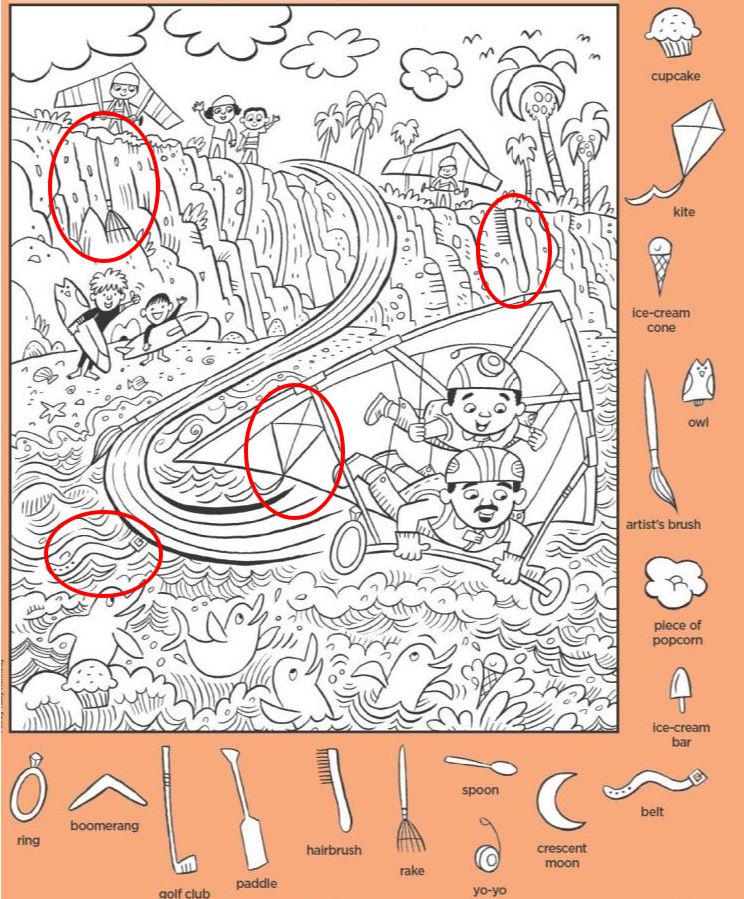
This white water rafting find it puzzle transforms a thrilling outdoor adventure into a rich visual challenge. Through dynamic movement, clever line art, and thoughtfully hidden objects, it sharpens focus, builds patience, and sparks imagination. The scene feels alive, the challenge feels fair, and the reward feels earned. In a single image, it delivers excitement, learning, and satisfaction all at once, proving that the best puzzles are the ones that pull you in and make you forget everything else while you search.