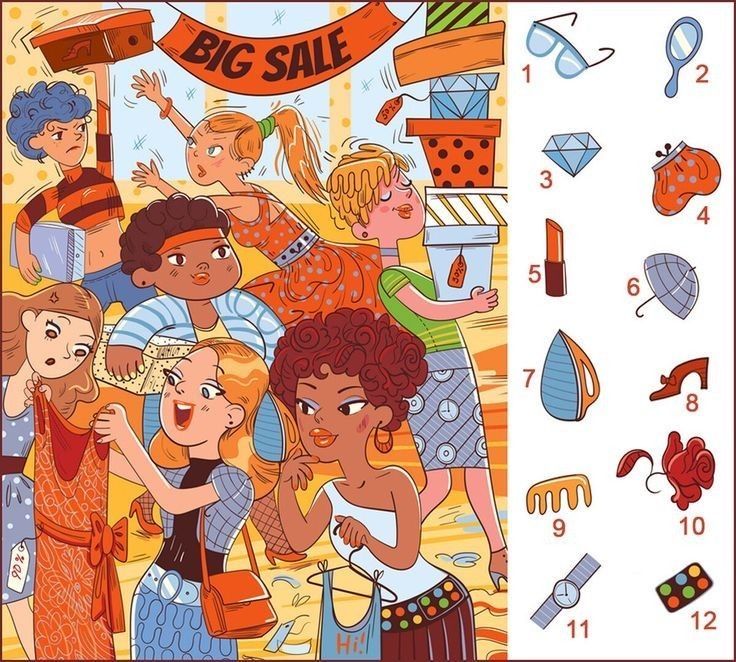
At first glance, this colorful illustration looks like pure shopping chaos. A bold banner reading Big Sale hangs overhead. Shoppers rush through racks and displays. Arms stretch upward for boxes. Dresses are pulled from hangers. Bags swing from shoulders. Excitement fills the air.
It feels loud. Fast. Competitive.
But look to the right side of the image and you realize something important. This is not just a fashion sale scene. It is a hidden object puzzle.
Twelve small fashion and beauty items appear in a numbered list. Glasses. A hand mirror. A diamond. A handbag. Lipstick. A hat. An iron. A high heel. A comb. A rose. A wristwatch. A makeup palette.
Your mission is simple. Find all twelve hidden items inside the shopping frenzy.
Simple never means easy.
Why Hidden Object Puzzles Capture Attention Instantly
Hidden object games succeed because they transform an image into a challenge. Instead of casually admiring the illustration, you become an investigator. You scan every corner. You compare shapes to the item list. You double check details you almost ignored.
In this Big Sale scene, the energy makes the search even more exciting. Shoppers move quickly. Boxes stack high. Dresses flow with movement. The entire composition feels dynamic.
That complexity creates perfect camouflage.
Your brain must sort through movement and emotion to isolate small shapes. That mental shift keeps you engaged far longer than a typical image would.
The Psychology Behind Visual Search in Busy Scenes
When you see a crowded shopping scene, your brain processes it in broad categories. People. Clothes. Boxes. Accessories. Signs.
You interpret the image as one complete story.
Hidden object puzzles disrupt that natural grouping. Instead of seeing a dress as a dress, you start examining its folds. Instead of viewing a bag as a bag, you analyze its outline. Instead of admiring a hairstyle, you question whether a comb hides within it.
Your brain moves from storytelling mode to detail analysis mode.
That shift increases focus and cognitive engagement.
How the Fashion Theme Elevates the Challenge
The fashion sale setting makes this puzzle especially clever. Many of the hidden objects belong naturally in a shopping environment. A handbag fits perfectly. Lipstick makes sense. A wristwatch blends easily. A high heel looks right at home.
Because these objects belong in the scene, they do not feel out of place.
That familiarity increases difficulty.
A diamond shape might hide in a pattern. A hand mirror could disguise itself among accessories. A makeup palette might blend into a colorful design. A rose could merge with fabric details.
Your brain must differentiate between what belongs naturally and what is intentionally hidden.
Why Chaos Makes Camouflage Stronger
The overlapping figures and layered objects create visual density. Dresses overlap. Arms cross. Bags swing. Boxes stack.
Every one of these elements offers potential hiding spots.
A comb might align with hair texture. A hat could resemble a piece of folded clothing. An iron might blend into angular shapes of stacked items. Glasses could hide among facial features or accessories.
The more chaotic the environment, the easier it becomes to conceal additional forms.
Your challenge is to slow down inside the chaos.
Why This Puzzle Appeals to a Broad Audience
Shopping scenes resonate with a wide audience. Fashion lovers enjoy recognizing trendy elements. Casual viewers appreciate the humor of exaggerated sale frenzy. Younger audiences engage with the vibrant colors and expressive faces.
The hidden object format adds universal appeal. Anyone can participate regardless of age or background.
Friends can challenge each other to find all twelve items faster. Families can turn it into a group activity. Social media users can compare answers in comments.
This organic interaction increases engagement naturally.
The Engagement Power of Interactive Visual Content
From a digital content perspective, puzzles like this significantly increase time spent on page. Readers cannot skim. They must pause and concentrate.
They move back and forth between the object list and the illustration. They revisit areas they thought were clear. They examine shapes from multiple angles.
This prolonged attention improves user experience and builds deeper connection.
Interactive visual challenges create memorable moments.
How Hidden Object Games Strengthen Focus
Beyond entertainment, hidden object puzzles train the brain. They encourage pattern recognition. They sharpen attention to detail. They improve visual discrimination.
In everyday life, we often overlook small details because we rush. This puzzle forces you to slow down and analyze.
That skill transfers into reading, problem solving, and observation.
The shopping scene becomes more than playful chaos. It becomes a mental exercise.
The Satisfaction of Completing the List
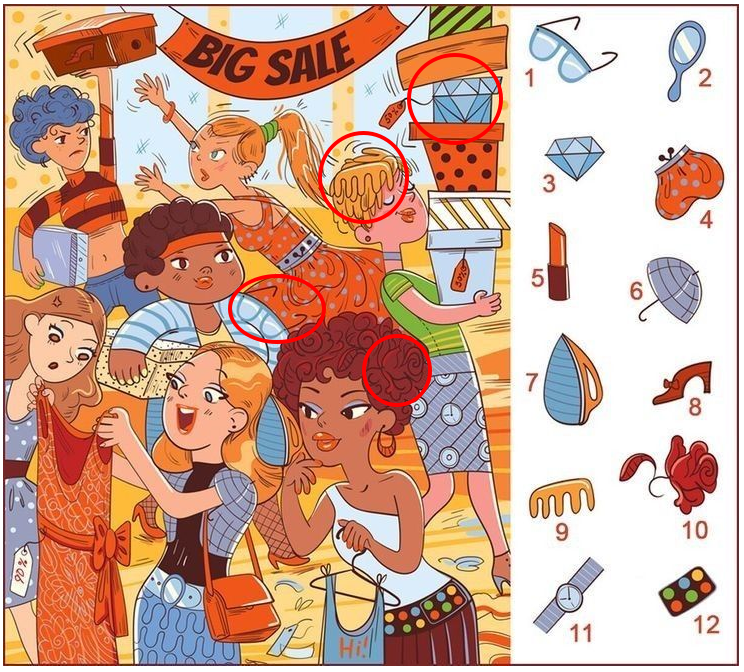
As you locate each hidden item, you feel small bursts of accomplishment. You find the lipstick tucked cleverly into the scene. You identify the wristwatch disguised among accessories. You finally spot the elusive diamond.
Each discovery builds momentum.
When you complete all twelve items, the satisfaction feels earned.
You navigated chaos. You focused under pressure. You solved the visual riddle.
Conclusion
This Big Sale hidden object puzzle proves that engaging content does not require dramatic effects or complicated rules. It relies on thoughtful design, vibrant storytelling, and clever visual integration.
By blending a high energy shopping scene with a twelve item search challenge, the illustration invites viewers to slow down and observe carefully. It transforms fashion frenzy into an interactive brain teaser that rewards patience and sharp eyes.
You begin with curiosity. You continue with concentration. You finish with satisfaction.
And along the way, you realize that sometimes the best deals are not hanging on the rack. They are hidden quietly in the details, waiting for you to find them.