What could be better than a sunny day at the beach? Kids laughing, waves rolling in, sandcastles rising like tiny kingdoms, and colorful beach toys scattered across golden sand. Now imagine turning that joyful seaside scene into an engaging hidden object puzzle that sharpens the mind while delivering pure summer fun.
That’s exactly what this vibrant beach illustration offers.
At first glance, it looks like a cheerful summer vacation moment. But look closer, and you’ll discover a cleverly designed visual brain teaser packed with hidden objects waiting to be found.
Let’s dive into why this beach-themed hidden object puzzle is more than just a playful picture—it’s a powerful cognitive workout wrapped in sunshine.
Why Beach-Themed Hidden Object Puzzles Are So Addictive
There’s something instantly uplifting about a beach scene. Bright colors. Playful energy. Movement everywhere. Your eyes naturally explore every corner.
That visual richness makes it the perfect environment for a hidden object challenge.
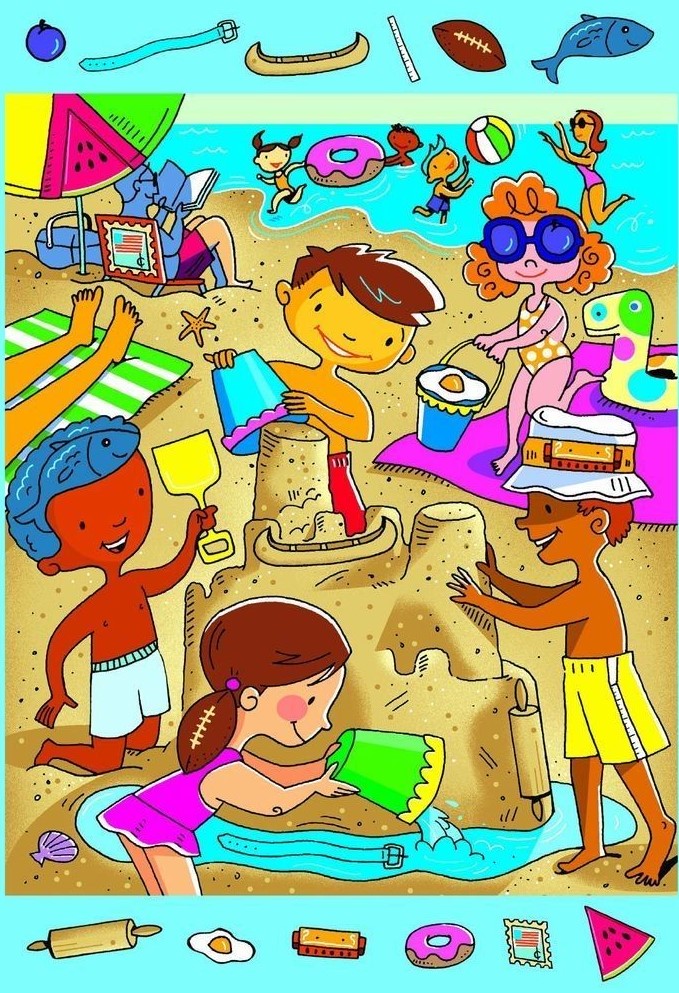
In this scene, children build sandcastles with buckets and shovels. One child pours water into a sandy moat. Another carefully shapes a tower. In the background, families relax under umbrellas while kids splash in the ocean with inflatable rings and beach balls.
But hidden among these cheerful details are everyday objects cleverly blended into the scene.
Your task? Find them all.
The vibrant setting keeps your brain engaged longer because there’s so much happening visually. Each new discovery feels like uncovering treasure in the sand.
How Hidden Object Games Improve Brain Function
Hidden object puzzles aren’t just entertaining—they’re mentally stimulating.
When you search for specific shapes like a rolling pin, fried egg, donut, stamp, watermelon slice, belt, football, fish, or ruler, your brain activates multiple cognitive processes at once.
You strengthen:
Visual scanning skills
Attention to detail
Pattern recognition
Memory recall
Problem-solving strategies
You’re not passively looking at a picture. You’re analyzing it.
Your brain shifts into detective mode. You compare shapes. You question shadows. You trace outlines. You eliminate distractions.
And that kind of mental workout builds sharper focus over time.
The Sandcastle Scene: A Visual Playground of Detail
The central focus of the image features children building sandcastles. Buckets tilt. Water flows into carved trenches. Hands carefully mold wet sand into towers.
This creative energy mirrors the puzzle-solving process itself.
Just like building a sandcastle requires patience and precision, finding hidden objects demands careful observation.
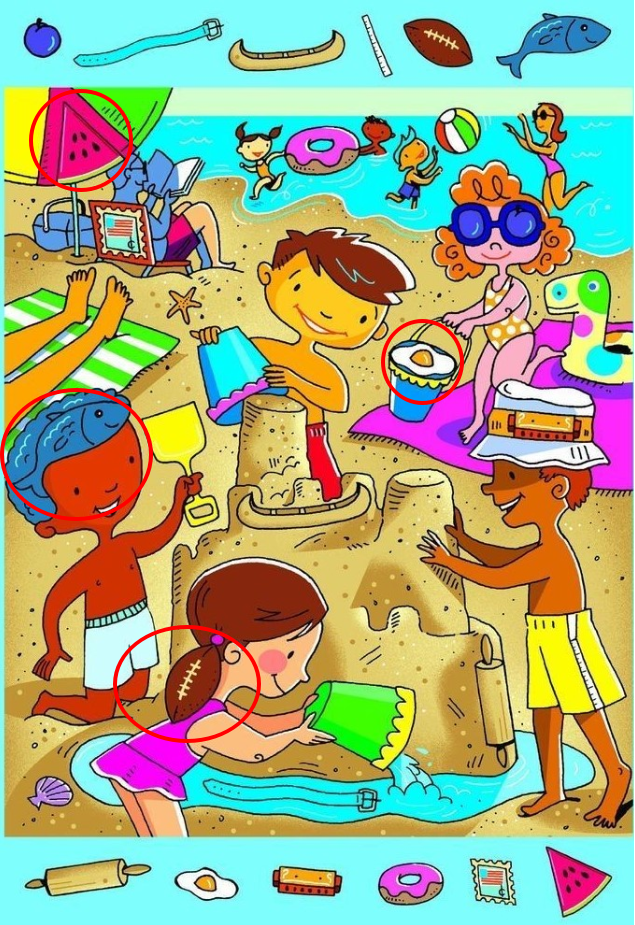
Notice how beach toys, floating inflatables, and picnic items scatter across the sand. These elements provide natural camouflage for hidden shapes. A watermelon slice might blend with a beach umbrella design. A stamp might disguise itself within patterns on clothing. A fish shape might merge into waves or shadows.
The playful chaos makes the challenge exciting.
Family-Friendly Fun That Encourages Screen-Free Engagement
In a world dominated by fast-moving digital entertainment, hidden object puzzles offer a refreshing alternative.
This beach illustration encourages slow, intentional observation. It invites families to sit together and collaborate.
Parents can ask, “Did you find the donut yet?”
Kids can shout, “I see the football!”
That shared experience creates connection.
Unlike many fast-paced games, this activity rewards patience. There’s no timer. No pressure. Just curiosity and discovery.
It’s the perfect printable activity for summer vacations, classrooms, or quiet afternoons at home.
Why Bright, Colorful Designs Increase Engagement
Color psychology plays a powerful role in attention. Bright blues, yellows, and pinks naturally draw the eye. The ocean’s deep turquoise contrasts with warm golden sand. Beach balls pop with vibrant stripes.
These color contrasts make hidden shapes both easier and harder to find.
Sometimes the bold colors guide your eye directly to an object. Other times they distract you completely.
That visual tension keeps your brain working.
It’s like searching for seashells along the shore—you scan, you pause, you look again.
Educational Benefits for Kids of All Ages
This beach puzzle blends fun and learning seamlessly.
Younger children strengthen shape recognition and fine motor tracking skills. Older children improve analytical thinking and visual discrimination.
Even adults benefit from the cognitive stimulation.
In fact, hidden object puzzles are often used in cognitive training exercises because they enhance concentration and delay mental fatigue.
The playful beach theme ensures the activity never feels like homework.
Encouraging Creativity and Imagination
Beyond the puzzle itself, the beach setting sparks imagination.
Kids might imagine building their own sandcastles. They might invent stories about the children in the image. They might design new hidden object challenges.
That creative spark extends the value of the activity.
A single illustration becomes a storytelling tool, a brain exercise, and a bonding experience all at once.
The Power of Observational Skills in Everyday Life
Observation matters beyond puzzles.
It helps children notice details in reading comprehension.
It improves accuracy in math problem-solving.
It sharpens awareness in sports and physical activities.
Training the brain to see what others overlook builds confidence.
When a child finally finds that tricky hidden object, the sense of accomplishment feels real. That small win reinforces perseverance.
And perseverance carries over into academics and daily challenges.
Conclusion
This vibrant summer beach hidden object puzzle captures the joy of sunny days while delivering meaningful cognitive benefits. Through playful sandcastle building, colorful ocean scenes, and cleverly disguised shapes, it transforms a simple illustration into an engaging brain challenge.
As you search for hidden items like a donut, football, stamp, or watermelon slice, you sharpen focus, strengthen observation skills, and train your brain to notice subtle details.
More importantly, you slow down. You engage fully. You experience the satisfaction of discovery.
In a fast-moving world, that simple act of careful looking feels surprisingly powerful.
So take another glance at the sand, the waves, and the scattered beach toys.
There’s always something hiding in plain sight—waiting for sharp eyes to find it.