At first glance, this image feels comforting and a little funny. A friendly horse doctor sits on a rolling stool, carefully checking the throat of a small child who looks both brave and slightly nervous. The room feels warm and familiar. Cabinets line the walls. Medical tools rest neatly on shelves. A desk holds a computer and a lamp. Everything looks calm, organized, and safe.
Then your eyes drift downward and the real challenge appears.
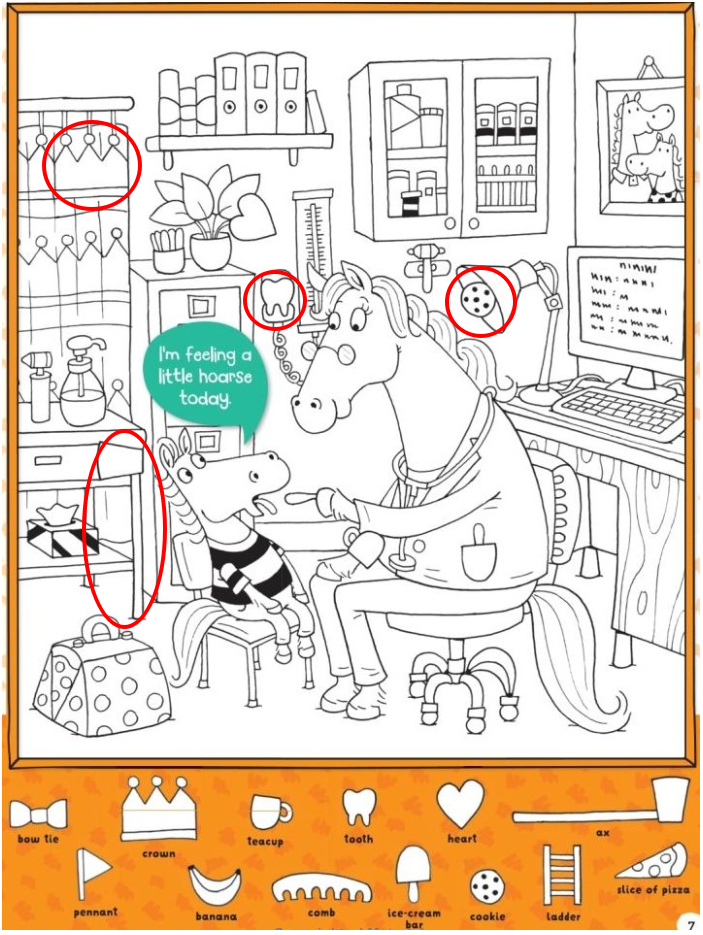
A collection of everyday shapes waits to be found inside the scene. A bow tie. A crown. A teacup. A tooth. A heart. A banana. A comb. An ice cream. A cookie. A ladder. Even a slice of pizza. What looked like a simple doctor visit suddenly becomes a playful hidden picture puzzle that asks you to slow down and really look.
This hidden picture doctor office puzzle blends humor, comfort, and curiosity into a visual experience that feels lighthearted and surprisingly engaging.
Why medical scenes feel perfect for hidden picture puzzles
Doctor offices carry a unique emotional balance. They can feel serious, but they also represent care, safety, and trust. This image leans fully into the comforting side.
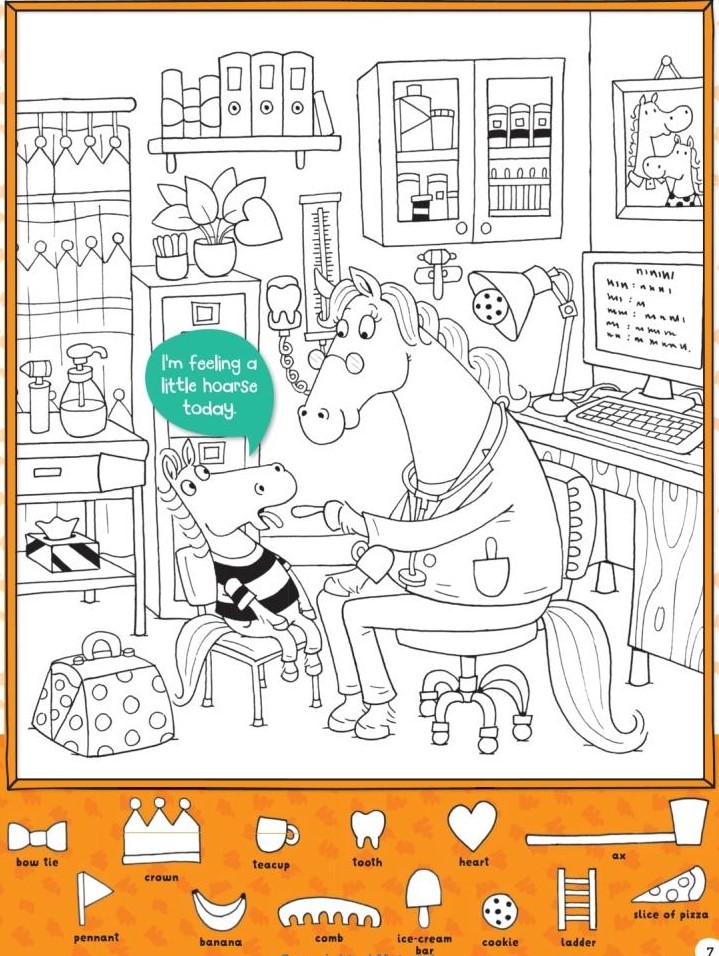
The horse doctor feels friendly rather than intimidating. The child sits calmly instead of crying. The room feels tidy and well lit. That sense of safety relaxes the viewer immediately.
When the mind relaxes, it assumes everything is exactly as it seems. That assumption opens the door for hidden objects to blend in quietly, waiting to be discovered.
The charm of a playful animal doctor
The choice of a horse as the doctor instantly changes the tone. It adds humor and warmth without turning the scene silly.
The horse wears a lab coat and uses medical tools with gentle focus. That contrast between animal and professional creates a storybook feel that invites curiosity.
You want to explore the room, not rush through it. That desire to linger makes the puzzle far more engaging.
How everyday objects disappear in plain sight
The list of hidden objects reads like a mix of silly and ordinary. A banana next to a tooth. A crown near a comb. A slice of pizza hiding in a medical office.
Because these objects do not belong in a clinic, your brain actively filters them out. You do not expect to see food near medical equipment. You do not expect a ladder inside a quiet exam room.
That mismatch helps the objects hide more effectively. They disguise themselves as parts of furniture, decorations, or shadows. Your brain labels them as background before questioning their shape.
Why clean line art sharpens attention
This illustration uses crisp black and white lines with a limited accent color. That simplicity forces your eyes to rely on shape and structure instead of color.
Every outline matters. Every curve could be something more than it appears. You begin tracing shelves, cabinets, and tools more carefully.
This style rewards slow looking. The longer you spend with the image, the more confident you feel spotting what does not belong.
The comforting rhythm of an organized space
The doctor office setting feels orderly. Shelves align neatly. Tools sit in logical places. The desk looks functional rather than cluttered.
That order creates visual rhythm. Your eyes move naturally from one area to the next. That movement encourages systematic searching, which keeps frustration low and focus high.
Hidden objects blend into that order rather than disrupting it, which makes the challenge feel fair and satisfying.
Why humor keeps viewers engaged longer
There is gentle humor everywhere in this scene. The idea of a horse doctor. The child sitting calmly with an open mouth. The unexpected presence of playful objects hiding around the room.
That humor lightens the challenge. You smile while searching. You enjoy the process instead of treating it like a task.
When people smile, they stay longer. Engagement deepens naturally.
Why this puzzle appeals to children
Children connect instantly with the characters. The child patient feels relatable. The animal doctor feels friendly and non threatening.
Finding hidden objects feels like a game rather than work. Each discovery builds confidence and excitement.
The scene also helps reduce anxiety around doctor visits by presenting them in a warm, playful way.
Why adults enjoy puzzles like this too
Adults appreciate the cleverness. The objects hide well without feeling impossible. The scene tells a story that feels gentle and nostalgic.
Searching becomes a quiet mental break. It offers focus without stress, like a crossword for the eyes.
The combination of humor and calm makes the puzzle feel refreshing rather than demanding.
The subtle skills this puzzle builds
While it feels lighthearted, this puzzle strengthens important cognitive skills. Visual scanning improves as the eyes learn to move deliberately. Pattern recognition sharpens as shapes repeat in different contexts. Attention deepens as distractions fade away.
All of this happens naturally through play, which makes the learning stick without effort.
Why familiar indoor scenes hold attention
Indoor scenes feel contained. Your eyes do not wander endlessly. Everything exists within a defined space.
That containment reduces visual fatigue and encourages thorough exploration. You feel confident that every object can be found if you look carefully enough.
This sense of completeness keeps viewers engaged until the very end.
The satisfaction of spotting the unexpected
There is a special joy in finding an object that feels completely out of place. A slice of pizza hiding near medical tools. A crown blending into office decor.
That moment of recognition feels rewarding. It triggers a small rush of satisfaction that encourages continued searching.
Each discovery reinforces the feeling that careful observation pays off.
Why this puzzle invites repeated viewing
Even after finding all the objects, the image remains enjoyable. You notice details you missed before. You appreciate the expressions and layout more fully.
The puzzle becomes more than a challenge. It becomes a scene worth revisiting.
That layered value makes hidden picture puzzles like this especially memorable.
The timeless appeal of gentle storytelling
This image tells a story without words. A caring doctor. A brave child. A calm environment. The story feels universal and timeless.
That timeless quality keeps the puzzle relevant and engaging over time. It does not rely on trends or technology.
Timeless scenes create trust and comfort, which encourages return visits.
Why hidden picture puzzles feel so rewarding
Hidden picture puzzles reward patience rather than speed. They encourage presence rather than multitasking.
This puzzle respects the viewer. It challenges without overwhelming. It entertains without demanding.
That balance creates a positive experience that lingers after the puzzle ends.
Conclusion
This hidden picture doctor office puzzle transforms a gentle checkup scene into a playful and engaging observation game. Through warm humor, clean line art, and cleverly hidden objects, it invites viewers to slow down and truly look. Each discovery rewards patience and curiosity, turning a simple illustration into a memorable experience. It reminds us that even the most ordinary places can hold delightful surprises when we take the time to notice what is quietly hiding in plain sight.