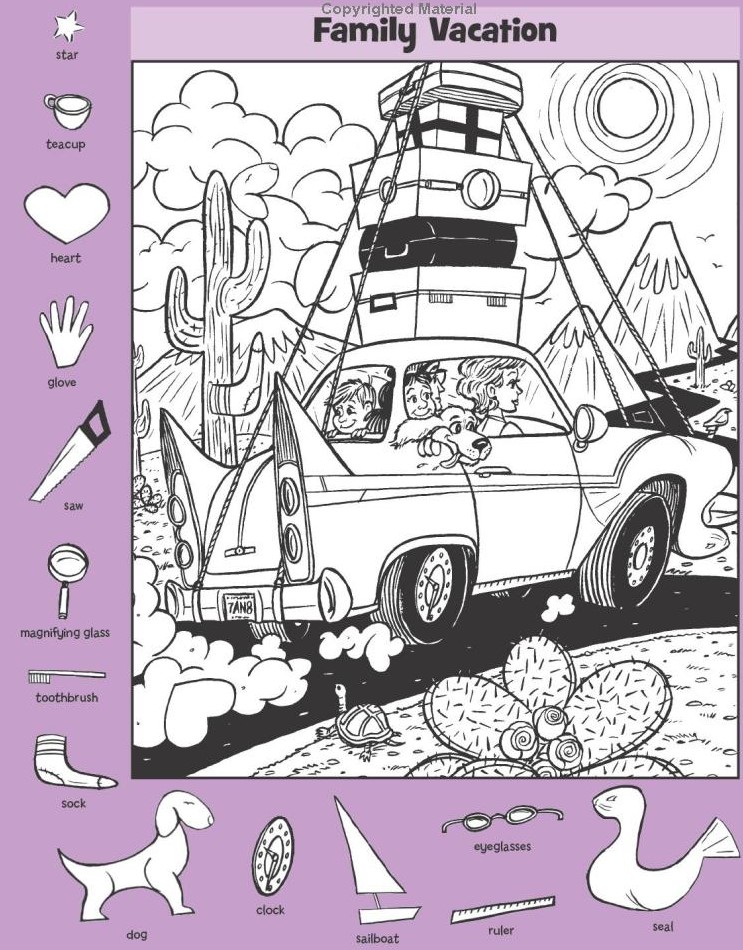
At first glance, it looks like a cheerful family road trip through the desert. A packed car cruises past towering cacti and distant mountains. The sun blazes overhead. Luggage is strapped high on the roof. A dog leans happily out the window.
It feels like a simple coloring page.
But look closer.
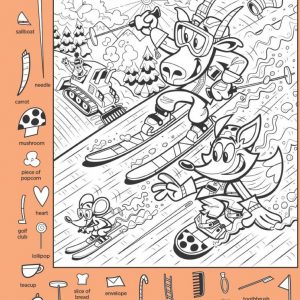
This “Family Vacation” illustration is actually a cleverly designed hidden object puzzle. Scattered throughout the scene are everyday items—some obvious, some brilliantly disguised. Your mission? Find them all.
From a teacup to a sailboat, from a magnifying glass to a sock, each object hides in plain sight. And the more you search, the more you realize this puzzle is far trickier than it first appears.
Why Hidden Object Puzzles Are So Engaging
There’s something timeless about hidden object games. They invite you to slow down and observe. In a world filled with fast scrolling and instant gratification, these puzzles demand focus.
Why do we love them so much?
Because they reward attention.
When you finally spot a hidden star tucked inside a cloud or a glove blended into the landscape, your brain delivers a small burst of satisfaction. That “aha” moment keeps you hooked.
This family vacation puzzle does exactly that. It transforms a relaxed road trip scene into an interactive visual challenge.
A Closer Look at the Road Trip Scene
The illustration captures a charming moment: a family car loaded with luggage drives through a desert landscape. Tall cacti stretch toward the sky. Mountains rise in the distance. A bright sun hovers above swirling clouds.
Inside the car, family members smile as they head toward adventure.
But hidden within this wholesome setting are multiple objects, including:
Star
Teacup
Heart
Glove
Saw
Magnifying glass
Toothbrush
Sock
Dog
Clock
Sailboat
Ruler
Seal
Eyeglasses
Each object appears somewhere within the drawing—but not always as a full, obvious shape.
Some blend into the smoke clouds behind the car.
Others hide within the cactus arms.
A few may be cleverly formed by negative space between objects.
The puzzle challenges you to separate illustration details from intentional disguises.
The Psychology Behind “Hidden in Plain Sight”
Why is it so difficult to spot objects that are right in front of you?
Because your brain labels scenes quickly.
When you look at this image, your mind immediately categorizes it: car, desert, mountains, family, dog. Once those labels are assigned, your brain stops analyzing individual lines.
Hidden object puzzles break that autopilot mode.
To succeed, you must shift from recognizing “car” to noticing the curve of a bumper that might resemble a seal. Instead of seeing “cloud,” you must examine whether its outline forms a heart or a star.
This shift from passive viewing to active searching is what makes the puzzle both challenging and rewarding.
How Visual Puzzles Strengthen Cognitive Skills
This isn’t just entertainment—it’s brain training.
Hidden object puzzles improve:
Visual discrimination
Attention to detail
Spatial awareness
Pattern recognition
Problem-solving skills
When you search for a ruler, your brain scans for straight, narrow lines. When looking for a sailboat, it searches for triangular shapes and curved bases.
Each object activates a slightly different pattern-recognition pathway.
Over time, this strengthens your ability to analyze visual information more efficiently.
Why Black-and-White Illustrations Increase Difficulty
The “Family Vacation” puzzle uses clean black-and-white line art. That design choice makes the challenge harder.
Without color contrast, every line carries equal visual weight. Nothing stands out automatically. The star isn’t bright yellow. The teacup isn’t shaded differently.
You must rely purely on shape recognition.
This forces deeper engagement. You can’t casually glance at the image. You have to study it carefully.
Tips to Find Every Hidden Object
If you’re struggling to find all the items, try these strategies:
Focus on one object at a time.
Scan small sections rather than the entire image.
Look for partial outlines instead of complete shapes.
Rotate the image mentally to see new perspectives.
Pay attention to negative space between lines.
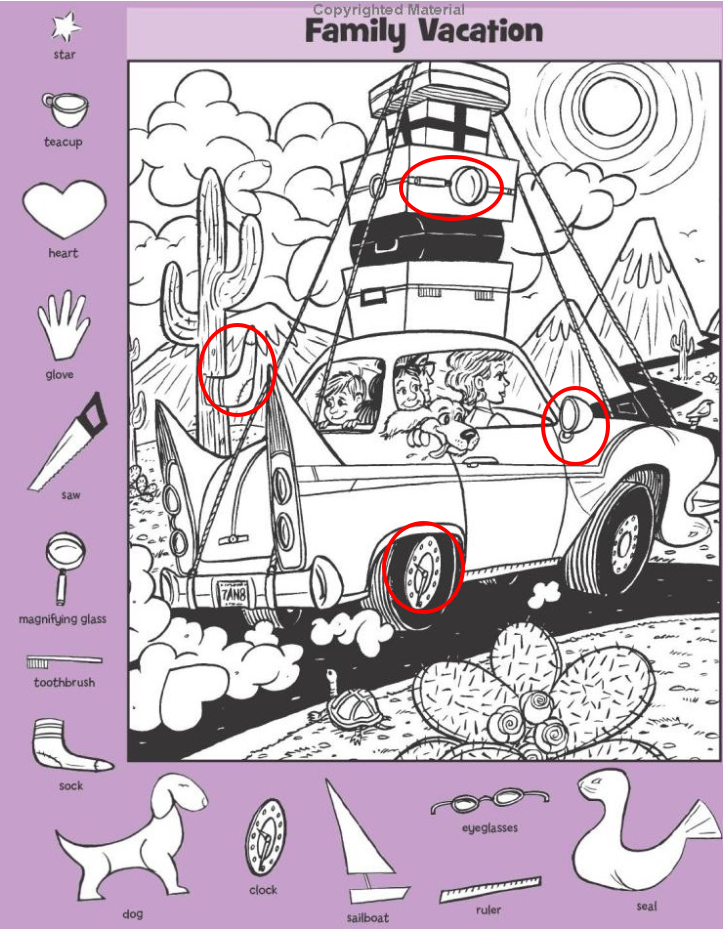
Sometimes the magnifying glass may form from circular patterns in the luggage. The toothbrush might blend into a straight edge along the car roof.
Patience is key.
Why Family-Themed Puzzles Have Universal Appeal
The family road trip setting adds warmth to the challenge. It’s not chaotic or stressful. It feels inviting.
That welcoming atmosphere makes people more willing to engage. Children enjoy the playful style. Adults appreciate the clever design.
It’s a puzzle that crosses generations.
Parents can search alongside kids. Friends can challenge each other. It sparks conversation: “Did you find the clock?” “Where’s the seal hiding?”
That shared discovery makes the experience even more enjoyable.
The Emotional Reward of Finding the Final Object
There’s always one object that seems impossible to locate.
You scan the image again and again. You start doubting whether it’s really there.
Then suddenly—you see it.
And once you do, you can’t unsee it.
That final discovery feels like solving a tiny mystery. Your brain registers success, releasing a small wave of satisfaction.
That emotional reward is why hidden object puzzles remain popular year after year.
Why This Puzzle Works Perfectly Online
Visual challenges like this perform exceptionally well across digital platforms because they are:
Family-friendly
Non-controversial
Interactive
Visually engaging
Easy to understand
They encourage comments and sharing. People naturally ask others if they’ve found all the objects.
And because the design is wholesome and appropriate, it aligns with platform policies and audience expectations.
Conclusion
The “Family Vacation” hidden object puzzle transforms a simple desert road trip illustration into an engaging visual adventure. With everyday items cleverly disguised throughout the scene, it challenges viewers to slow down, observe carefully, and think differently.
The difficulty doesn’t come from complexity—it comes from perception. Our brains prefer shortcuts, but puzzles like this demand attention to detail.
When you shift from casually viewing the image to actively analyzing shapes, the hidden objects begin to reveal themselves.
So take another look at the car, the cacti, the clouds, and even the smoke behind the wheels.
The star, the sailboat, the magnifying glass—they’re all there.
You just have to see them.