Elf and Puppy Hidden Object Puzzle: A Magical Christmas Brain Game Kids Love
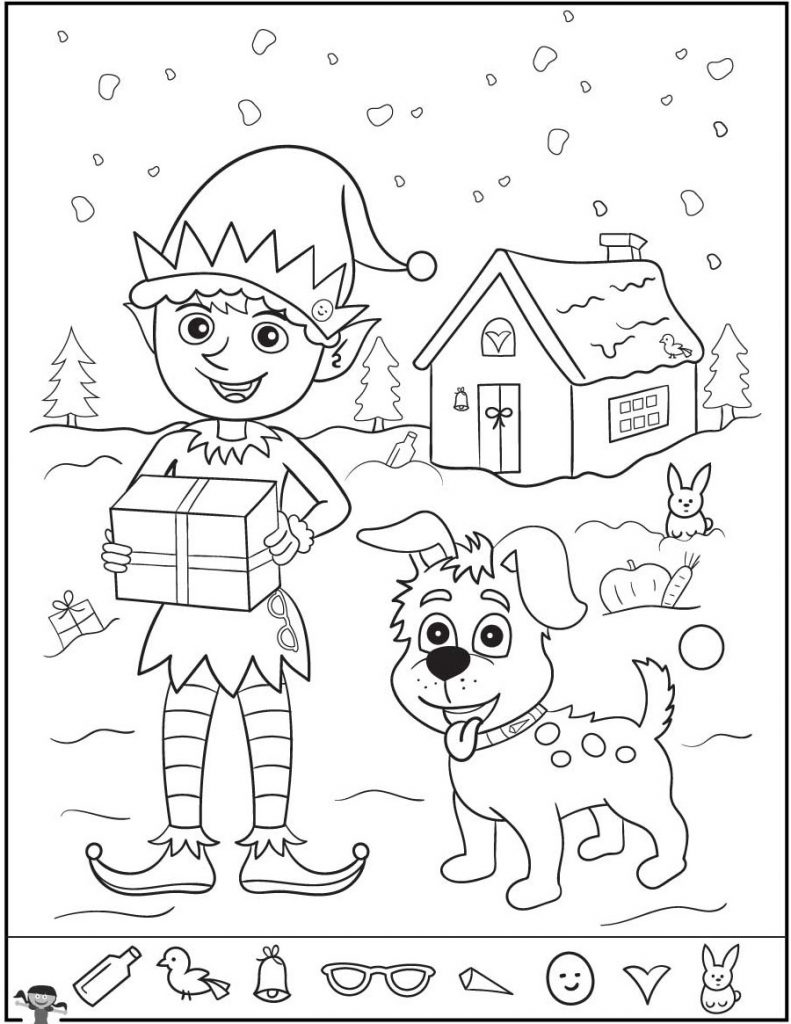
There’s something timeless about Christmas illustrations. Snow falling softly, cozy houses, cheerful characters, and just enough mystery to spark curiosity. This elf-and-puppy hidden object picture is a perfect example. At first glance, it looks like a sweet winter coloring page. Look again, and it quietly transforms into a clever puzzle that invites kids to slow down, observe, and think.
This isn’t just a picture. It’s an experience—one that blends holiday magic, playful problem-solving, and creative discovery into a single, kid-friendly activity.
A Festive Scene That Instantly Feels Warm and Safe
The first thing you notice is the elf. Smiling, friendly, holding a present like it’s a secret meant just for you. Beside the elf stands a happy puppy, tongue out, tail wagging, full of energy. In the background, a small house sits peacefully under falling snow, with trees, animals, and gentle winter details completing the scene.
Nothing feels rushed. Nothing feels overwhelming.
That calm atmosphere matters. Kids feel safe exploring it. And when kids feel safe, they’re more willing to focus, search, and stick with a challenge.
Why Hidden Object Puzzles Are So Powerful for Young Minds
Hidden object puzzles work because they don’t feel like work. Kids don’t see them as learning tools—they see them as games. But beneath the fun, real cognitive skills are developing.
As children search for the small icons hidden throughout the picture, they practice:
- Visual scanning
- Shape recognition
- Attention to detail
- Patience and persistence
- Memory recall
Each hidden item becomes a mini mission. Every discovery delivers a small reward. That steady rhythm keeps kids engaged far longer than passive activities.
The Clever Use of Familiar Holiday Objects
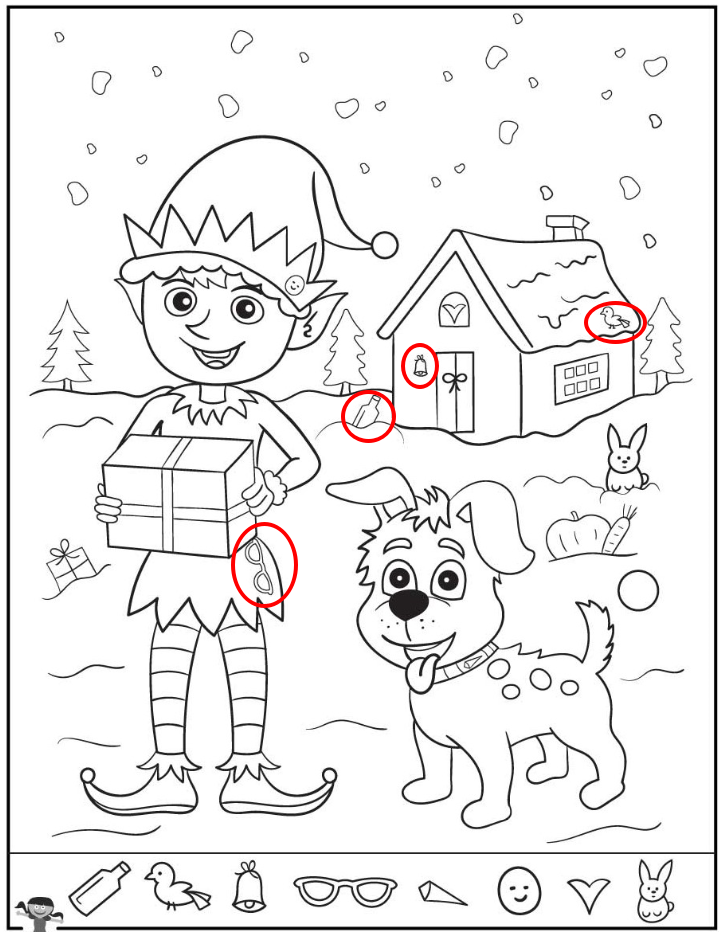
What makes this puzzle especially effective is the choice of objects. The icons at the bottom—bottle, bird, bell, glasses, cone, face, leaf, bunny—are simple and recognizable. Kids know exactly what they’re looking for.
But here’s the trick:
They don’t always look the same when they’re hiding.
A bell might blend into the elf’s outfit.
A leaf could hide in the snowy ground.
Glasses might disguise themselves within lines or shapes.
This teaches kids to adapt their thinking. They learn that objects can change form depending on context, which strengthens flexible thinking skills.
Black-and-White Design That Encourages Focus and Creativity
The black-and-white line art isn’t just practical—it’s intentional.
Without color cues, kids rely purely on outlines and shapes. That sharpens visual discrimination. At the same time, the image doubles as a coloring page, turning the puzzle into a creative outlet.
One moment, kids are searching carefully.
The next, they’re choosing colors and personalizing the scene.
That combination of logic and creativity keeps the experience fresh and engaging.
Why the Elf and Puppy Make the Puzzle More Inviting
Characters matter. The elf isn’t just decoration—it’s emotional glue. The friendly face invites trust. The puppy adds playfulness and warmth. Together, they turn the puzzle into a story rather than a task.
Kids don’t feel like they’re solving a problem.
They feel like they’re helping characters in a winter world.
That emotional connection increases attention span and makes kids more willing to try again if they miss something the first time.
A Gentle Challenge That Builds Confidence
This puzzle strikes a perfect balance. It’s not too easy, but it’s not frustrating either. Kids might miss an object on their first scan—and that’s okay.
Each second look improves their strategy.
They start scanning edges.
They compare shapes more carefully.
They slow down instead of rushing.
When they finally find the last hidden object, the satisfaction is real. That sense of “I did it” builds confidence—and confident kids love learning.
Perfect for Quiet Time, Classrooms, and Holiday Activities
This type of activity fits seamlessly into many settings:
- Holiday classroom stations
- Quiet time at home
- Winter-themed learning centers
- Road trip or travel printables
- Family game moments
It doesn’t require instructions, screens, or supervision. Kids naturally understand what to do, which encourages independence and self-directed play.
How This Puzzle Encourages Conversation and Connection
Hidden object puzzles often become shared experiences. Kids love pointing out what they’ve found. They ask for help. They compare discoveries.
Parents and teachers can gently guide without pressure:
“Where else could that shape be hiding?”
“What makes this one tricky?”
These small conversations turn play into meaningful interaction without breaking the fun.
Why Kids Come Back to the Same Puzzle Again and Again
Unlike one-and-done activities, hidden object puzzles have replay value. Kids often return to the same image after a break and notice new details they missed before.
Add coloring, and the replay value doubles.
Each revisit strengthens memory, focus, and observation skills—without boredom.
Conclusion: A Simple Holiday Picture With Lasting Value
This elf and puppy hidden object puzzle proves that simple design can deliver powerful results. Wrapped in a festive winter scene, it quietly builds focus, patience, and confidence while keeping kids smiling.
It invites children to slow down in a season that often feels rushed. It turns a quiet moment into an adventure. And most importantly, it makes learning feel like play.
Sometimes, the best gifts aren’t wrapped in paper—they’re hidden in plain sight, waiting to be discovered.