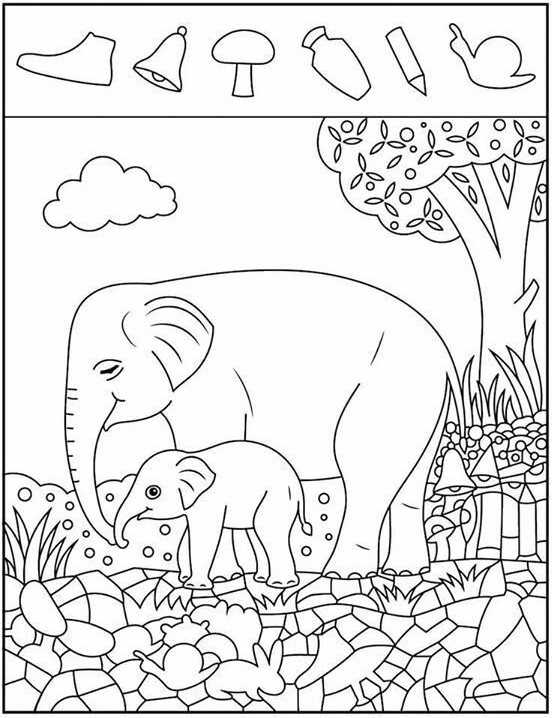
At first glance, this image feels calm and reassuring. A large elephant walks slowly across a rocky landscape while a small baby elephant stays close by, matching every step. A tree stretches its branches above them, leaves scattered softly in the air. Clouds drift quietly in the sky. Everything about the scene feels balanced, patient, and full of quiet connection.
Then your eyes travel upward and notice something else.
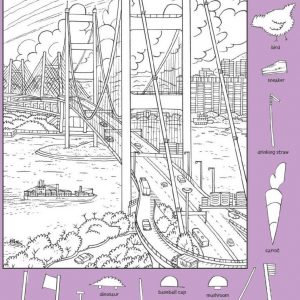
A row of small shapes waits at the top of the page, inviting you to find them hidden within the scene below. A shoe. A bell. A mushroom. A bottle. A pencil. A snail. What seemed like a simple wildlife illustration now becomes a thoughtful hidden picture puzzle that rewards careful looking and steady focus.
This hidden picture elephant puzzle blends warmth, curiosity, and mindfulness into one experience that feels relaxing rather than demanding.
Why elephant scenes naturally draw people in
Elephants carry a special emotional weight. They symbolize family, memory, and calm strength. Seeing an adult elephant walking beside its baby immediately creates a sense of protection and trust.
This image uses that emotional bond beautifully. The baby elephant stays close, mirroring the adult’s movement. There is no rush. No danger. Just togetherness.
That emotional comfort lowers mental defenses. When viewers feel safe, they slow down. Slowing down is exactly what hidden picture puzzles need to work their magic.
The quiet storytelling inside the illustration
This scene tells a story without a single word. You can imagine the sound of heavy footsteps on stone, the gentle rustle of leaves, the soft breathing of two animals moving in harmony.
That story keeps playing in your mind as you search. You are not just scanning shapes. You are spending time in a moment.
Because the story feels gentle and meaningful, the act of searching feels purposeful rather than mechanical.
How simple shapes disappear into nature
The hidden objects in this puzzle are everyday items. A bell. A bottle. A pencil. A snail. These shapes feel familiar, which makes them easier to overlook.
Nature is full of curves, lines, and textures. Rocks form rounded shapes. Leaves repeat similar outlines. Tree trunks stretch vertically like tools. Shadows carve unexpected silhouettes.
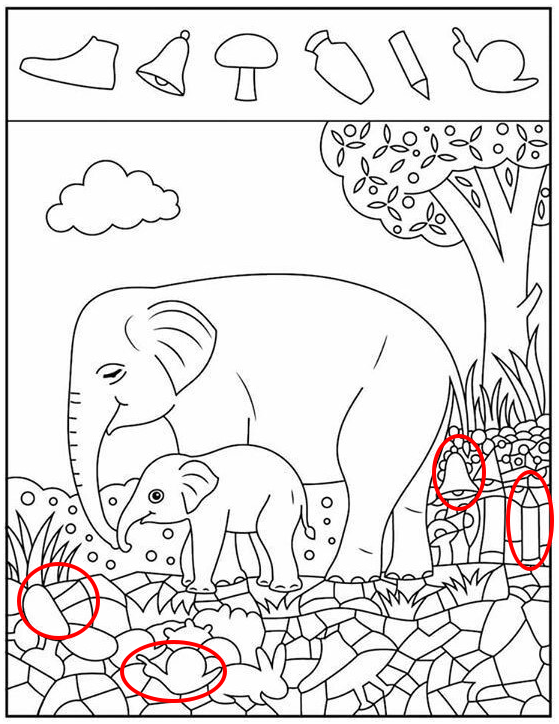
A bell might echo the curve of a leaf cluster. A bottle could blend into the elephant’s leg or the tree trunk. A snail might hide among stones where rounded shapes already dominate.
The puzzle does not trick you with size. It challenges you to separate what belongs from what only pretends to belong.
Why black and white line art improves focus
This illustration uses clean black and white lines with no color distractions. That design choice matters.
Without color, your eyes cannot rely on contrast alone. You must study outlines, angles, and proportions. Every shape demands attention.
This style slows the search in a good way. It encourages deliberate observation instead of quick scanning. The longer you look, the more confident you feel in what you see.
The calming rhythm of a wildlife setting
Nature scenes have a natural rhythm. They feel unhurried. Trees do not rush. Animals move with purpose, not speed.
That rhythm transfers to the puzzle experience. You do not feel pressure to finish quickly. You feel invited to explore at your own pace.
This calm pacing turns the puzzle into something almost meditative, like watching clouds move slowly across the sky.
Why this puzzle works beautifully for all ages
Children love the elephants. The baby elephant feels friendly and relatable. Finding hidden objects becomes a game filled with small victories.
Adults appreciate the peaceful atmosphere and the subtle challenge. It feels like a mental break rather than a task.
Older viewers enjoy the clarity and gentleness. The puzzle keeps the mind active without creating stress.
One image manages to engage different ages without changing its tone.
The quiet cognitive benefits hidden inside the search
As you look for hidden shapes, your brain practices important skills. Visual discrimination improves as you compare similar outlines. Memory sharpens as you recall which areas you already checked. Attention deepens as distractions fade away.
These benefits develop naturally through play. There is no instruction. No pressure. Just curiosity guiding the process.
Why nature themed puzzles encourage longer engagement
Nature feels grounding. People instinctively spend more time with images that feel peaceful and balanced.
This elephant scene offers visual rest. There is enough detail to explore, but enough open space to breathe.
That balance keeps viewers engaged longer, which makes the search feel satisfying rather than tiring.
The joy of finally spotting a hidden object
There is a special moment when a shape suddenly stands out. Something that blended perfectly into the background reveals itself.
That moment feels rewarding. You smile. You might even wonder how you missed it earlier.
Each discovery reinforces the idea that patience pays off, which keeps you motivated to continue.
Why minimal scenes often create deeper puzzles
Complex scenes overwhelm quickly. Minimal scenes invite deeper looking.
This image proves that you do not need chaos to create challenge. A few carefully placed elements, combined with repetition and natural textures, create a puzzle that feels rich and thoughtful.
By removing excess detail, the illustration encourages focus on what truly matters.
The emotional pull of parent and child imagery
The bond between the two elephants adds emotional depth to the puzzle. It creates a sense of continuity and care.
That emotional layer keeps viewers connected even when the search becomes tricky. You stay because the scene feels meaningful, not just because you want to finish.
Emotion transforms a puzzle into an experience.
Why wildlife puzzles feel timeless
Wildlife scenes never rely on trends. Elephants walking together feel just as powerful now as they did years ago.
That timeless quality gives this puzzle lasting appeal. It does not age. It remains relevant and inviting across generations.
Timeless imagery builds trust and familiarity, which encourages return visits.
Why hidden picture puzzles feel so satisfying
Hidden picture puzzles reward attention, not speed. They encourage presence, not multitasking.
This elephant puzzle respects the viewer. It challenges gently. It entertains quietly.
That respectful balance creates a positive experience that lingers after the puzzle ends.
The beauty of discovery without noise
This image does not shout for attention. It whispers.
The quiet lines, the slow movement, the gentle bond between animals all invite a softer kind of focus.
In a noisy world, that quiet discovery feels refreshing and rare.
Why this puzzle invites repeated viewing
Even after finding all the hidden objects, the image still offers value. You notice the curve of the elephants’ trunks. You appreciate the texture of the stones. You feel the calm again.
The puzzle becomes more than a challenge. It becomes a moment you want to revisit.
Conclusion
This hidden picture elephant puzzle transforms a peaceful wildlife scene into a gentle and rewarding observation experience. Through clean line art, emotional storytelling, and cleverly hidden shapes, it invites viewers to slow down and truly look. Each discovery rewards patience and curiosity, turning a simple illustration into a calming journey of focus and connection. It reminds us that sometimes the most meaningful challenges appear quietly, waiting for those willing to look closely and move at nature’s pace.