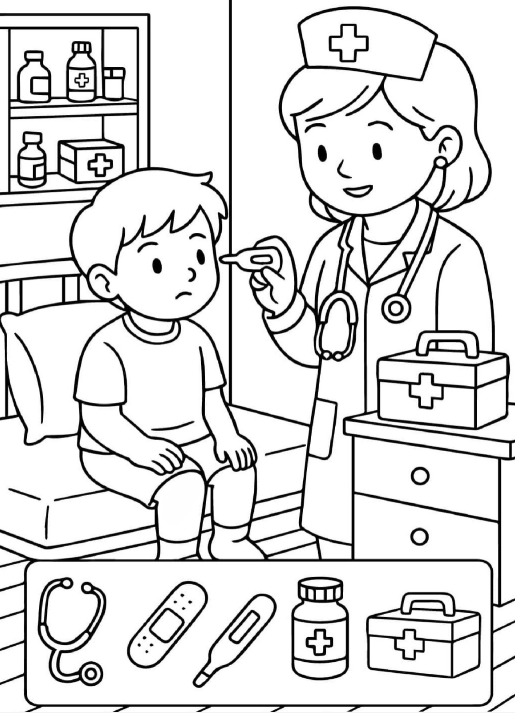
At first glance, this black and white illustration looks like a simple children’s coloring page. A friendly nurse stands beside a young boy sitting on a medical exam table. She gently holds a thermometer near his mouth while medical supplies line the shelves behind them. A small first aid kit rests on a nearby cabinet.
It feels calm. Safe. Reassuring.
But look closer.
This is not just a hospital scene. It is a hidden object puzzle designed to turn a routine checkup into an engaging search and find challenge for kids and parents alike.
Below the image, several medical themed items appear as silhouettes. Your task is to find them hidden within the scene above. They are cleverly blended into everyday clinic details, waiting for sharp eyes to discover them.
Why Hidden Object Puzzles Are Perfect for Kids
Children naturally love to explore. When you give them a hidden object activity, you transform passive viewing into active problem solving.
Instead of simply recognizing a nurse and a patient, kids begin asking deeper questions.
Where is that shape hiding?
Does this outline match?
What if I look at it from a different angle?
That shift from observation to investigation strengthens focus, patience, and visual discrimination skills. And because this puzzle uses a friendly medical setting, it also helps children feel more comfortable with doctor visits.
The Hospital Scene Feels Safe and Relatable
The illustration captures a gentle moment inside a medical clinic. The boy sits calmly on the examination table, hands resting on his knees. The nurse smiles warmly, dressed in a traditional uniform with a medical cross symbol. A stethoscope hangs around her neck, signaling care and professionalism.
Behind them, shelves display bottles and boxes of medicine. A first aid kit sits neatly on a cabinet. Everything appears organized and clean.
This reassuring environment makes the puzzle inviting rather than intimidating. Children can engage with the image without fear. Instead of focusing on sickness, the scene highlights care, trust, and helpful medical tools.
How to Approach This Medical Hidden Object Challenge
Before you start scanning randomly, pause for a moment.
Look at the silhouettes displayed at the bottom of the image. Notice the shapes carefully. There is a stethoscope, a bandage, a thermometer, a medicine bottle, and a first aid kit. Each has a unique outline.
Memorize the curves and angles. Pay attention to distinctive features, like the round earpieces of the stethoscope or the rectangular shape of the first aid box.
Now look back at the main illustration.
Instead of searching for the actual object, search for the shape.
That distinction is important.
Hidden objects often blend into larger designs. For example, a shelf edge might form part of a rectangular shape. The curve of clothing might resemble part of a stethoscope. A bottle on the shelf may subtly match the silhouette at the bottom.
When you focus on outlines rather than meanings, you increase your chances of spotting each item.
Why This Puzzle Supports Learning and Development
Hidden object puzzles are more than entertainment. They actively support cognitive development.
Visual discrimination skills improve as children compare similar shapes and identify subtle differences. This skill plays a crucial role in reading and handwriting development.
Concentration grows stronger because the task requires sustained attention. Instead of jumping quickly between distractions, children practice focusing on a single image for an extended period.
Problem solving abilities also strengthen. Kids learn to try new strategies if one approach does not work. They might scan from top to bottom. Then left to right. Then section by section.
Each small discovery builds confidence.
And in a medical themed setting, the puzzle also introduces children to basic healthcare tools in a friendly way.
Turning Doctor Visits Into a Positive Experience
Many children feel nervous before visiting a doctor or nurse. But activities like this can help reduce anxiety.
When kids see medical tools as part of a fun game, they begin associating them with curiosity rather than fear. A thermometer becomes something interesting instead of scary. A stethoscope becomes a shape to find instead of a mysterious device.
Parents and teachers can use this type of puzzle as a conversation starter.
What does a stethoscope do?
Why do nurses use thermometers?
How does a bandage help heal a cut?
The hidden object game becomes both educational and comforting.
Tips to Find Every Hidden Medical Item
If you feel stuck while searching, try these simple strategies.
Divide the image into smaller sections. Focus only on the top shelf first. Then move to the lower shelf. Then examine the nurse’s uniform and the exam table.
Slow your gaze. Move carefully across each line and contour. Do not rush.
Imagine tracing each silhouette with your finger. Compare it mentally to the shapes in the picture.
If possible, take a short break and return with fresh eyes. Sometimes the object becomes obvious after stepping away for a moment.
Remember, the hidden items are cleverly disguised, but they are there.
The Value of Screen Free Mental Play
In a world filled with digital games and fast paced entertainment, simple black and white puzzles offer something refreshing.
They slow the pace.
They encourage observation.
They stimulate the mind without overwhelming it.
This hospital themed hidden object activity feels like a quiet mental workout. It strengthens focus while delivering small moments of satisfaction with every discovery.
Conclusion
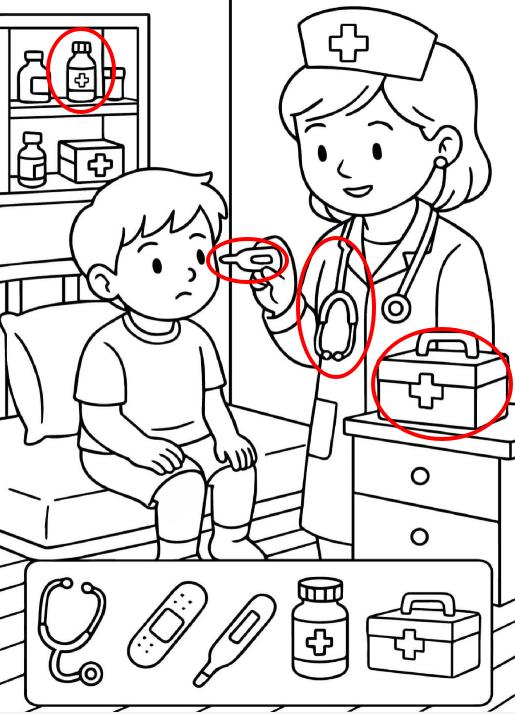
This delightful hospital hidden object puzzle transforms a routine medical checkup scene into an engaging search and find challenge. Within the friendly clinic setting, essential medical items like a stethoscope, bandage, thermometer, medicine bottle, and first aid kit blend seamlessly into the detailed illustration.
By focusing on shapes instead of objects, dividing the image into sections, and practicing patience, children and adults alike can uncover each hidden item. The puzzle strengthens visual skills, improves concentration, and even helps create positive associations with healthcare environments.
Take another careful look at the shelves. Study the nurse’s uniform. Examine the lines around the exam table.
The hidden medical tools are already there.
All you need to do is spot them.