There’s something magical about a sunny day by the ocean. The waves sparkle, seagulls glide overhead, and the wooden boardwalk hums with laughter. Now imagine turning that lively seaside scene into an exciting hidden object puzzle for kids. That’s exactly what this colorful beach illustration offers—a vibrant seek-and-find activity that blends storytelling, adventure, and brain-boosting fun.
At first glance, you see children riding bicycles along a pier near the ocean. But look closer. Hidden within the scene are everyday objects cleverly tucked into the environment. The challenge? Find them all.
This is more than just a picture. It’s an interactive learning experience wrapped in a playful summer theme.
Seaside Hidden Object Games That Spark Curiosity
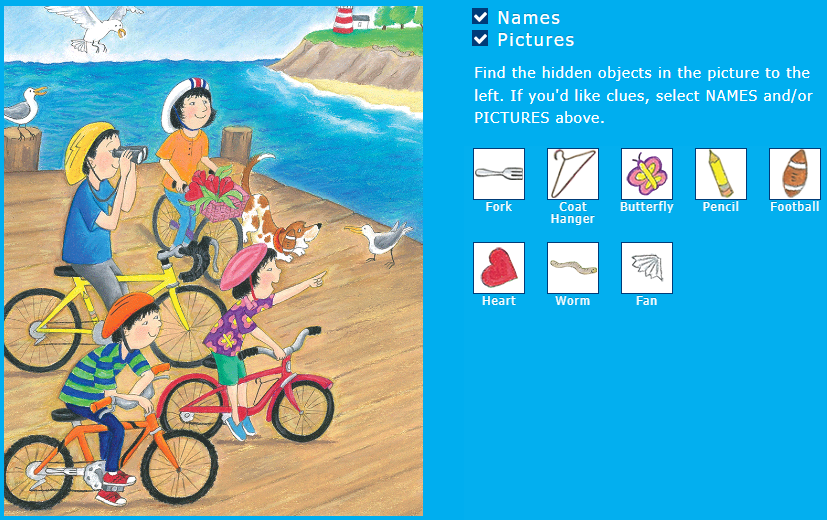
The illustration shows four children enjoying a bike ride by the sea. One child looks through binoculars. Another points excitedly toward the water. A small dog trots nearby. Seagulls fly overhead, and waves roll gently toward the shore. In the distance, a lighthouse stands proudly on a cliff.
But on the right side of the image, a list of hidden objects appears. Children must search for items like a fork, coat hanger, butterfly, pencil, football, heart, worm, and fan.
These objects do not naturally belong on a beach boardwalk. That’s what makes the puzzle so engaging. Kids must carefully scan the image, comparing shapes and outlines to the clues provided.
It’s like a treasure hunt disguised as a summer adventure.
Why Hidden Object Puzzles Improve Attention and Memory
Hidden object activities strengthen visual scanning skills. When children search for a specific shape, their brains shift into focused mode. They examine lines, curves, and patterns more carefully than they would in casual viewing.
This type of visual puzzle helps improve:
Attention to detail
Short-term memory
Pattern recognition
Problem-solving skills
For example, when searching for a coat hanger, a child must recall its triangular shape. When looking for a worm, they must identify curved lines that might blend into the wooden pier or ocean waves.
This active thinking strengthens neural connections while still feeling like play.
Summer Learning Through Beach-Themed Printables
Parents and teachers often look for summer learning activities that keep children mentally engaged without feeling like homework. Beach hidden object puzzles strike the perfect balance.
The seaside setting feels light and joyful. Bicycles, ocean views, and playful dogs create a positive emotional connection. Kids feel relaxed, which helps them absorb information more effectively.
And because the activity involves observation rather than memorization, it encourages natural cognitive development.
It’s summer fun with a purpose.
Building Visual Discrimination Skills
Visual discrimination allows children to notice differences and similarities between shapes. This skill plays a crucial role in reading and writing development. Recognizing letters like “b” and “d” requires the same type of careful comparison used in hidden object games.
When kids search for a pencil hidden among bicycle frames or pier planks, they practice distinguishing subtle variations in shape and orientation.
They learn to ask themselves:
Is that straight line part of a bike, or is it the pencil?
Is that curve part of the ocean wave, or could it be the worm?
This kind of analysis strengthens foundational learning skills in a natural way.
Encouraging Outdoor Adventure Themes
The beach cycling scene promotes healthy, active living. The children ride bicycles together, explore the oceanfront, and observe wildlife. Even though the activity is on paper, the imagery reinforces outdoor exploration.
Parents can expand the experience by discussing:
Bike safety
Ocean ecosystems
Lighthouse history
Seagull behavior
A single hidden object worksheet becomes a springboard for conversation and curiosity.
And because the image remains wholesome and family friendly, it aligns perfectly with school and platform guidelines.
Screen-Free Entertainment That Actually Engages
Let’s be honest. Many children gravitate toward screens during free time. But printable hidden object games provide an effective alternative.
They require no batteries.
They reduce screen exposure.
They encourage independent focus.
Instead of passively watching content, children actively interact with the image. They trace shapes with their fingers. They circle discoveries. They celebrate each item found.
That sense of accomplishment builds confidence.
Fine Motor Skills and Coordination
If children mark each hidden object with a pencil or crayon, they strengthen fine motor control. Circling small shapes requires hand stability and coordination. Even pointing and tracking with a finger improves visual-motor integration.
These small movements support writing readiness and classroom performance.
And because the setting feels playful and summery, children stay motivated longer.
Why Beach-Themed Hidden Object Games Are So Popular
Search trends consistently show strong interest in summer printable activities, hidden object puzzles for kids, and beach learning worksheets. Why? Because parents want educational content that feels fun.
Beach imagery taps into universal positive emotions. Most families associate the ocean with vacations, relaxation, and exploration. When learning connects with those feelings, children respond enthusiastically.
This type of activity works well for:
Summer camps
Classroom brain breaks
Travel entertainment
Rainy-day indoor play
Homeschool enrichment
The combination of bright illustration and cognitive challenge keeps kids engaged without overwhelming them.
Creative Storytelling Opportunities
Beyond finding hidden objects, children can invent stories about the scene. Where are the kids riding? Are they heading to the lighthouse? Did they discover something exciting in the water?
Encouraging storytelling builds vocabulary and communication skills. It turns a static image into a living adventure.
When children narrate their own version of the beach day, they strengthen imagination and expressive language at the same time.
Conclusion
This beach hidden object puzzle featuring children biking along a sunny pier offers far more than simple entertainment. It combines visual challenge, cognitive development, and creative storytelling into one engaging activity.
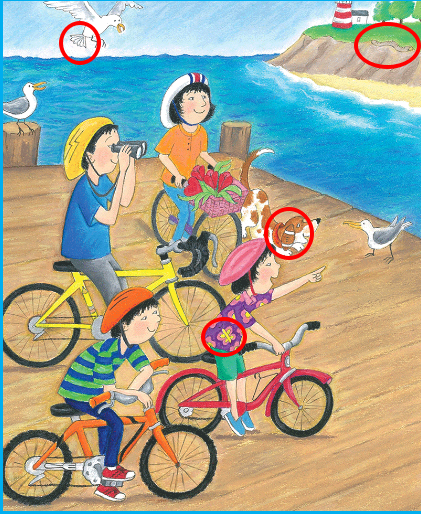
As kids search for hidden objects like a fork, butterfly, heart, and pencil, they sharpen focus and observation skills. As they explore the seaside illustration, they strengthen memory and pattern recognition. And as they imagine the story behind the scene, they expand their creativity.
In a world filled with digital distractions, simple yet interactive printable puzzles like this provide meaningful, screen-free learning experiences. The ocean may stretch endlessly in the background, but the real discovery happens within the child’s growing mind.
Fun, educational, and endlessly engaging, this beach seek-and-find activity proves that sometimes the best adventures start with a single picture.