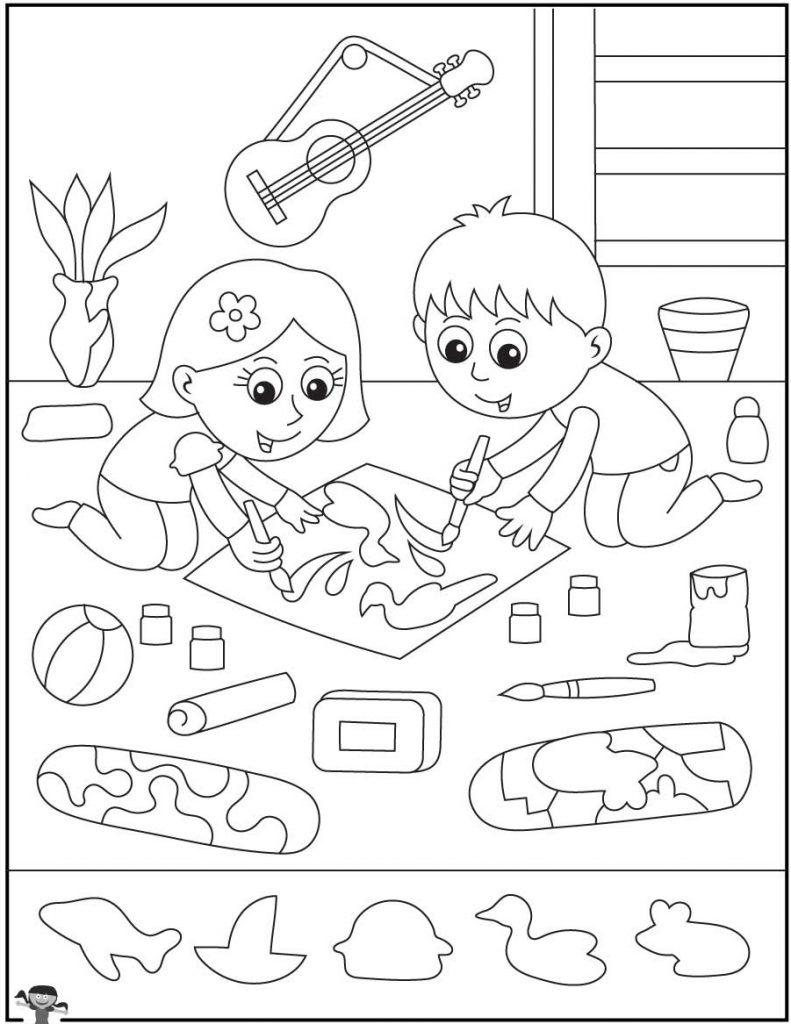
There’s something heartwarming about watching children create art together. The room feels brighter. The imagination feels limitless. And the mess? Well, that’s just part of the magic. This charming kids art coloring page captures that joyful moment perfectly—two children kneeling on the floor, painting animal shapes on paper while surrounded by art supplies.
But this isn’t just a simple coloring sheet. It’s an interactive hidden shape puzzle designed to spark creativity, strengthen focus, and encourage screen-free learning.
Let’s explore why this printable kids art activity is more powerful than it first appears.
Kids Painting Activity That Encourages Creativity
At the center of the image, a boy and a girl kneel on the floor, happily painting on a large sheet of paper. Paint jars sit nearby. Brushes rest on the ground. A beach ball, skateboard, and art tools surround them. A guitar hangs on the wall, and a potted plant decorates the background.
The scene feels cozy and imaginative—like a rainy afternoon turned into an art adventure.
Children naturally connect with images of other kids creating. It makes them want to join in. When they color this page, they aren’t just filling in shapes. They’re stepping into the story.
Will the paint be bright red and blue?
Will the skateboard have bold patterns?
Will the background walls be pastel or vibrant?
Creative freedom builds confidence. When kids choose their own colors, they develop decision-making skills while expressing their personality.
Hidden Animal Shape Puzzle for Brain Development
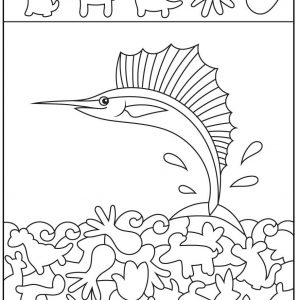
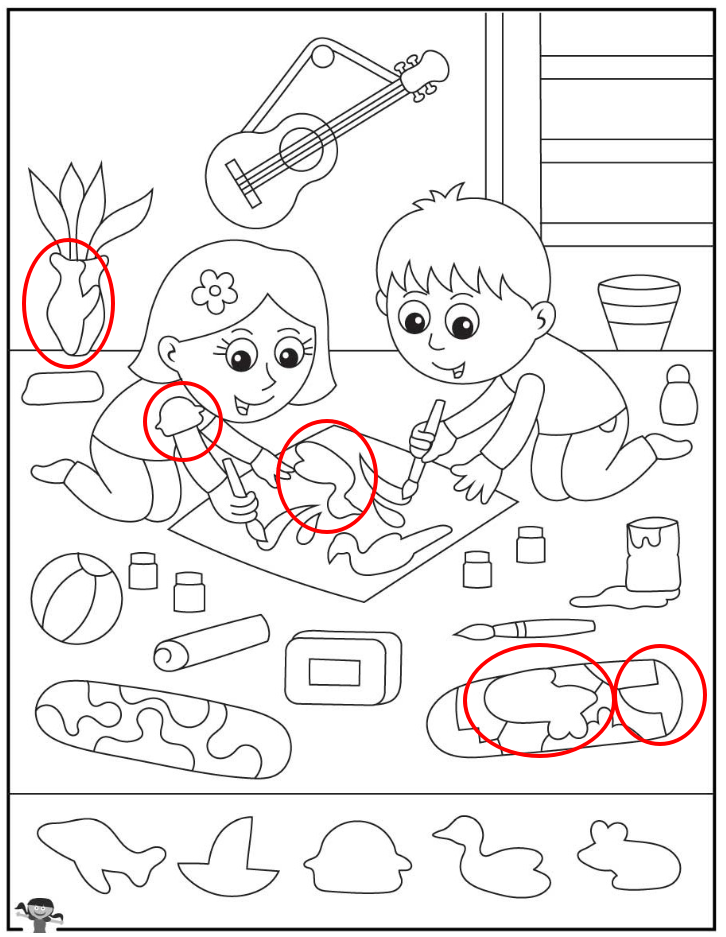
Look at the bottom of the page and you’ll notice several animal silhouettes. These shapes—such as a fish, duck, hat, and rabbit—are hidden within the main illustration. The challenge is simple: find them inside the picture.
This turns the coloring page into a hidden object puzzle.
Hidden shape activities strengthen:
Visual scanning skills
Attention to detail
Pattern recognition
Memory recall
For example, if a child searches for the duck silhouette, they must compare curves and outlines carefully. They scan the painted shapes on the paper. They look at the skateboard designs. They examine background details.
This type of focused observation builds cognitive flexibility.
Fine Motor Skill Development Through Coloring
Coloring detailed illustrations strengthens hand-eye coordination and fine motor control. The children in the image are painting curved shapes, which require steady hand movement.
When kids color:
They practice holding crayons properly.
They improve wrist stability.
They refine small muscle control.
These skills support writing readiness and classroom performance later on.
Even circling hidden shapes improves coordination.
Screen-Free Indoor Activity for Kids
Parents often search for screen-free activities that genuinely engage children. Printable coloring puzzles like this provide meaningful alternatives to digital entertainment.
They are:
Easy to print
Portable
Affordable
Educational
Instead of passively watching videos, children actively participate. They color, search, and think.
The indoor art setting also makes this page perfect for rainy days, homeschool sessions, after-school quiet time, or classroom enrichment.
Learning Through Art and Play
Art-based activities create natural learning opportunities. Parents and teachers can ask open-ended questions such as:
What animals are they painting?
What colors would you use?
Can you create your own animal shape?
These questions spark conversation and storytelling. Children expand vocabulary and strengthen communication skills while engaging creatively.
The presence of art supplies in the illustration—paint jars, brushes, skateboard designs—also introduces children to different creative tools.
Encouraging Cooperation and Social Skills
The image shows two children working side by side. They collaborate on one large sheet of paper. This visual reinforces teamwork and cooperation.
Children observing the image see:
Shared creativity
Mutual focus
Positive interaction
This subtle modeling encourages social-emotional development. It reminds children that creating together can be fun and rewarding.
Why Art-Themed Printables Perform So Well
Search trends consistently show strong interest in kids art coloring pages, hidden object worksheets, and printable learning activities. Parents value content that blends creativity and education.
Art-themed activities work especially well because they feel playful rather than academic. Children don’t feel pressured. They feel inspired.
And because the content remains wholesome, family-friendly, and positive, it aligns with classroom standards and digital platform policies.
Boosting Imagination Through Storytelling
This scene can easily become the start of a story. Are the children creating artwork for a school project? Are they designing animal stickers? Are they making gifts?
Encouraging kids to invent stories around the image strengthens narrative thinking skills. They learn to structure ideas and express imagination clearly.
Storytelling also improves emotional expression and confidence.
The Power of Simple Educational Printables
Sometimes the most effective learning tools are the simplest. A black-and-white coloring page with hidden shapes does not rely on flashy animation or sound effects. It relies on engagement.
Children control the pace. They decide when to color and when to search. They take ownership of the activity.
That independence builds resilience and concentration.
Conclusion
This creative kids art coloring page offers far more than a charming indoor painting scene. It combines artistic expression, hidden shape discovery, and cognitive development into one interactive experience.
As children color the art supplies and playful characters, they strengthen fine motor skills. As they search for hidden animal silhouettes, they sharpen focus and visual discrimination. As they imagine the story behind the scene, they expand creativity and communication skills.
In a world filled with fast-paced distractions, this simple yet engaging printable activity proves that imagination, focus, and creativity remain powerful tools for childhood growth.
Art may begin with a blank page, but in the hands of a child, it becomes a world of discovery.