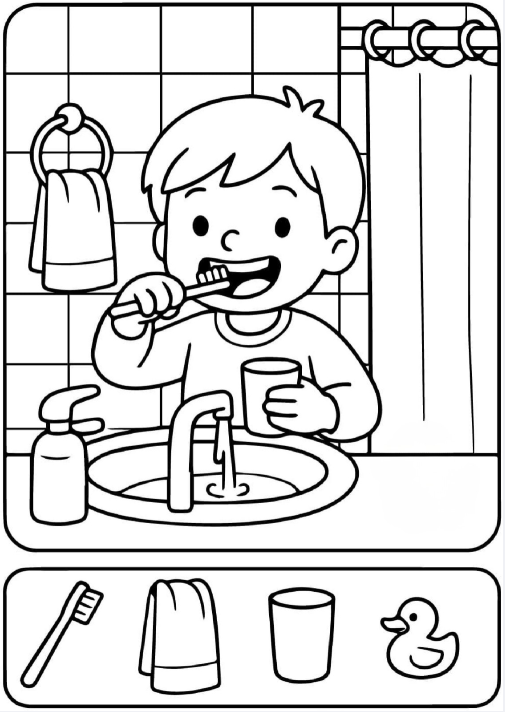
At first glance, this picture feels simple and sweet. A young child stands at the sink, brushing their teeth with a big smile, water running, cup in hand, towel nearby. It looks like a normal morning routine. Then your brain clicks into puzzle mode. Something is hidden here. Several things, actually.
This is not just a cute illustration. It is a find it puzzle built around one of the most important daily habits kids learn. Brushing teeth. And that combination is powerful.
Why everyday routines make the best puzzles
Kids connect fastest with scenes they recognize. A bathroom. A sink. A toothbrush. These are familiar, safe, and non intimidating. When a puzzle uses a routine kids already know, it lowers resistance and raises curiosity.
Instead of asking what is happening here, kids think I know this place. That comfort keeps them engaged longer and encourages them to explore every corner of the image.
Why this scene feels calm instead of chaotic
There is no clutter overload. The lines are clean. The space feels balanced. Everything has room to breathe.
That calm layout helps the eyes move naturally from object to object. It makes the search challenging but never frustrating. The puzzle invites focus instead of demanding it.
This is exactly what parents want from screen free activities.
Why brushing teeth imagery reinforces positive habits
This image quietly celebrates self care. The child looks happy. The act feels normal and positive.
That matters. Kids absorb visual messages fast. When they see routines framed as enjoyable, they internalize them more easily.
A puzzle like this supports healthy habits without lectures or pressure.
Why find it puzzles support early learning
Hidden object puzzles do more than entertain. They train visual discrimination, memory, and attention control.
Kids learn to compare shapes, notice small differences, and stay focused until they succeed. These skills transfer directly into reading, problem solving, and classroom tasks.
All that learning happens while kids feel like they are playing.
Why black and white line art works so well
Without color cues, the brain must rely on shape, size, and placement. That strengthens visual processing.
Line art also keeps the image timeless. It does not feel dated or trendy. It feels classic and reusable.
This style works especially well for printable activities, classroom worksheets, and quiet time games.
Why the bathroom setting increases challenge
Bathrooms are full of repeating shapes. Tiles. Curves. Cylinders. That repetition makes hiding objects more effective.
A cup can blend into the sink. A towel shape can echo the curtain folds. A small object can disappear into negative space.
Your brain thinks it sees everything, then realizes it does not.
Why kids love searching in familiar spaces
When kids recognize a setting, they feel confident. That confidence fuels persistence.
They do not give up easily because they believe the answer is there. They just have to look harder.
That belief builds patience and resilience in a very natural way.
Why parents appreciate puzzles like this
This activity feels purposeful. It combines fun, learning, and life skills.
Parents see value in activities that reinforce routines instead of distracting from them. A brushing teeth puzzle fits perfectly into morning or bedtime conversations.
It opens the door to talk about hygiene without nagging.
Why simple object lists make puzzles fair
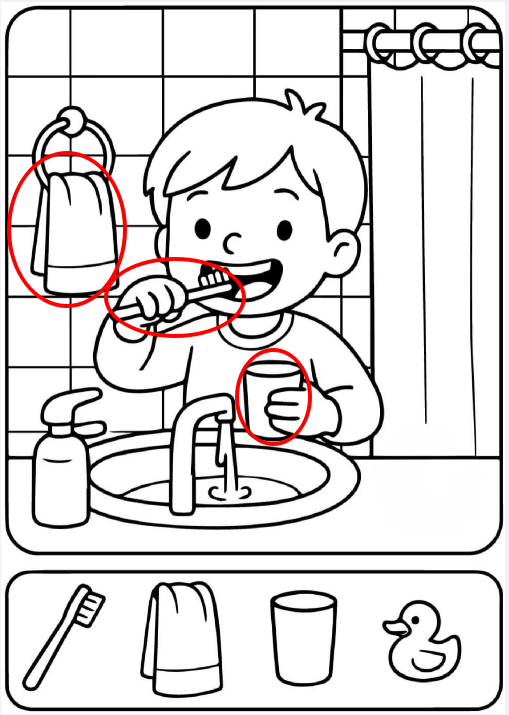
The hidden items are common bathroom objects. Toothbrush. Towel. Cup. Toy.
Nothing feels obscure. Kids know what they are looking for. The challenge comes from spotting it, not guessing what it is.
That balance keeps frustration low and motivation high.
Why this puzzle encourages slow thinking
Fast scanning rarely works here. The image rewards careful observation.
Kids learn to slow down, trace outlines, and check spaces they already scanned. That deliberate approach strengthens concentration.
In a world of fast tapping and scrolling, that skill matters.
Why the smiling child sets the emotional tone
Emotion drives engagement. The child in the picture looks happy and relaxed.
That expression signals safety and success. It tells the viewer this is doable. You are welcome here.
A friendly character makes the puzzle feel cooperative instead of competitive.
Why this activity works across age groups
Younger kids enjoy spotting obvious shapes. Older kids enjoy finding the tricky ones.
Adults often underestimate the challenge and get pulled in. That shared experience creates connection.
Few activities manage to entertain multiple ages at once.
Why routine based puzzles improve memory
When puzzles connect to daily habits, kids recall them more easily.
The next time they brush their teeth, they may remember the puzzle. That reinforces both memory and behavior.
Learning sticks better when it links to real life.
Why educators use scenes like this
Teachers love visuals that combine life skills with cognitive tasks.
This puzzle supports health education, visual scanning, and quiet focus time. It fits well into early childhood classrooms and therapy settings.
It also works as a conversation starter.
Why repetition builds confidence
Each found object builds momentum. Kids feel capable and proud.
That confidence spills into other tasks. They feel more willing to try, search, and persist.
Success becomes a habit.
Why the sink becomes the visual anchor
The sink and faucet draw the eye first. They act as the center point.
From there, the eyes move outward to towels, curtains, and smaller details. Good puzzles guide visual flow without the viewer realizing it.
That subtle design keeps the search enjoyable.
Why printable puzzles remain popular
Printable activities give kids a break from screens while still engaging their minds.
This puzzle works perfectly on paper. Kids can circle objects, color the scene, or work together.
It adapts easily to different learning environments.
Why this image feels reassuring
There is no rush. No danger. No noise.
Just a child doing something familiar and useful. That reassurance helps anxious or overstimulated kids relax.
Calm images support emotional regulation.
Why hidden object puzzles build independence
Kids can work on this puzzle alone. They control the pace. They decide when they are finished.
That autonomy builds self trust and motivation.
It feels good to solve something on your own.
Conclusion
This kids brushing teeth find it puzzle turns an everyday routine into a thoughtful and engaging activity. Through clean line art, a familiar bathroom setting, and well hidden objects, it encourages focus, patience, and healthy habits all at once. The scene feels calm, friendly, and rewarding, making it ideal for kids, parents, and educators alike. Sometimes the most powerful learning tools are the ones that feel simple, familiar, and quietly fun.