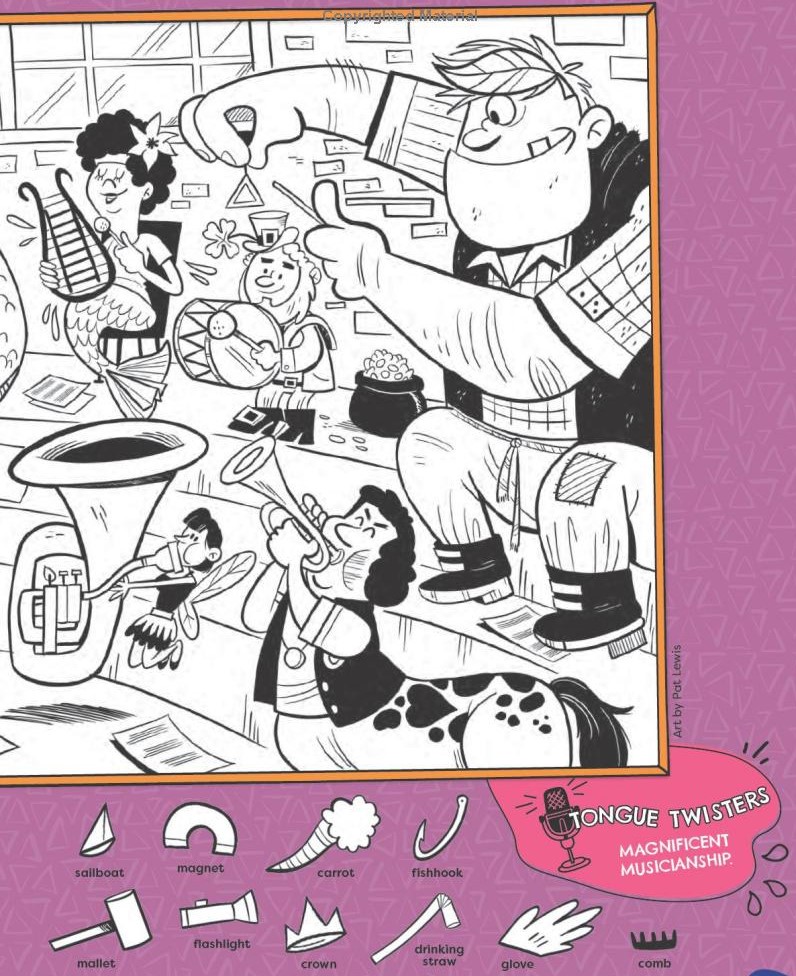
At first glance, this image feels loud in the best possible way. Musicians crowd the scene. Instruments blast in every direction. A giant conductor points with confidence while chaos and rhythm swirl together like a street parade gone gloriously wild. But look closer and you will realize this is not just a funny music illustration. It is a cleverly designed hidden object puzzle that challenges your eyes, patience, and focus all at once.
This picture takes music, humor, and visual trickery and blends them into a single moment that demands your attention. The longer you look, the more you notice. And the more you notice, the more you realize how much you missed at first.
Why music scenes are perfect for hidden object puzzles
Music scenes work beautifully for hidden object puzzles because they are naturally busy. Instruments overlap. People move in exaggerated poses. Lines curve and intersect in unpredictable ways. That visual noise gives artists endless opportunities to hide everyday objects in plain sight.
In this image, the musicians and instruments create shapes that echo the hidden items below. A curve of a horn can disguise a hook. A glove might blend into a sleeve. A comb can hide in textured hair or patterned clothing. Your brain assumes everything belongs to the music, which is exactly why the objects are so hard to spot.
The puzzle plays with expectation, and that is where the challenge begins.
Why your brain struggles to slow down
When you see a scene like this, your brain wants to understand the story first. Who is leading the band. Who is playing what. Why is everything so exaggerated. That storytelling instinct overrides careful observation.
Hidden object puzzles punish that instinct. They reward stillness and patience instead. The moment you stop following the story and start scanning shapes, angles, and outlines, the puzzle begins to open up.
This image teaches a quiet lesson. To see clearly, you have to slow down.
Why exaggerated art increases difficulty
Cartoon style art might look simple, but it often makes puzzles harder. Exaggeration bends proportions. Hands are larger. Faces stretch. Clothing folds dramatically. Those distortions blur the line between object and background.
In this scene, nothing looks perfectly normal. That makes it harder to recognize items by memory alone. You cannot rely on a standard mental image of a flashlight or a crown. You have to adapt to how the artist reshaped it to fit the scene.
That adaptation keeps your brain engaged and alert.
Why the object list matters more than you think
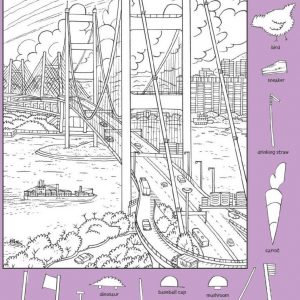
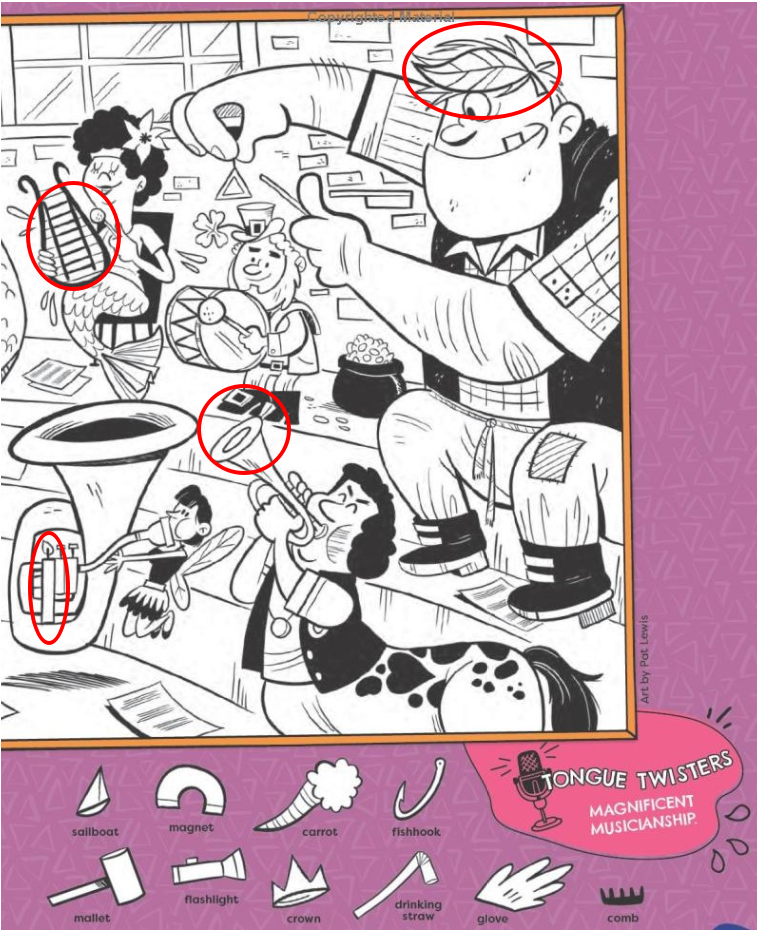
The object list at the bottom looks harmless. Sailboat. Magnet. Carrot. Fishhook. Mallet. Flashlight. Crown. Drinking straw. Glove. Comb. Each item feels easy on its own.
Together, they become a test of cognitive flexibility. Some objects share similar curves. Others share straight edges. Some are organic shapes. Others are rigid.
Your brain wants to group them, but the puzzle forces you to search for each one individually. That tension keeps the experience challenging without feeling overwhelming.
Why musicians create perfect camouflage
Musicians hold instruments, wear accessories, and strike dynamic poses. All of that creates visual clutter. Clutter is the best hiding place.
A mallet can blend into a drumstick. A straw can hide along the line of an instrument tube. A fishhook might echo the curve of a musical note or decorative flourish.
The artist uses the rhythm of the scene to hide objects in rhythm as well. Once you notice that, your search strategy changes.
Why humor keeps frustration away
This image is funny. The characters are expressive. The band feels slightly out of control. The conductor looks confident but maybe a little overwhelmed.
That humor matters. When a puzzle feels playful, frustration turns into curiosity. Instead of quitting, you smile and keep looking. You enjoy the process rather than rushing the result.
That emotional tone is why people spend more time on puzzles like this than they expect.
Why hidden object puzzles sharpen real skills
This kind of visual challenge improves focus, pattern recognition, and attention to detail. It trains your brain to separate signal from noise.
In daily life, that skill helps with reading, problem solving, and even decision making. You become better at noticing what matters and ignoring distractions.
It is quiet mental exercise disguised as fun.
Why the scene rewards multiple passes
You will not find everything on your first scan. That is intentional. The puzzle rewards multiple passes with different strategies.
First, you might scan the foreground. Then the background. Then specific characters. Then negative space between shapes. Each pass reveals something new.
That layered design keeps the image engaging long after the initial glance.
Why this puzzle works for all ages
Kids enjoy the cartoon style and the challenge of spotting familiar shapes. Adults enjoy the complexity and humor. Older players enjoy the slower pace and visual scanning.
The puzzle does not rely on language or trivia. It relies on observation. That makes it accessible to a wide audience.
Few types of content achieve that balance so effortlessly.
Why music themes boost engagement
Music is emotional. Even without sound, you can almost hear this image. That sensory suggestion pulls viewers in and keeps them engaged longer.
Engagement matters. The longer someone stays with an image, the more satisfying the experience becomes. That is why puzzles like this perform so well online.
They invite you to linger.
Why the hardest object is always the last one
There is always one object that refuses to reveal itself. That final item breaks your pattern and challenges your assumptions.
You think you know how the puzzle works, and then it surprises you. That surprise forces deeper focus.
When you finally see it, the moment feels earned.
Why this image stays memorable
You might forget what you scrolled past earlier today, but you will remember this puzzle. You will remember the chaos, the music, the frustration, and the eventual success.
Memorable content creates return visits. It encourages sharing. It sticks.
That is the quiet power of well designed visual puzzles.
Why puzzles like this feel rewarding instead of draining
Unlike fast paced games or endless scrolling, this puzzle asks for calm attention. It slows your breathing. It narrows your focus.
When you finish, you feel satisfied rather than exhausted. That feeling is rare in digital content and deeply valuable.
Conclusion
This hidden object music puzzle transforms a loud, playful street band into a thoughtful test of observation and patience. By blending exaggerated art, humor, and clever visual camouflage, it challenges the brain without overwhelming it. Each hidden item pushes you to look beyond the obvious and truly see the scene in front of you. In the end, the puzzle is not just about finding objects. It is about slowing down, tuning in, and discovering how much more there is to notice when you really look.