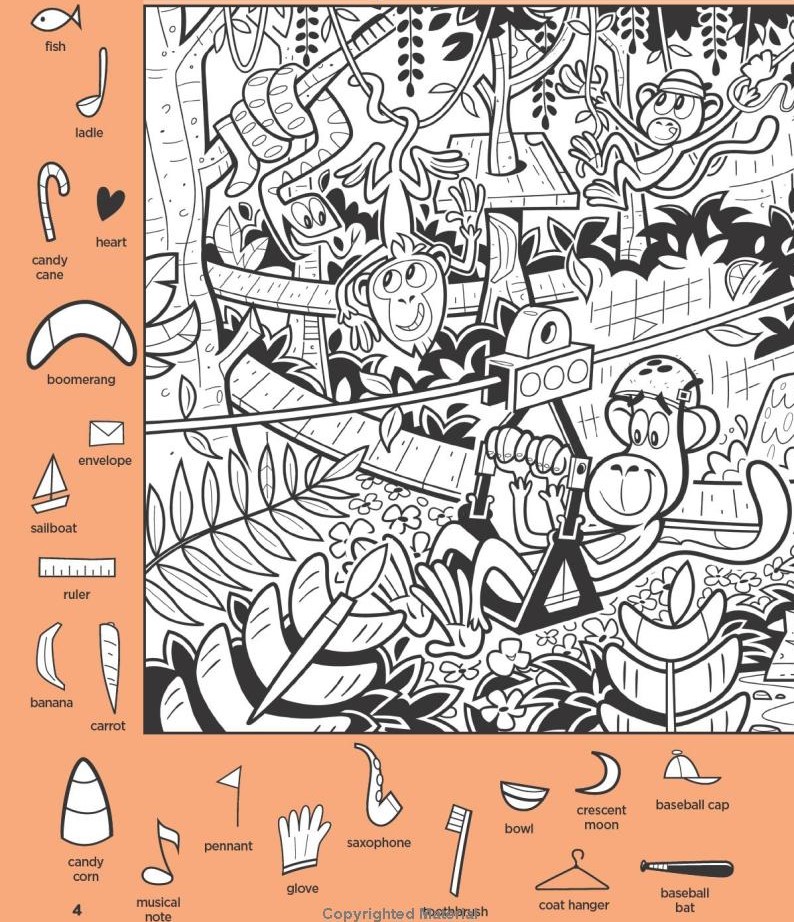
At first glance, this black and white jungle scene looks like cheerful chaos. Monkeys swing from vines, peek through leaves, wave from platforms, and grin straight at you like they know a secret. And honestly, they do. Hidden inside this lively jungle illustration are dozens of everyday objects cleverly disguised among branches, shadows, and foliage. This is not just a picture. It is a full blown hidden picture puzzle designed to test your focus, patience, and attention to detail in the most playful way possible.
If you enjoy the feeling of getting lost in a challenge without even noticing time passing, you are already in the right place.
Why jungle scenes are perfect for hidden object puzzles
Jungles are naturally busy environments. Leaves overlap. Vines twist. Shapes repeat. That visual density makes them ideal for hiding objects in plain sight. In this puzzle, nothing feels forced. A banana blends into a leaf cluster. A ruler disappears into a wooden beam. A musical note sneaks into the curves of a vine.
Your brain expects clutter in a jungle, so it works harder to separate signal from noise. That effort is exactly what sharpens visual perception.
How black and white art increases concentration
Colorful puzzles feel inviting, but black and white puzzles demand precision. Without color cues to rely on, your eyes must trace outlines, compare shapes, and recognize subtle differences in form.
This style forces deeper engagement. You slow down. You scan carefully. You stop guessing and start observing. That is why black and white hidden picture puzzles are especially effective for building focus and visual discipline.
Why monkeys make the scene feel alive and playful
The monkeys in this illustration are not background characters. They are active participants. One swings toward you. Another peers through foliage. One grips a camera like a curious explorer.
Their expressions add humor and personality, which keeps the puzzle from feeling sterile or academic. Instead of searching through a static image, you feel like you are exploring a living jungle full of curious eyes.
That emotional connection keeps motivation high.
How object lists turn chaos into a clear goal
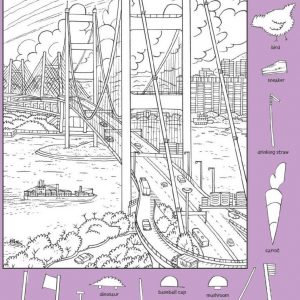
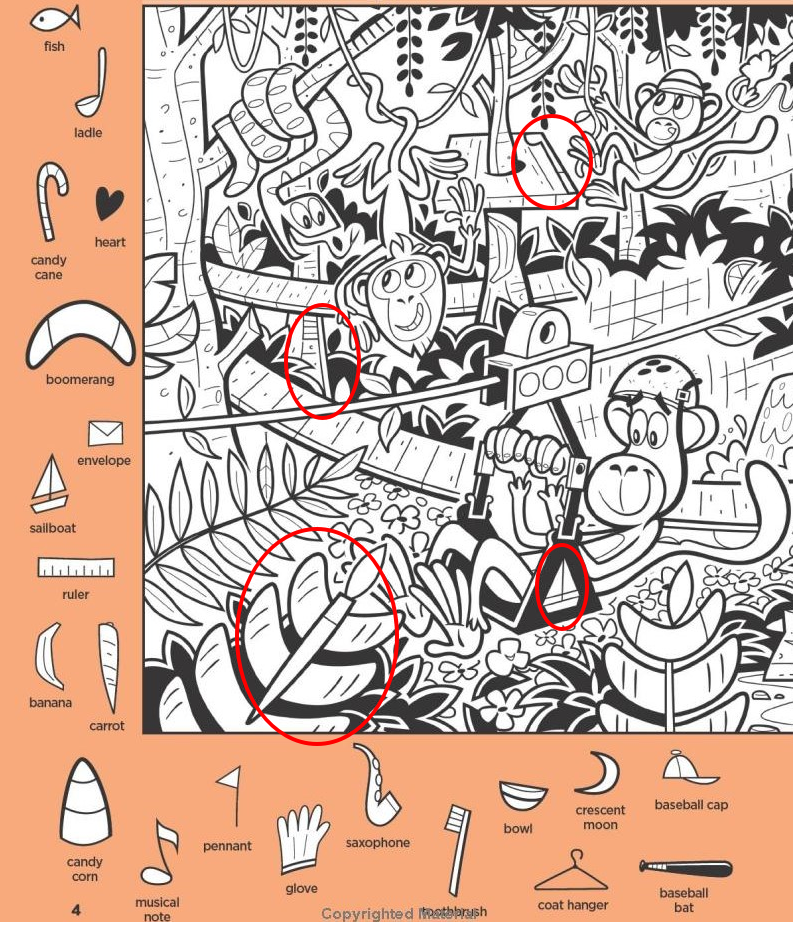
On the sides and bottom of the image, you see a list of objects to find. Fish. Ladle. Candy cane. Boomerang. Envelope. Banana. Saxophone. Glove. And many more.
This list gives structure to the chaos. Instead of staring aimlessly, your brain locks onto a mission. Find this shape. Then the next. Then the next.
Each discovery delivers a small hit of satisfaction that fuels the next search.
Why puzzles like this build real world skills
This might feel like play, but your brain is doing serious work.
Visual scanning improves reading readiness. Shape recognition strengthens pattern analysis. Sustained attention increases focus stamina. Completing a difficult search boosts confidence and perseverance.
These are foundational skills used in school, work, and everyday problem solving.
Why hidden picture puzzles reduce stress naturally
Unlike fast paced games or loud digital content, this puzzle invites calm concentration. There is no timer screaming at you. No penalty for pausing. No pressure to perform.
Your breathing slows. Your mind settles. Your attention narrows to one task.
That state is deeply calming and surprisingly restorative.
Why children and adults enjoy the same puzzle
This jungle puzzle works across age groups because it scales naturally. Children enjoy spotting obvious shapes and laughing at the monkeys. Adults enjoy tracking down the most devious objects hidden in complex linework.
The same image offers different levels of challenge depending on experience. That makes it ideal for families, classrooms, and shared activities.
Why repetition makes the puzzle better not boring
The first time through, you might miss several objects. The second time, you spot them faster. The third time, you notice details you never saw before.
Each pass builds familiarity and confidence. That feeling of improvement keeps people coming back, even after they think they are finished.
Hidden picture puzzles reward persistence in a gentle way.
Why this type of content performs so well online
Hidden object puzzles naturally increase time on page. People do not skim them. They stop. They engage. They search.
That extended interaction creates a perfect environment for ad visibility without feeling intrusive. Family friendly themes also attract broad audiences, including parents, teachers, and casual puzzle fans.
Engagement and trust grow together.
Why line art puzzles stand out in search results
In a world flooded with glossy images, detailed line art feels refreshing. It signals challenge and craftsmanship.
Thumbnails like this grab attention because they promise interaction, not passive viewing. That curiosity drives clicks and shares, which boosts visibility organically.
Visual intrigue is powerful currency online.
Why educators love puzzles like this
Teachers use hidden picture puzzles as warm up activities, focus exercises, or calm down breaks. They encourage quiet concentration while still feeling fun.
Students who struggle with traditional tasks often excel at visual puzzles, which builds confidence and participation.
Learning happens without resistance.
Why completing the puzzle feels genuinely rewarding
Finding the final object is not just relief. It is pride.
You know you earned it. You looked closely. You stayed patient. You trusted your eyes.
That sense of accomplishment sticks with you longer than flashy rewards ever could.
Conclusion
This jungle monkey hidden picture puzzle is more than a playful illustration. It is a carefully crafted challenge that blends fun, focus, and cognitive growth into a single engaging experience. Through detailed line art, clever object placement, and lively characters, it invites both children and adults to slow down, look closer, and enjoy the quiet thrill of discovery. In a noisy digital world, puzzles like this remind us that sometimes the most satisfying moments come from patience, curiosity, and the joy of finally seeing what was hidden all along.