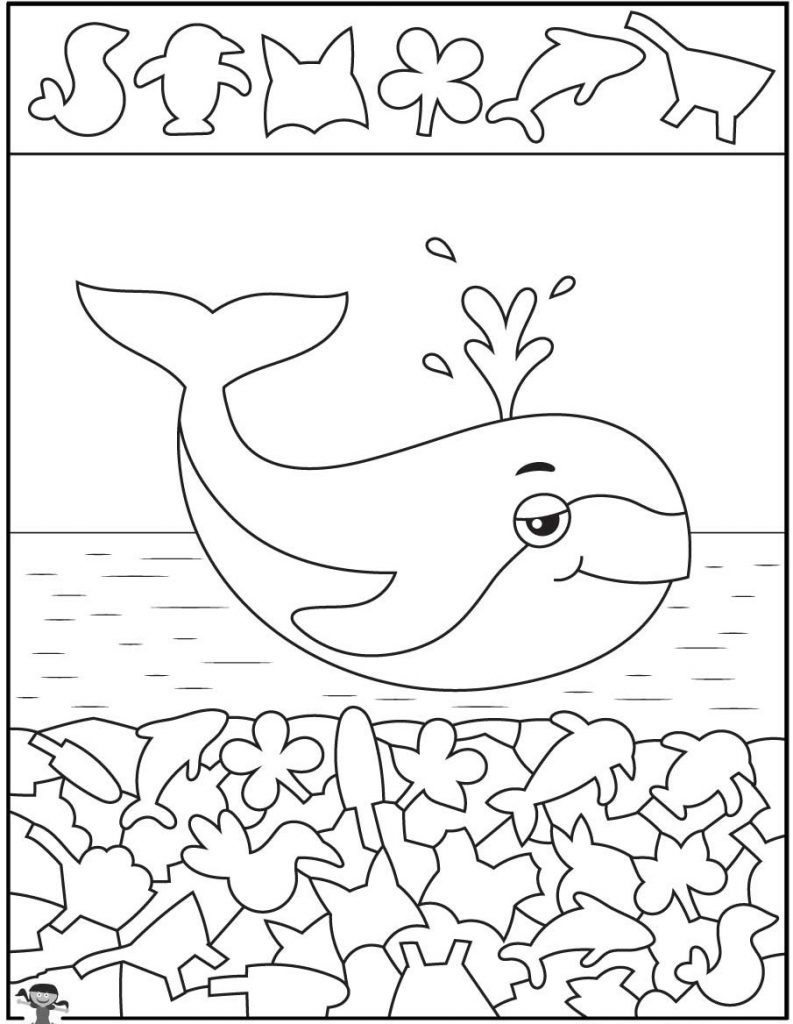
At first glance, this image feels wonderfully simple. A smiling whale floats peacefully in the ocean. Gentle waves stretch across the page. Beneath the surface, shapes scatter like a playful secret waiting to be uncovered. But the moment you slow down and really look, this picture transforms into something far more engaging. It becomes a hidden picture puzzle that quietly trains attention, patience, and visual intelligence without ever feeling like work.
This whale themed hidden picture scene proves that the best puzzles do not shout for attention. They invite it.
Why whale scenes instantly calm the mind
There is something universally soothing about whales. Their size suggests strength, yet their movement feels slow and gentle. In this image, the whale’s relaxed expression and soft curves immediately set a calm emotional tone.
Calm visuals reduce mental noise. When the brain feels safe and relaxed, it becomes more open to observation and curiosity. That is the perfect state for a hidden picture puzzle.
Instead of rushing to solve something, the viewer settles in. They explore.
How simple line art increases puzzle clarity
This image uses clean black and white line art. No colors compete for attention. No shading distracts the eye. Every shape stands clearly on its own.
That simplicity is powerful. It allows hidden objects to blend through shape rather than color tricks. The challenge becomes visual reasoning instead of visual overload.
Line art puzzles like this sharpen perception. You start noticing edges, angles, and curves instead of relying on obvious contrast.
Why ocean environments are ideal for hidden objects
The ocean naturally supports repetition. Waves repeat. Fish shapes repeat. Organic forms overlap and flow into each other.
This repetition creates the perfect camouflage for hidden shapes. A dolphin outline can hide inside coral. A clover shape can disappear among sea plants. A fish silhouette can blend into underwater textures.
Nothing feels forced. Every hidden object feels like it belongs.
How this puzzle supports early learning skills
This type of puzzle strengthens visual discrimination. That is the ability to notice small differences between similar shapes.
Children develop this skill by comparing outlines, matching silhouettes, and scanning environments carefully. This whale puzzle does exactly that without pressure or instructions.
There are no wrong answers printed on the page. There is only exploration. That freedom makes learning stick.
Why adults enjoy these puzzles just as much
Adults may not realize how much they crave quiet focus. This puzzle offers exactly that.
There is no screen glare. No notifications. No urgency. Just a page that asks you to look closer.
Hidden picture puzzles activate the same satisfaction loop as meditation. Each discovery brings a small reward. The brain releases calm satisfaction instead of stress.
That is why adults often enjoy these puzzles even more than children.
The power of shape recognition over reading
This puzzle does not require reading instructions. The shapes at the top guide the task visually.
That makes it accessible across ages and languages. It also shifts the brain into pattern recognition mode rather than verbal processing.
Pattern recognition strengthens problem solving, memory, and spatial awareness. Those skills transfer to real world tasks far beyond puzzles.
Why whales make perfect central characters
The whale’s large body provides a visual anchor. It grounds the page and gives the eye a starting point.
From there, the viewer naturally moves outward. First the whale. Then the water. Then the underwater shapes. Then the hidden objects.
This visual hierarchy keeps the puzzle from feeling overwhelming. Even beginners know where to start.
Why this puzzle encourages patience without frustration
There is no timer. No score. No penalty for missing something.
The viewer can stop and start at any time. That flexibility encourages patience instead of pressure.
When puzzles feel optional rather than demanding, people spend more time with them. That extended engagement increases both enjoyment and cognitive benefit.
How black and white puzzles improve imagination
Without color, the brain fills in gaps. Viewers imagine the blue water, the gray whale, the colorful sea plants.
That act of imagining activates creativity. The puzzle becomes interactive in a subtle way.
Many people even use puzzles like this as coloring pages after completing the search, doubling the engagement.
Why hidden picture puzzles are timeless content
Trends change. Technology evolves. Attention spans fluctuate. But the joy of finding hidden things never fades.
Humans have always loved discovery. From scavenger hunts to riddles to puzzles carved into stone, the instinct remains the same.
This whale puzzle could entertain a child today or fifty years from now with equal success.
Why this type of content performs well online
Hidden picture puzzles naturally increase time on page. Users do not skim them. They study them.
Longer engagement sends positive signals to search engines and advertisers alike. It shows genuine interest, not accidental clicks.
Because the content is family friendly, calm, and educational, it attracts a wide audience without controversy.
Why parents and educators trust puzzles like this
This puzzle feels safe. There are no ads inside the image. No aggressive branding. No loud themes.
Parents appreciate activities that entertain without overstimulation. Educators value tools that build skills quietly.
That trust makes this type of content highly shareable and repeatable.
How this puzzle supports emotional regulation
Focusing on visual tasks slows breathing. It reduces anxious thought loops. It creates a sense of control.
For children, this helps with emotional self regulation. For adults, it offers a mental reset.
The whale’s calm presence reinforces that effect throughout the activity.
Why the underwater clutter increases challenge naturally
The bottom section of the image is filled with overlapping shapes. That density increases difficulty without increasing complexity.
Conclusion
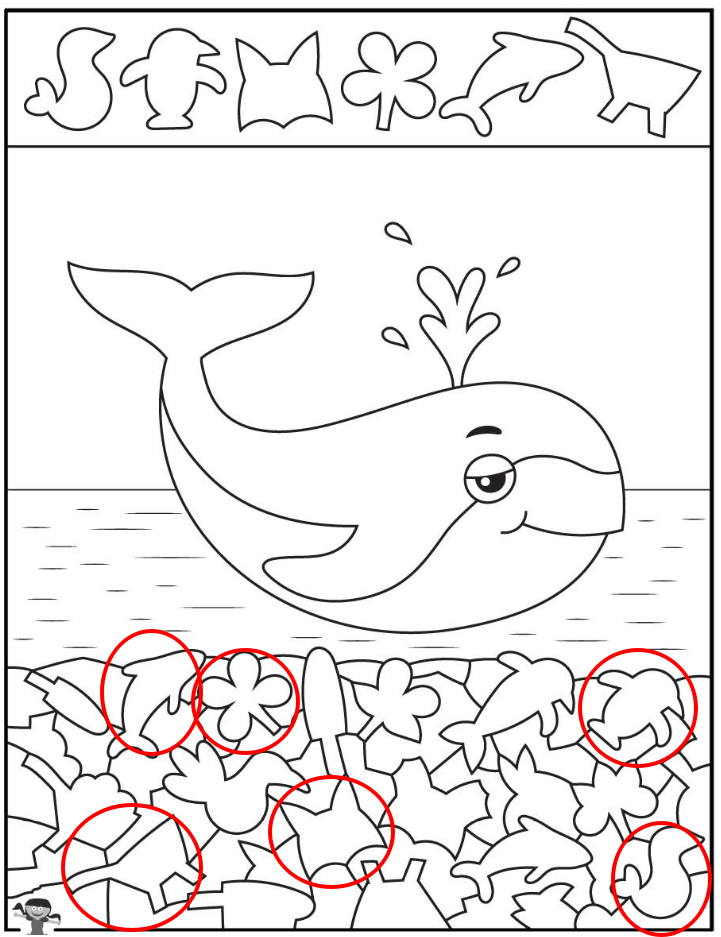
This hidden picture whale puzzle proves that simple design can deliver deep engagement. Through calm imagery, clean line art, and thoughtfully hidden shapes, it invites viewers of all ages to slow down and truly observe. It strengthens focus, patience, and visual intelligence while offering a peaceful escape from noise and distraction. Whether used for learning, relaxation, or quiet family fun, this puzzle transforms a gentle whale scene into a rewarding journey of discovery that leaves the mind refreshed and satisfied.