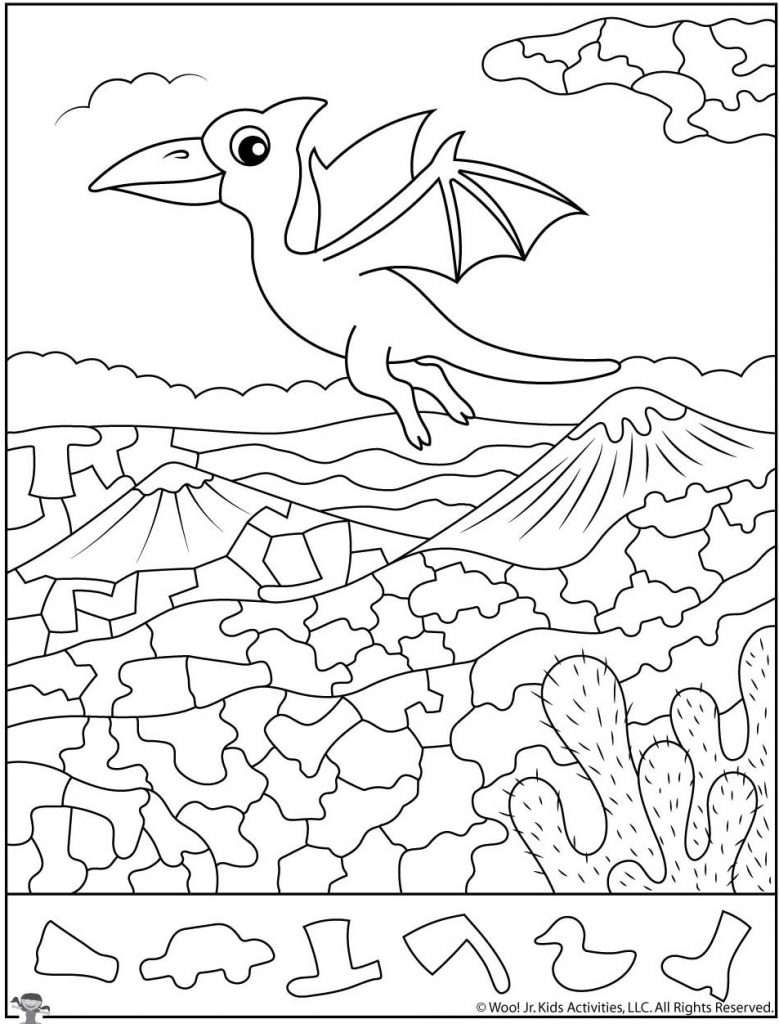
At first glance, this image feels calm and almost meditative. A flying dinosaur glides across a prehistoric sky, wings spread wide above volcanoes, clouds, and strange ancient plants. The clean black and white lines invite you in slowly, like a coloring page waiting for life. Then your brain catches on. This is not just a picture. This is a challenge. Shapes hide in plain sight, quietly daring you to find them.
That moment right there is where hidden picture puzzles shine. They look simple. They feel friendly. And then they grab your attention far longer than you ever planned.
Why prehistoric scenes make perfect hidden picture puzzles
Dinosaurs trigger curiosity instantly. Even adults feel it. There is something timeless about prehistoric worlds that pulls us in. Volcanoes, ancient skies, unfamiliar plants, and creatures that no longer exist create a setting where anything feels possible.
That sense of wonder lowers your guard. You stop analyzing and start exploring. Your eyes wander naturally, which is exactly what a hidden picture puzzle wants. Instead of scanning with logic, you scan with imagination. That makes it easier for shapes to hide in curves, clouds, and rocky textures.
The flying dinosaur at the center becomes both a distraction and a guide. Your eyes follow its wings, its tail, its beak. Meanwhile, the real challenge lives in the background.
How black and white art sharpens visual awareness
Color often does the heavy lifting in visual recognition. When color disappears, the brain has to work harder. This puzzle uses only outlines and negative space, forcing your eyes to slow down.
Without color cues, shape recognition becomes the star of the show. A cloud might not just be a cloud. A rock might echo the outline of something familiar. A plant might secretly double as an object you are supposed to find.
This kind of visual work strengthens focus and patience. It teaches the brain to look beyond first impressions and question what it thinks it sees.
Why hidden shapes blend so naturally into nature scenes
Nature is full of organic curves, uneven lines, and repeating patterns. That makes it the perfect camouflage for hidden objects. In this image, clouds curl and stretch. Mountains crack and fold. Plants twist upward in strange directions.
These elements act like visual noise, but the good kind. They distract without overwhelming. The hidden shapes borrow those same curves and angles, blending seamlessly into the environment.
You are not looking for something slapped on top of the scene. You are looking for something that belongs there just enough to stay unnoticed.
The flying dinosaur as a focal anchor
Every strong hidden picture puzzle has a visual anchor. Here, it is the flying dinosaur. Your eyes return to it again and again. It feels safe. Familiar. Central.
That anchor gives the rest of the image permission to be sneaky. While your attention keeps snapping back to the dinosaur, the background quietly hides its secrets. This push and pull keeps you engaged longer than you realize.
It also adds emotional charm. The dinosaur does not feel threatening. It feels playful. Almost friendly. That tone matters, especially for puzzles designed to appeal to both kids and adults.
How these puzzles support cognitive development
Hidden picture puzzles are not just entertainment. They actively train the brain. They improve visual discrimination, attention to detail, and pattern recognition.
For children, this kind of puzzle supports early problem solving skills and visual literacy. For adults, it works like a mental stretch. A gentle workout for focus and patience.
Because the scene feels imaginative rather than academic, the learning happens quietly. You do not feel like you are practicing a skill. You feel like you are saying just one more look.
Why minimal instructions increase engagement
Notice how the puzzle does not overwhelm you with text. The shapes you need to find sit quietly at the bottom, shown only as outlines. No long explanations. No step by step rules.
That simplicity invites exploration. You decide where to start. You choose your pace. That autonomy increases satisfaction and keeps frustration low.
When users feel in control, they stay longer and enjoy the challenge more deeply.
Why this type of content performs so well online
Hidden picture puzzles naturally increase time on page. People do not skim them. They pause. They zoom mentally. They return to sections they already checked.
That sustained attention sends strong engagement signals. It also creates a relaxed environment where ads feel less intrusive. Users are focused but calm, which is ideal for high value ad placement.
Because the content is family friendly and evergreen, it attracts a wide range of advertisers and stays relevant over time.
The power of imagination driven puzzles
Unlike hyper realistic scenes, this illustration invites imagination. The prehistoric world is open ended. There is no single correct interpretation of the setting, only the challenge within it.
That imaginative space encourages users to linger. They are not just searching. They are exploring. The puzzle becomes an experience rather than a task.
Confirming the shapes feels like uncovering a secret hidden in history, not just checking off a list.
Why frustration becomes part of the fun
You will miss at least one shape on your first pass. Everyone does. That moment of mild frustration is intentional.
It nudges you to slow down. To rethink how you are looking. To stop assuming that a cloud is just a cloud or a rock is just a rock.
When you finally spot the shape, the reward feels real. Not because the puzzle was hard, but because you earned the insight.
Why dinosaur themed puzzles appeal across ages
Dinosaurs live in a rare sweet spot. They are educational without feeling serious. They are exciting without being scary. They appeal to kids and adults equally.
That cross generational appeal makes this type of puzzle especially powerful. Parents engage alongside children. Teachers use them as quiet activities. Adults enjoy them as low stress brain games.
The result is broad reach and long lasting interest.
Conclusion
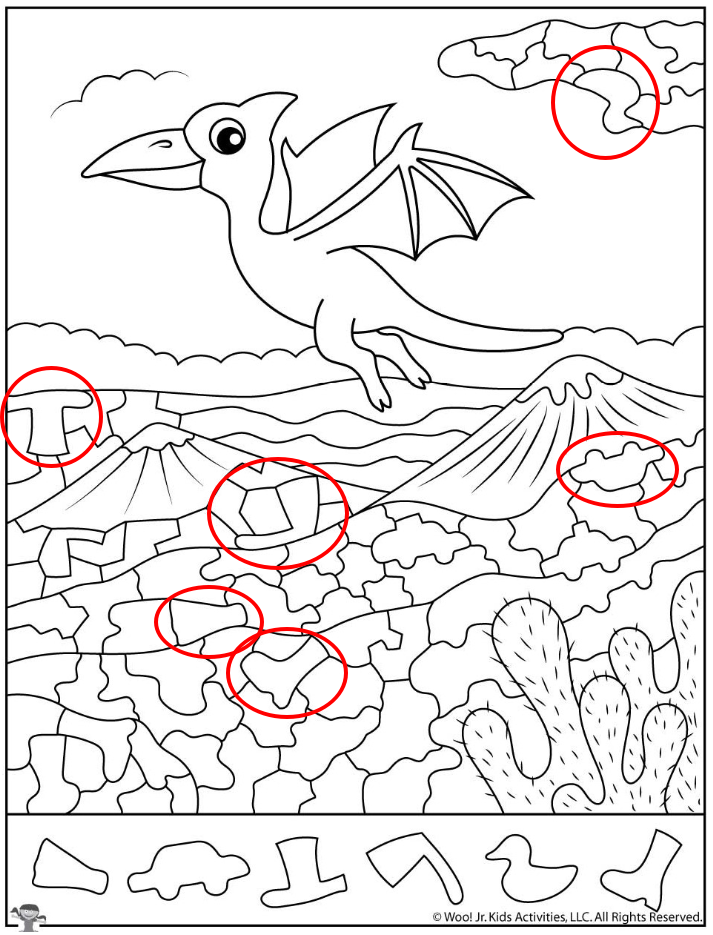
This flying dinosaur hidden picture puzzle proves that the best challenges do not shout for attention. They whisper. Through simple black and white lines, a prehistoric setting, and cleverly disguised shapes, it invites you to slow down and truly look. Each cloud, rock, and plant becomes a question mark instead of background noise. The longer you stay, the sharper your focus becomes. In a world full of distractions, this quiet puzzle offers something rare: a moment of calm curiosity where imagination leads and discovery follows.