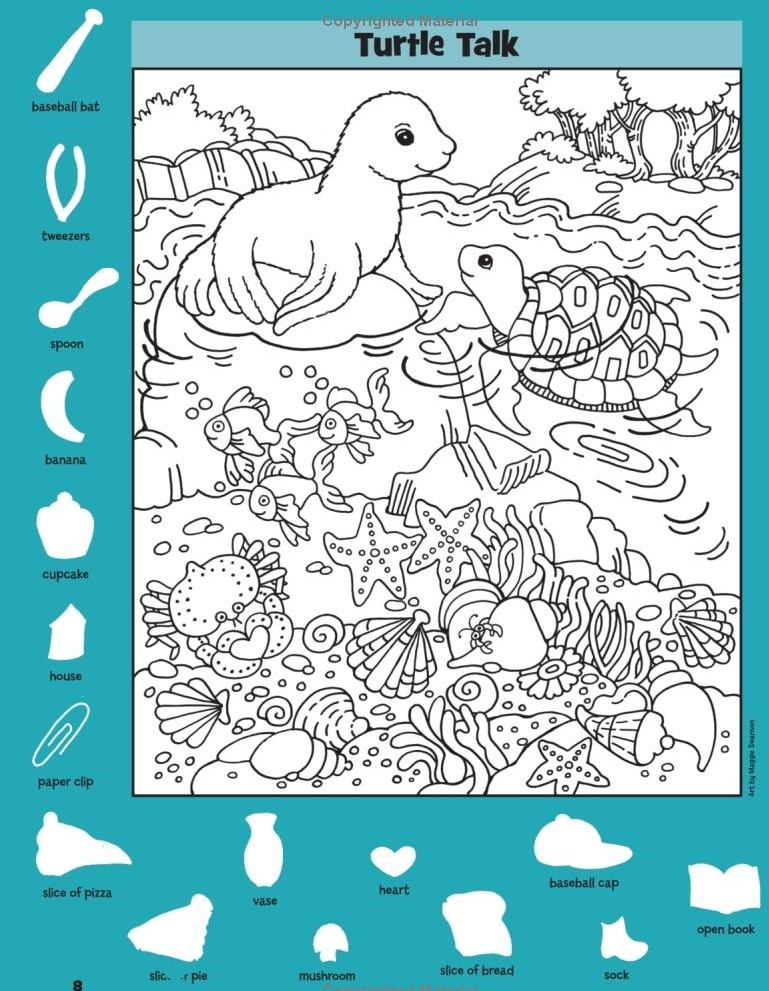
At first glance, this illustration feels peaceful and playful. A gentle turtle floats in calm water, meeting a friendly sea companion while fish dart below and coral fills the ocean floor. The scene feels like a quiet conversation happening underwater, slow and thoughtful, untouched by noise or rush. But look closer and you realize this is not just a sweet ocean drawing. It is a carefully crafted hidden object puzzle designed to test your attention, patience, and perception in the most relaxing way possible.
This image invites you to slow down. It does not shout for your attention. It whispers. And that is exactly why it works so well.
Why ocean themed puzzles feel instantly soothing
The underwater setting creates an emotional response before the puzzle even begins. Water represents calm, flow, and depth. Our brains naturally associate ocean imagery with relaxation, which lowers mental defenses. When you feel calm, you stop scanning aggressively and start observing gently.
That mental shift is critical. Hidden object puzzles thrive when you are relaxed, not rushed. The turtle scene uses flowing water lines, rounded shapes, and soft curves to lull your brain into a state of comfort. Once that happens, the hidden objects blend in effortlessly.
You think you are just enjoying the artwork. In reality, the puzzle has already begun.
The turtle as the center of attention
The turtle immediately becomes the emotional anchor of the image. Its expression feels curious and friendly, almost as if it is aware of the viewer. Your eyes return to it again and again, checking its shell, its flippers, its posture.
This is intentional visual misdirection. While your attention stays with the turtle, the surrounding environment quietly hides everyday objects in plain sight. Coral mimics shapes you recognize. Shells echo familiar outlines. Sea plants curve into silhouettes your brain wants to ignore.
The turtle does not hide anything itself. It simply keeps you distracted long enough for the rest of the image to do its work.
How hidden objects borrow the language of the ocean
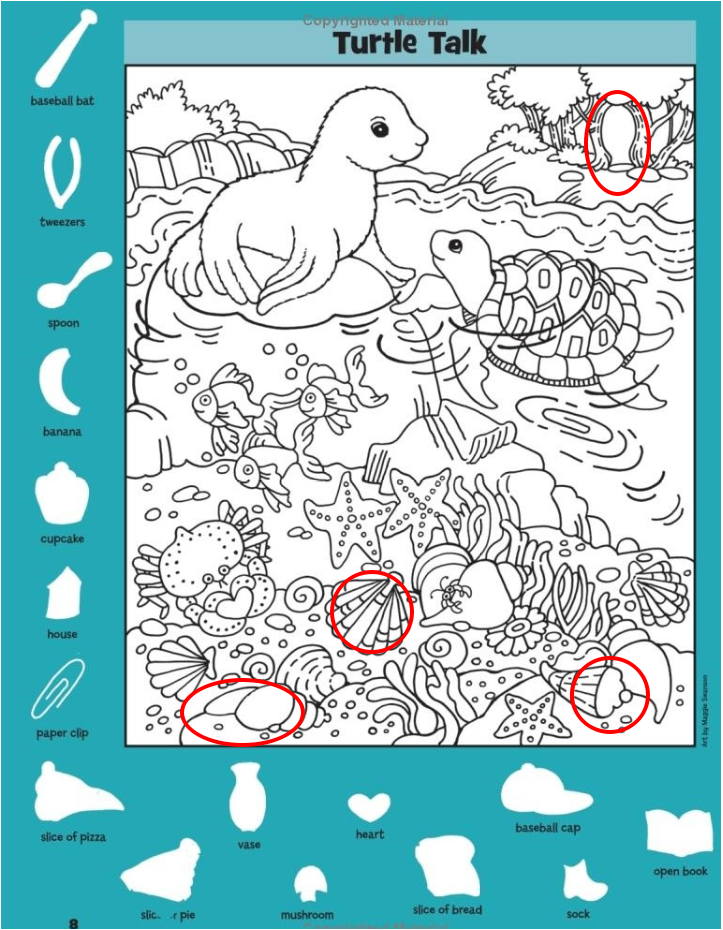
The brilliance of this puzzle lies in how normal objects are disguised using natural forms. A spoon becomes seaweed. A paper clip turns into a wave ripple. A banana adopts the curve of underwater motion. Nothing looks forced.
Our brains love patterns. When we see repeated shapes like shells, bubbles, and coral, we stop analyzing them individually. The puzzle uses that habit against us. Objects hide by becoming part of the pattern rather than standing apart from it.
That is why the longer you stare, the more surprised you feel when something suddenly appears obvious.
Why first impressions always lie
Most people assume this puzzle is easy. The drawing style feels friendly and simple. There is no heavy shading or visual clutter. That assumption is the trap.
Because the image feels easy, you look quickly. You trust your first impression. And your first impression misses almost everything.
Only when you slow down do you realize how carefully each line was placed. The water currents are not random. The coral shapes are deliberate. Even the fish positioning creates visual cover.
This puzzle rewards patience, not speed.
The joy of searching without pressure
There is no timer here. No failure message. No competition. That absence of pressure makes the experience deeply satisfying. You are free to explore, pause, and revisit areas without judgment.
This kind of interaction keeps people engaged longer. Instead of rushing to finish, you stay because the process itself feels good. Each discovered object delivers a small hit of satisfaction, like finding a shell while walking along the beach.
That emotional rhythm keeps your attention locked in.
Why hidden object puzzles sharpen real world focus
As you search, your brain shifts into a different mode. You stop seeing objects as labels and start seeing them as shapes. Curves matter more than names. Negative space becomes meaningful.
This skill transfers beyond the puzzle. You become more observant in daily life. You notice details you once overlooked. Your visual memory improves. Even your patience grows.
All from a single calm image of turtles and coral.
Why the underwater theme works for all ages
Children approach this puzzle with imagination. They invent stories about the turtle conversation. They name the fish. They explore freely.
Adults approach it analytically. They scan sections. They compare shapes. They test hypotheses.
Both approaches succeed in different ways. That universal appeal makes this type of content timeless. It works for families, classrooms, and quiet solo moments alike.
No instructions are needed. The image teaches you how to engage.
The moment everything clicks
There is always a turning point. A moment when your eyes suddenly adjust. You stop looking for objects and start recognizing them. From that point on, discoveries accelerate.
What felt impossible becomes playful. You begin to enjoy the hunt rather than worry about the result. That shift is powerful. It reminds you that perception is flexible and skill based, not fixed.
You were not missing anything earlier. You were simply looking the wrong way.
Why simple line art is more challenging than color
Without color cues, your brain cannot rely on contrast. You must depend on outline recognition alone. That makes the puzzle more challenging and more rewarding.
Line art forces deeper engagement. You cannot skim. You must truly see.
That is why this turtle puzzle stays interesting far longer than flashy, colorful games. It respects your intelligence without overwhelming your senses.
A quiet conversation beneath the surface
The title Turtle Talk feels appropriate. This image is a conversation. Not just between the animals, but between the artwork and the viewer.
It asks you to slow down. To pay attention. To trust curiosity over urgency.
In a noisy world, that invitation feels refreshing.
Conclusion
This Turtle Talk hidden object puzzle proves that calm visuals can deliver powerful engagement. Beneath its peaceful underwater scene lies a thoughtful challenge that sharpens observation, rewards patience, and invites mindful exploration. By blending everyday objects seamlessly into ocean life, the image transforms simple line art into a deeply satisfying visual experience. The longer you look, the more the ocean speaks back, reminding you that sometimes the most rewarding discoveries appear only when you slow down and truly see.