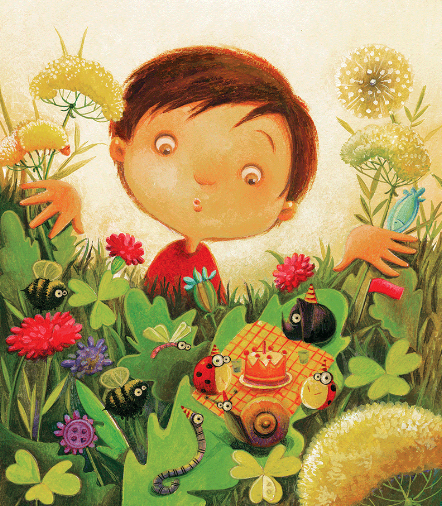
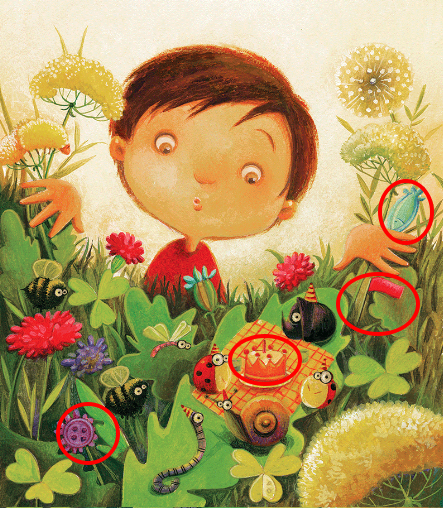
At first glance, this image feels like stepping into a dream you once had as a child but never quite remembered. A wide eyed child leans into a lush garden, arms open in surprise, discovering a tiny hidden celebration unfolding among flowers, leaves, and insects. It is playful. It is gentle. And it carries a quiet magic that pulls you closer the longer you look.
This illustration does not rush you. It invites you to pause. To look carefully. To remember what it felt like when the world seemed enormous and full of secrets waiting just beneath the surface.
The moment curiosity takes over
The child at the center of the image is not loud or dramatic. Their expression is soft, curious, almost reverent. This is the face of discovery, not fear. The garden is not something to conquer. It is something to explore.
That distinction matters. The image celebrates curiosity as a natural instinct. The child does not interrupt the tiny creatures. They observe them. They lean in gently, as if understanding that something special is happening.
This subtle emotion sets the entire tone of the scene.
A miniature world hidden in plain sight
At the heart of the image sits a tiny picnic. A small table. A cake. Insects gathered like guests at a celebration no human was meant to see. Ladybugs, beetles, snails, and worms become characters with purpose and personality.
This hidden world idea taps into a powerful childhood fantasy. The belief that life continues all around us in ways we rarely notice. That every patch of grass holds stories if we slow down enough to see them.
It transforms the garden from background scenery into a living universe.
Why gardens feel magical to children
Gardens are unpredictable. Flowers grow where they want. Bugs appear without warning. Colors change with the seasons. For a child, a garden is not just nature. It is mystery.
This image captures that perfectly. The oversized flowers frame the child like a curtain opening on a stage. The insects are not pests. They are hosts. The garden becomes a place of wonder instead of rules.
That emotional framing is why the scene feels timeless.
The power of scale in storytelling
One of the most striking elements of this illustration is scale. The child is large. The insects are small. But emotionally, the balance feels equal.
The tiny picnic carries just as much importance as the child discovering it. That equality creates respect. It suggests that every part of the natural world has value, no matter its size.
This visual metaphor resonates deeply. It teaches empathy without a single word.
Color choices that amplify imagination
The colors in the image feel warm and alive. Greens dominate, grounding the scene in nature. Reds and yellows draw attention to movement and life. Soft lighting adds a dreamlike glow.
Nothing feels harsh. Nothing feels artificial. The palette supports the sense of safety and wonder. It feels like a place you could step into without fear.
Color here is not decoration. It is storytelling.
Insects as friendly characters
Instead of frightening or gross, the insects feel charming. Their wide eyes and rounded shapes make them approachable. Even the worm feels curious rather than creepy.
This portrayal subtly shifts perception. It invites children to see insects as part of the ecosystem, not something to avoid. That shift builds respect for nature early, through imagination instead of instruction.
It is learning disguised as play.
The picnic as a symbol of harmony
A picnic suggests peace. Sharing. Celebration. By placing insects around a tiny picnic table, the image communicates harmony within nature.
Nothing is hunting. Nothing is hiding. Everything coexists. The child witnesses this balance rather than disrupting it.
That message feels especially meaningful in a world that often feels rushed and disconnected from nature.
Why hidden details increase engagement
The longer you look, the more you find. Small bugs tucked behind leaves. Subtle expressions. Tiny objects placed with intention.
This layered detail encourages active viewing. Your eyes wander. Your brain connects dots. The image rewards patience.
That kind of engagement builds focus and satisfaction naturally.
The emotional safety of the scene
There is no danger here. No sharp edges. No threat. Even surprise feels gentle.
This emotional safety makes the image comforting. It feels like a bedtime story frozen in time. A reminder that the world can still feel kind and magical.
That comfort is part of its lasting appeal.
A reflection of how children see the world
Children notice things adults miss. They see faces in clouds. Stories in shadows. Entire worlds in a pile of leaves.
This illustration honors that perspective. It does not talk down to the child viewer. It meets them where their imagination already lives.
For adults, it becomes a mirror. A reminder of how we once saw everything as alive.
Why images like this endure
Trends change. Styles evolve. But the core idea here remains timeless. Curiosity. Nature. Imagination. Discovery.
This is why such images stay relevant across generations. They speak to something universal. The desire to believe that magic still exists, quietly waiting.
Conclusion
This whimsical garden illustration captures the heart of childhood curiosity and the beauty of unseen worlds living alongside our own. Through gentle expressions, rich natural detail, and imaginative storytelling, it transforms a simple garden into a place of wonder and harmony. The hidden picnic among insects reminds us to slow down, observe, and respect the small miracles surrounding us every day. By blending imagination with nature, the image invites both children and adults to reconnect with a sense of awe that never truly fades.