At first glance, this image feels alive with curiosity. Children gather around a massive world map mural, paintbrushes in hand, eyes wide with excitement. Some paint oceans and continents. Others point, read, or laugh as they recognize animals, landmarks, and faraway places. Buckets of paint sit nearby. Books open on desks. The entire room buzzes with creative energy, like learning has stepped off the page and onto the wall.
Then something magical happens.
You realize this is not just a classroom illustration. It is a hidden picture puzzle layered inside a global exploration scene. Everyday objects wait patiently along the bottom, ready to be discovered within the colorful chaos above. A sock. A mitten. A scarf. A ruler. A comb. A heart. A boot. A pitcher. A vase. A kite. A sailboat. Suddenly, the image transforms into an engaging visual challenge that rewards careful observation and playful curiosity.
This hidden picture world map puzzle blends imagination, education, and focus into a joyful experience that feels like traveling the globe without leaving your seat.
Why world map scenes instantly spark curiosity
Maps trigger something powerful in the human mind. They promise stories, journeys, and possibilities. A world map is not just geography. It is imagination drawn in lines and colors.
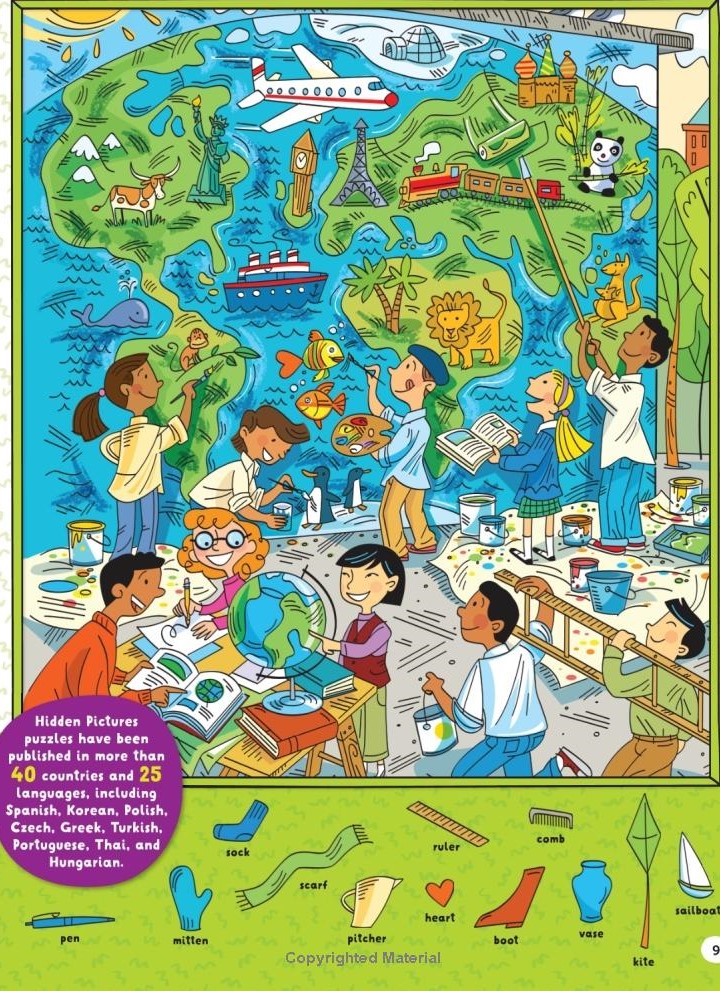
This image uses that power beautifully. The map bursts with life. Trains roll across land. Planes soar above oceans. Animals roam continents. Famous landmarks rise proudly. Every corner offers something new to notice.
When children gather around a map like this, learning stops feeling like work. It becomes exploration. That same feeling pulls the viewer in and keeps attention locked on the scene.
The joyful chaos that hides secrets everywhere
This classroom feels busy in the best possible way. Kids move in different directions. Some paint carefully. Others gesture excitedly. Tools and books scatter naturally around the room.
That joyful chaos creates the perfect hiding ground for objects. The brain jumps quickly from one exciting detail to another. In doing so, it often misses subtle shapes quietly blending into the background.
Hidden picture puzzles thrive in environments like this because excitement distracts just enough to make the challenge rewarding.
Why bright colors make searching more fun and more tricky
The colors in this image feel bold and playful. Blues splash across oceans. Greens shape continents. Reds and yellows pop from clothing and landmarks.
Color grabs attention fast. Shape takes time.
Your eyes bounce happily across the mural, but finding hidden objects requires slowing down and ignoring the color rush. You begin tracing outlines instead of chasing brightness. That shift feels satisfying, like tuning into a deeper layer of the image.
The balance between color and form keeps the puzzle engaging without feeling overwhelming.
How everyday objects disappear inside a global scene
The hidden objects feel completely unrelated to maps and classrooms. A mitten does not belong on a continent. A comb does not belong near an ocean. A sock does not belong next to a landmark.
And yet, they hide perfectly.
A scarf might echo the curve of a river. A ruler could align with a border or road. A vase might blend into architectural shapes. A kite could disguise itself among flags or birds.
Because the map already contains so many shapes and symbols, your brain accepts unfamiliar outlines without question. That acceptance is where the challenge lives.
Why children learning scenes feel especially engaging
There is something contagious about seeing kids learn together. Their expressions show curiosity, teamwork, and joy.
This image captures that energy perfectly. Every child seems absorbed in discovery. No one looks bored. No one looks rushed.
That emotional tone transfers to the viewer. You feel invited to join the activity rather than observe from a distance. Searching for hidden objects becomes part of the learning experience rather than a separate task.
The storytelling woven into the map
This image tells multiple stories at once. A train crosses land. A ship sails the sea. Animals live where they belong. Landmarks hint at culture and history.
As you search for hidden objects, those stories continue unfolding in your mind. You imagine trips, lessons, and adventures.
That narrative depth keeps engagement high. You are not just finding shapes. You are exploring a world.
Why this puzzle appeals across age groups
Children enjoy the playful art style and the challenge of spotting objects. Each discovery feels like a win.
Adults appreciate the clever composition and the nostalgic reminder of learning through creativity. The puzzle feels like a mental stretch wrapped in joy.
Older viewers enjoy the clarity and richness without feeling overwhelmed. The scene offers stimulation without pressure.
One image manages to bring generations together through curiosity.
The quiet skills built through visual searching
Hidden picture puzzles strengthen focus in a natural way. Your eyes learn to scan methodically. Your brain learns to separate signal from noise. Memory sharpens as you recall areas already explored.
These skills develop quietly, without instruction or stress. They feel like play, which makes them stick.
In a scene centered on learning, that quiet growth feels especially fitting.
Why global themes encourage longer attention
Global imagery feels endless. There is always another detail to explore. Another place to notice.
This map invites repeated scanning. Even after finding several hidden objects, your eyes keep wandering. What did I miss in that corner. What is happening near that landmark.
That sense of endless discovery keeps people engaged longer than static scenes ever could.
The satisfaction of spotting the unexpected
There is a unique joy in finding an object where it should not exist. A boot tucked into geography. A heart hiding among symbols.
That moment feels clever. You feel clever. It creates a gentle thrill that motivates continued searching.
Each discovery reinforces the idea that careful looking pays off.
Why this puzzle invites sharing and discussion
Images like this naturally spark conversation. Someone always spots an object others missed. Someone else sees a shape in a completely different way.
The map itself invites discussion. Do you see that place. Did you notice that animal. Where would you travel first.
The puzzle becomes social, extending its life beyond a single viewer.
The timeless appeal of learning through play
This image reminds us that learning does not have to feel serious. It can feel joyful, messy, and creative.
That message resonates across generations. It brings back memories of classrooms filled with color and curiosity.
Conclusion
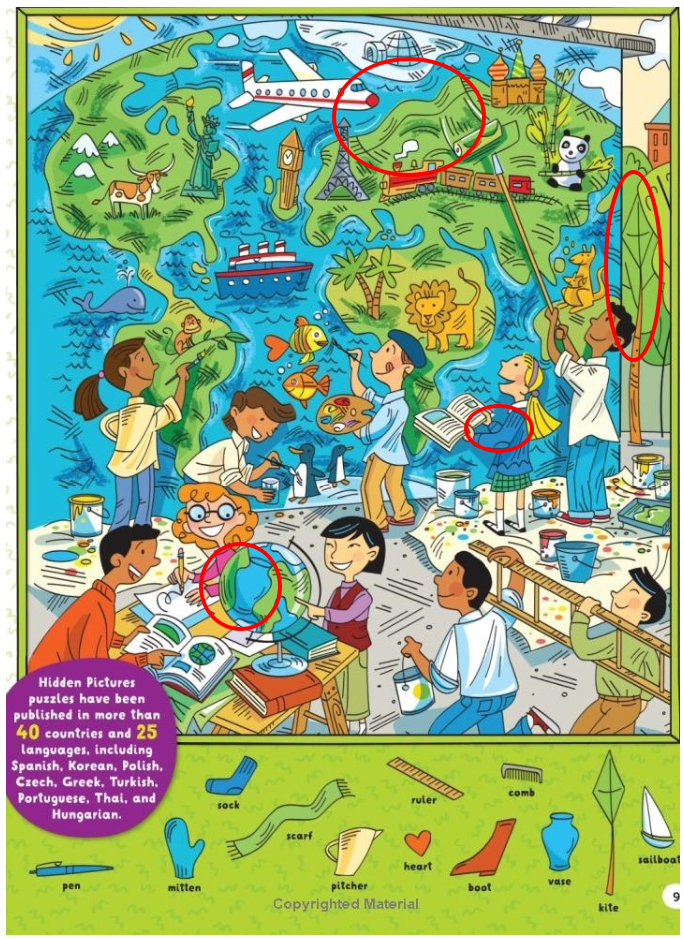
This hidden picture world map puzzle transforms a lively classroom moment into a rich adventure of observation and imagination. Through vibrant color, playful storytelling, and cleverly hidden objects, it invites viewers to slow down and explore a world filled with detail and wonder. Each discovery rewards patience and curiosity, turning learning into play and play into meaningful engagement. It reminds us that the world feels biggest and brightest when we take the time to truly look at what surrounds us.