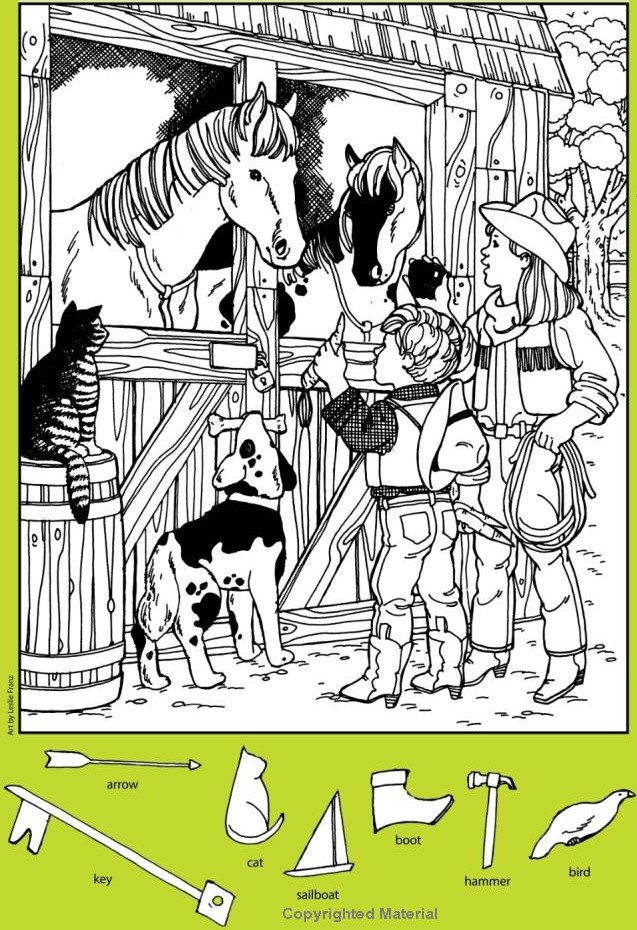
At first glance, this image feels warm and familiar. A small group stands at a wooden barn, sharing a calm moment with gentle animals. Horses lean forward from their stall, curious and relaxed. A child points with excitement. An adult holds a rope, steady and patient. A dog watches attentatively while a cat perches nearby, calm and observant. The entire scene feels like a peaceful pause in the countryside where nothing rushes and everything feels grounded.
Then the real invitation appears.
Hidden objects wait quietly within the illustration. An arrow. A key. A cat. A sailboat. A boot. A hammer. A bird. What once felt like a simple farm moment now becomes a thoughtful visual puzzle that invites you to slow down and look closer.
This hidden picture barn puzzle blends storytelling, observation, and calm curiosity into one experience that feels both comforting and engaging.
Why barn scenes create perfect hidden picture puzzles
Barns carry a special sense of order and warmth. Wooden beams, open doors, animals resting in familiar places. These environments feel structured without being rigid.
That balance matters. It gives the eyes natural paths to follow while still leaving room for surprise. Fences guide attention. Stalls create frames. Tools and textures offer places where shapes can quietly hide.
Because the scene feels realistic and grounded, the brain relaxes. When the brain relaxes, it assumes less vigilance. That assumption is exactly where hidden objects thrive.
The quiet storytelling inside the illustration
This image tells a story without words. You can almost hear the soft sounds of the barn. Hooves shifting. A dog breathing calmly. A child whispering in excitement.
The characters interact naturally. No one rushes. No one poses. That authenticity pulls you in emotionally before you even start searching.
As you begin looking for hidden objects, that story stays with you. It keeps the scene interesting even when your eyes have already scanned an area once.
How everyday shapes disappear into the environment
The objects you need to find are simple and familiar. A boot. A hammer. A sailboat. A key. A bird.
Because they belong to everyday life, your brain filters them out quickly. You see similar shapes everywhere in real barns. Wooden tools. Curved lines. Shadows. Fabric folds.
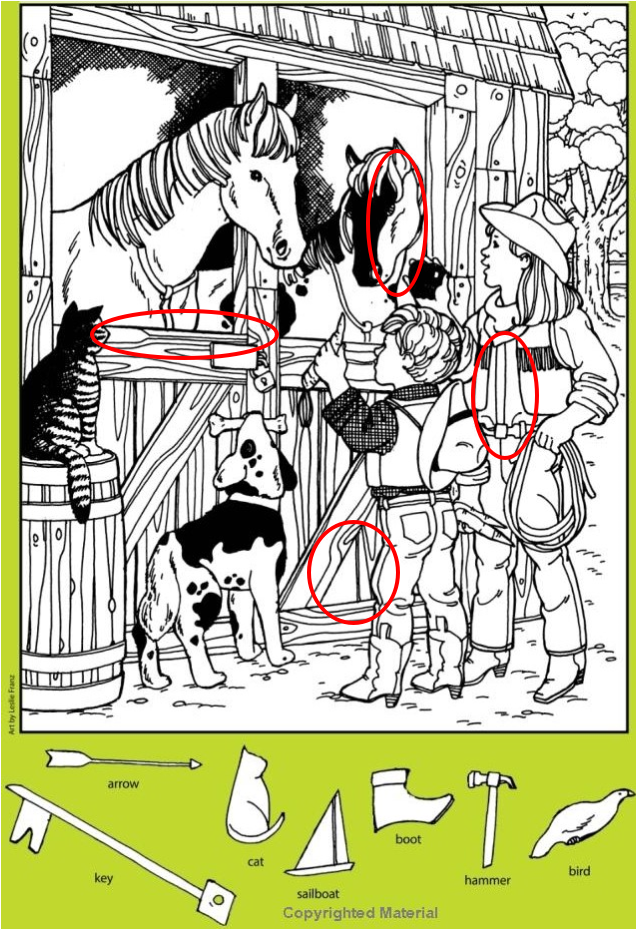
A hammer might blend into wood grain. A sailboat could echo the angle of a beam. A bird might hide inside a shape you assume is just decoration. A boot might merge into clothing or shadow.
The puzzle does not hide objects by shrinking them. It hides them by making them feel like they belong.
Why black and white line art sharpens attention
Without color, shape becomes everything. Your eyes cannot rely on contrast or brightness. They must rely on outline, proportion, and placement.
That forces slower looking. You trace lines. You examine corners. You question shapes you might normally ignore.
This style rewards patience. Each discovery feels earned rather than accidental. The moment you recognize a hidden shape, the satisfaction feels deeper because you worked for it.
The comfort of animals in visual puzzles
Animals soften the challenge. Horses feel gentle and familiar. Dogs and cats bring warmth and personality.
Their presence makes the scene feel alive rather than static. As you search, you naturally follow their gaze and posture, which guides your eyes to new areas.
Animals also anchor emotion. They make the puzzle feel safe and welcoming, which encourages longer engagement without fatigue.
Why this puzzle encourages slow exploration
Nothing in this image demands speed. The characters stand calmly. The animals rest. The environment feels stable.
That pace carries into the puzzle itself. You cannot rush through it. Fast scanning only leads to missed details.
Instead, the puzzle invites you to explore slowly, like walking through a barn and noticing textures, tools, and animals one by one.
That slow pace turns searching into something almost meditative.
The joy of spotting a hidden object at last
There is a special moment when a shape suddenly makes sense. Something you dismissed as background becomes the object you were searching for.
That click feels rewarding. It brings a quiet smile rather than loud excitement. You feel satisfied, not rushed.
This type of joy lingers. It makes you want to keep searching, even after finding several objects.
Why farm themed puzzles appeal to all ages
Children love the animals and the sense of discovery. Finding an object feels like uncovering a secret.
Adults appreciate the calm challenge and the nostalgic setting. Barn scenes often connect to memories of trips, stories, or simple moments away from noise.
Older viewers enjoy the gentle mental stimulation. The puzzle challenges attention without pressure or complexity.
One image manages to speak to everyone without changing its tone.
The subtle lessons hidden in the search
This puzzle builds observation skills quietly. Your eyes learn to slow down. Your brain learns to question assumptions.
You begin noticing how shapes repeat, how shadows form, how lines guide perception. These skills transfer naturally into everyday awareness.
The learning happens without instruction. It happens because the puzzle invites it.
Why familiar environments create stronger engagement
When a scene feels familiar, people stay longer. They feel comfortable exploring it.
This barn scene feels real. It feels like a place you could step into. That familiarity makes you care about finding everything.
You are not just completing a task. You are spending time in a place.
The balance between detail and clarity
The illustration includes enough detail to challenge the eye but not so much that it overwhelms.
Each element has space to breathe. That clarity allows hidden objects to blend naturally without disappearing unfairly.
This balance keeps frustration low and satisfaction high.
Why this puzzle invites repeated viewing
Even after finding all the objects, the image still offers value. You notice expressions. You follow a different line of sight. You appreciate the scene as a whole.
That layered design makes the puzzle enjoyable beyond the challenge itself.
People return to images like this not just to solve them, but to experience them again.
The timeless appeal of barn life imagery
Barn scenes do not belong to a trend. They feel timeless.
Wood, animals, people working together. These images remain meaningful regardless of era.
That timeless quality gives this puzzle lasting appeal and relevance.
Why hidden picture puzzles like this stay memorable
Conclusion
This hidden picture barn puzzle transforms a quiet farm visit into a thoughtful journey of observation and discovery. Through warm storytelling, familiar animals, and cleverly hidden shapes, it invites viewers to slow down and truly see what lies within the scene. Each found object rewards patience and attention, turning a simple illustration into a meaningful experience. It reminds us that the most rewarding discoveries often appear when we take the time to look closely at places that already feel like home.