At first glance, this image feels playful and slightly absurd in the best way. A stork and a fox sit across from each other at a round table, each sipping soup from tall glass flasks. The room glows with warm colors. Windows frame the background. A soft lamp hangs above, setting a cozy mood. It feels like a scene pulled from a storybook where animals behave like people and anything seems possible.
Then your eyes drift downward and notice a row of small shapes waiting patiently. Everyday objects hide somewhere in the picture. Suddenly, the scene shifts from simple charm to an engaging challenge that invites you to look closer and think deeper.
This hidden picture animal dinner puzzle transforms a whimsical moment into a thoughtful visual experience that rewards attention, curiosity, and patience.
Why animal story scenes make hidden picture puzzles irresistible
Animal characters immediately disarm the viewer. They feel friendly, familiar, and slightly magical. When animals sit at a table like humans, the brain relaxes and opens up to imagination.
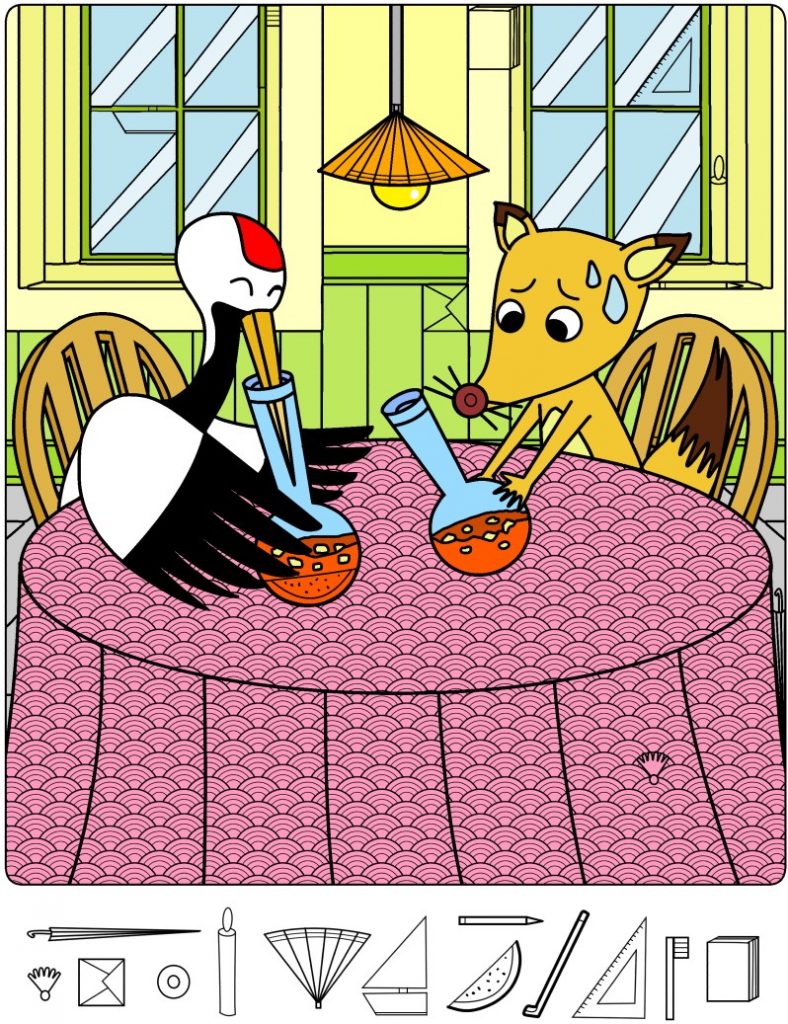
This image uses that effect perfectly. The stork looks confident and calm. The fox appears nervous, a bead of sweat on its face hinting at discomfort. That contrast adds humor and subtle tension, pulling you into the story before you even start searching.
Because the scene feels like a fable, you instinctively linger. You want to understand what is happening. That lingering creates the perfect environment for a hidden picture puzzle.
The quiet storytelling happening at the table
There is a story unfolding here without a single word. The stork drinks easily from a long beak friendly container. The fox struggles, unable to reach the soup properly. This simple setup mirrors classic lessons about perspective and fairness.
As you search for hidden objects, that story stays in the back of your mind. It gives meaning to the environment. You are not just scanning shapes. You are exploring a moment frozen in time.
That narrative layer deepens engagement and keeps your attention anchored.
How hidden objects blend into bold colors and patterns
The colors in this image are rich and confident. Pink tablecloth patterns repeat rhythmically. Green walls and yellow windows frame the scene. These strong shapes create ideal hiding spots.
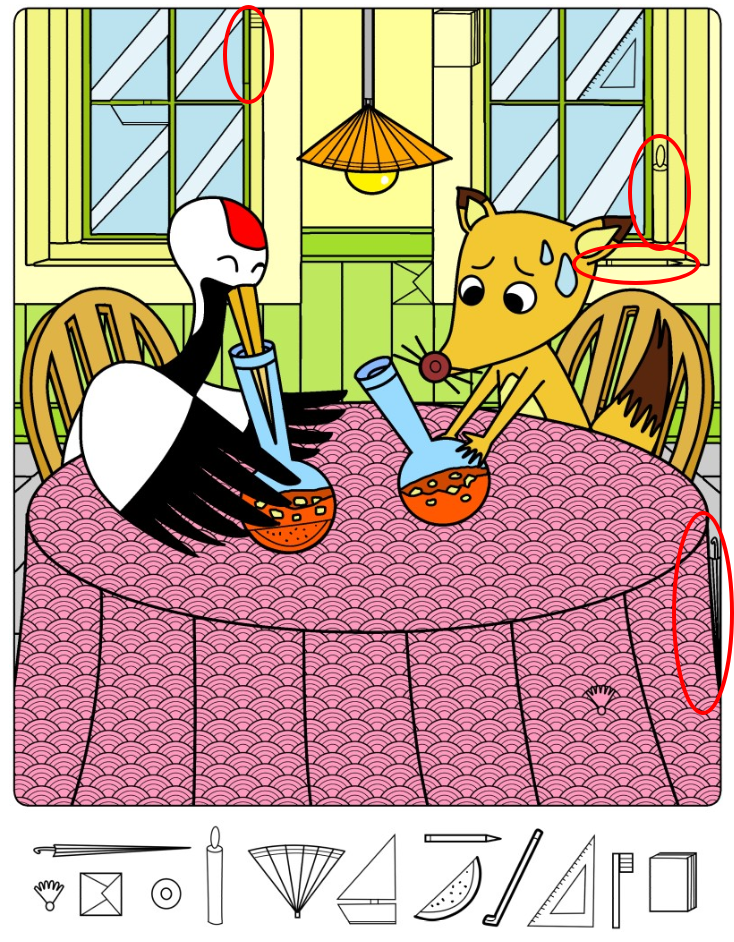
A candle might merge into the lamp or background lines. A fan shape could echo patterns on the tablecloth. A ruler might disguise itself as part of the window frame. A book could blend into the furniture. Each object feels like it belongs, even when it does not.
This blending challenges the brain gently. You see the shapes, but your mind has to decide whether they are decoration or something more.
Why bold illustration styles sharpen focus
Unlike soft sketches, bold line art and bright colors demand attention. They create clear boundaries and strong contrasts.
That clarity helps the puzzle feel fair. When you miss an object, it is not because it is invisible. It is because your brain categorized it too quickly as background.
This type of visual challenge trains you to slow down and question first impressions. That process feels satisfying rather than frustrating.
The balance between humor and challenge
This puzzle never feels serious. The animals alone guarantee a sense of fun. The exaggerated expressions and unusual dinnerware add lightness.
At the same time, the hidden objects require real focus. You cannot solve it by glancing once and moving on. You have to commit.
That balance keeps engagement high. You feel entertained while being mentally active, like laughing while solving a riddle.
Why this puzzle keeps viewers engaged longer
Hidden picture puzzles work because they create a loop of curiosity. You find one object and feel accomplished. That feeling pushes you to search for the next.
In this scene, the environment offers many layers. The table. The dishes. The chairs. The windows. Each area feels like it might hold a secret.
Even after finding several objects, you hesitate to stop. There is always the sense that one more remains just out of sight.
The comfort of indoor scenes in visual puzzles
Indoor settings feel safe and contained. Your eyes do not have to travel endlessly. Everything exists within a defined space.
This dining room scene uses that containment well. The walls frame the action. The table anchors the center. The objects hide within a manageable area.
That structure reduces visual fatigue and makes longer engagement feel natural.
Why adults enjoy puzzles disguised as stories
Adults often crave experiences that feel meaningful without being demanding. This puzzle offers that balance.
The story element adds depth. The visual search adds purpose. Together, they create an experience that feels richer than a simple game.
You are not just finding shapes. You are interpreting a scene, noticing emotions, and enjoying design choices.
The subtle satisfaction of spotting what others miss
There is a quiet pride in finding a hidden object that blends perfectly into the scene. It feels like noticing a clever detail in a painting.
That moment of recognition sparks joy. It makes you want to double check the rest of the image to see what else you might have overlooked.
This sense of discovery is what makes hidden picture puzzles so addictive in a gentle way.
Why this puzzle works for different ages
Children enjoy the animals and the bright colors. The challenge feels like a game rather than a task.
Adults appreciate the humor and the visual complexity. The story resonates on a deeper level.
Older viewers enjoy the calm pace and the clear structure. The puzzle offers stimulation without pressure.
One image manages to welcome everyone without changing its tone.
The educational value hidden beneath the surface
This puzzle builds observation skills naturally. Your eyes learn to scan patterns methodically. Your brain practices separating signal from noise.
It also encourages patience. Rushing does not help. Only careful looking leads to success.
These skills develop quietly, wrapped inside entertainment.
Why whimsical scenes leave a lasting impression
Whimsical illustrations stick in memory because they surprise us. A fox and a stork sharing dinner is not something you see every day.
That uniqueness makes the image memorable. Even after finishing the puzzle, the scene stays with you.
Memorable content invites return visits and repeat enjoyment.
The charm of classic fable inspired visuals
This image echoes classic fables without retelling them directly. That familiarity adds depth.
Viewers sense the lesson without being told. That subtlety feels respectful and engaging.
It turns the puzzle into more than a challenge. It becomes a reflection.
Conclusion
This hidden picture animal dinner puzzle transforms a colorful and humorous table scene into a thoughtful visual adventure. Through bold illustration, subtle storytelling, and cleverly hidden objects, it invites viewers to slow down and truly observe. Each discovery adds to the charm of the moment, blending curiosity with quiet satisfaction. It reminds us that even the most playful scenes can hold layers of meaning when we take the time to look a little closer.