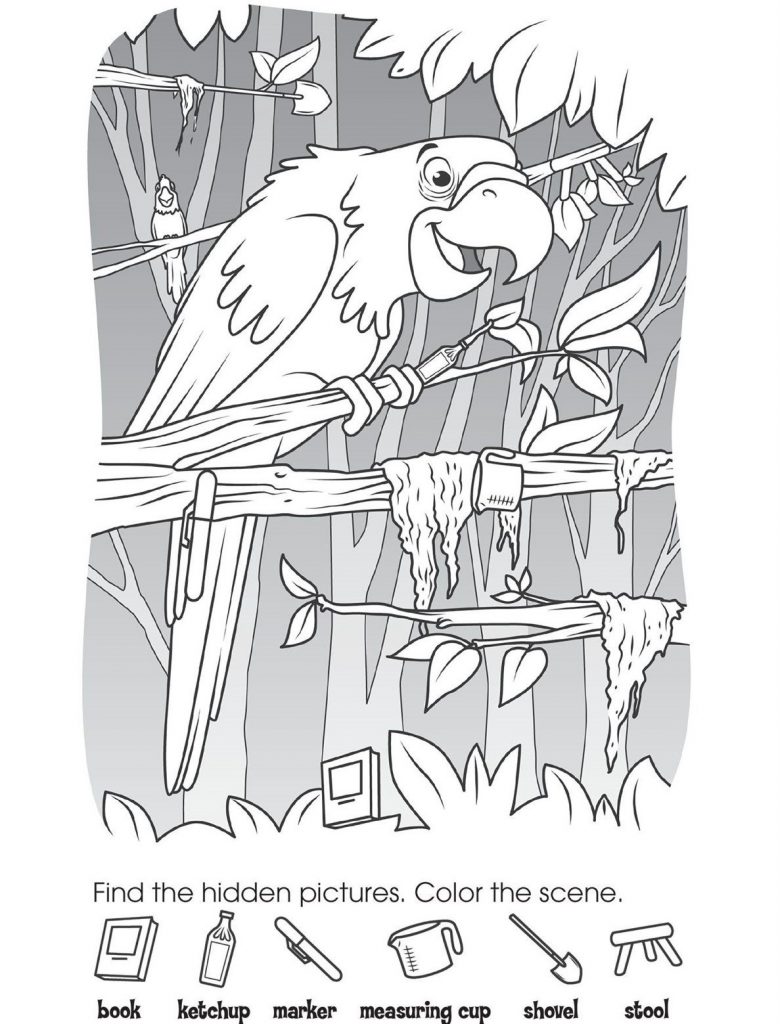
At first look, this picture feels peaceful. A cheerful parrot rests on a branch deep in the jungle. Leaves frame the scene. Vines hang lazily. Everything feels slow and natural, like a quiet moment in the forest when nothing rushes you. Then your eyes drift downward and the real invitation appears. Find the hidden pictures. Color the scene.
That single instruction changes everything.
What once looked like a simple coloring page becomes a gentle challenge that rewards patience, curiosity, and careful observation. This hidden picture jungle parrot puzzle invites you to slow down and look closer, transforming a calm illustration into an engaging visual journey that feels both playful and satisfying.
Why nature themed hidden picture puzzles feel so relaxing
There is something special about puzzles set in nature. Trees, leaves, birds, and soft shapes create a sense of balance. The brain relaxes before it even starts searching.
This parrot scene uses that effect beautifully. The branches guide your eyes naturally from top to bottom. The parrot becomes a friendly guide, watching as you explore the image. The background trees add depth without overwhelming the foreground.
Because the scene feels calm, your mind stays open. You do not feel rushed or pressured. You feel invited. That emotional tone makes it easier to focus for longer periods of time.
The joy of discovering hidden objects in plain sight
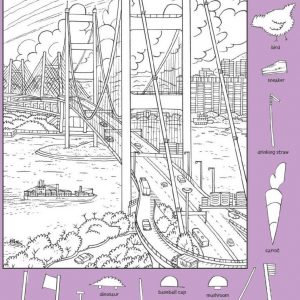
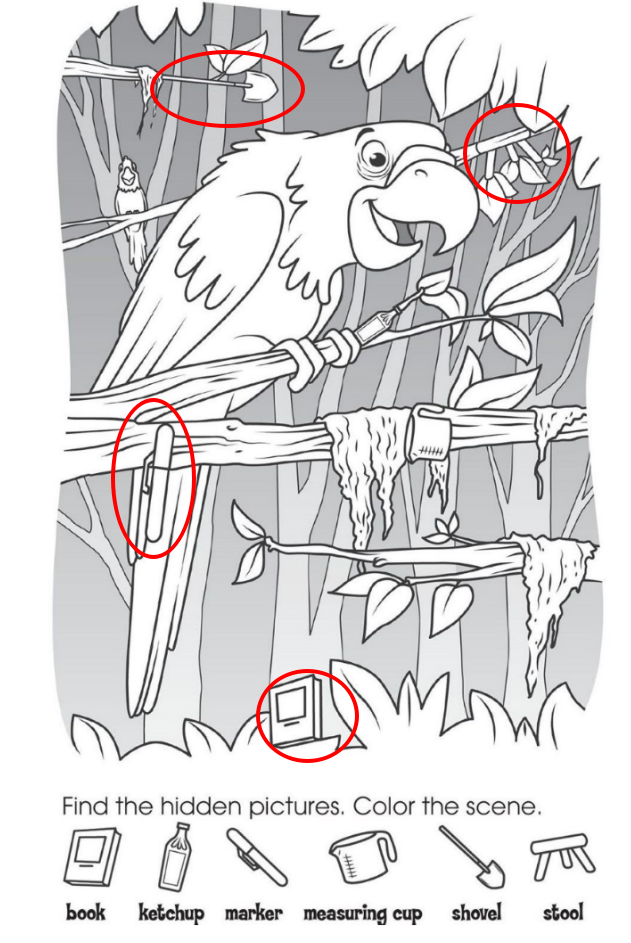
At the bottom of the image, a simple list waits quietly. A book. A ketchup bottle. A marker. A measuring cup. A shovel. A stool. Each object looks ordinary and familiar.
Inside the picture, they become clever shape shifters.
A marker might disguise itself as part of a branch. A shovel could hide within the angle of a leaf. The measuring cup may blend into the background shadows. The book might sit quietly near the ground, waiting for your eyes to finally notice it.
The beauty of this puzzle lies in its fairness. Nothing feels impossible. Every object is there, visible once you truly see it. The challenge is not trickery. It is attention.
Why this type of puzzle holds attention so naturally
Hidden picture puzzles work because they create a clear goal without stress. You know exactly what you are looking for, but you do not know where it is. That balance keeps the mind engaged.
In this parrot puzzle, the scene is detailed enough to require focus, but clean enough to avoid frustration. Your eyes move slowly across the image, checking branches, vines, and empty spaces.
Each time you find an object, a small spark of satisfaction appears. That feeling pushes you forward. You want to find just one more.
The calming power of combining puzzles with coloring
This image does something especially smart. It invites coloring after the search. That means the experience does not end when the last object is found.
Coloring extends the moment. It deepens focus. It turns discovery into creativity. You move from searching to expressing, using color to bring the jungle to life.
For children, this supports fine motor skills and patience. For adults, it becomes a mindful activity that quiets the noise of the day. The combination of puzzle and coloring feels complete, like finishing a walk and then sitting to enjoy the view.
How the parrot becomes the heart of the scene
The parrot is more than decoration. Its friendly expression anchors the image emotionally. It feels like a companion rather than a subject.
Your eyes return to the parrot again and again as you search. That familiarity keeps you grounded. It prevents visual fatigue. The bird almost feels like it is sharing the secret of where things hide, even if it never gives anything away.
This emotional connection makes the puzzle more memorable. You are not just finding objects. You are spending time in a place.
Why simple line art makes puzzles more engaging
The black and white line style plays an important role. Without color, shapes stand out clearly. Shadows and outlines become meaningful.
This forces the brain to rely on structure instead of color cues. It sharpens perception. When you later color the image, everything feels earned, as if you have unlocked the scene through attention.
The simplicity of the lines also invites imagination. You decide what the jungle looks like. You choose the mood through color. That personal involvement deepens engagement.
Why this puzzle appeals to all ages
Children enjoy the sense of discovery and the chance to color freely. They feel proud when they find an object on their own.
Adults appreciate the calm focus. It feels like a break from screens and noise without disconnecting completely.
Older viewers enjoy the gentle challenge. It stimulates the mind without pressure or complexity.
This broad appeal makes the puzzle feel welcoming rather than niche. Anyone can sit down with it and feel comfortable.
The subtle learning hidden inside the activity
While it feels like play, the puzzle builds important skills. Visual scanning improves as the eyes learn to move systematically. Memory strengthens as you remember where you have already looked. Patience grows with each careful search.
Coloring adds another layer. It encourages planning, creativity, and attention to detail. Together, these elements create a rich experience that supports both relaxation and mental clarity.
Why people return to hidden picture puzzles again and again
Hidden picture puzzles never truly get old. Even after solving one, the memory of the experience stays pleasant. That positive association makes people seek out similar challenges.
The calm satisfaction of finding what was hidden creates a quiet reward. It does not shout. It does not overwhelm. It simply feels good.
This parrot puzzle fits perfectly into that tradition. It respects the viewer’s time and attention. It offers just enough challenge to feel meaningful.
The lasting charm of jungle themed illustrations
Jungle scenes tap into curiosity and wonder. They feel full of life and mystery. Even in simple line art, they suggest depth and exploration.
This image uses that feeling well. The branches feel layered. The leaves create rhythm. The hidden objects feel like part of the environment rather than interruptions.
That harmony makes the puzzle feel natural, as if the objects belong there and are simply waiting to be noticed.
Conclusion
This hidden picture jungle parrot puzzle turns a peaceful coloring page into a thoughtful visual adventure. Through calm design, clever object placement, and a gentle invitation to slow down, it creates an experience that feels both relaxing and rewarding. Whether you enjoy searching, coloring, or simply spending time with a friendly parrot in a quiet forest, this puzzle reminds us that sometimes the greatest joy comes from looking a little closer at what is already in front of us.