Hidden Objects Puzzle Illustration: A Colorful Brain-Boosting Challenge That Sharpens Focus and Sparks Curiosity
A Playful Visual Explosion That Grabs Attention Instantly
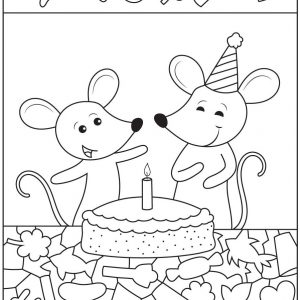
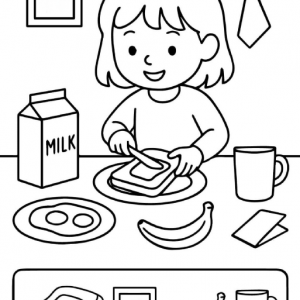
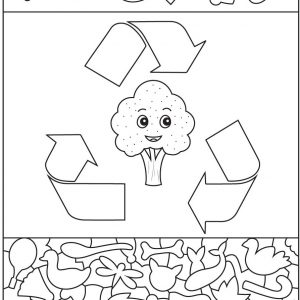
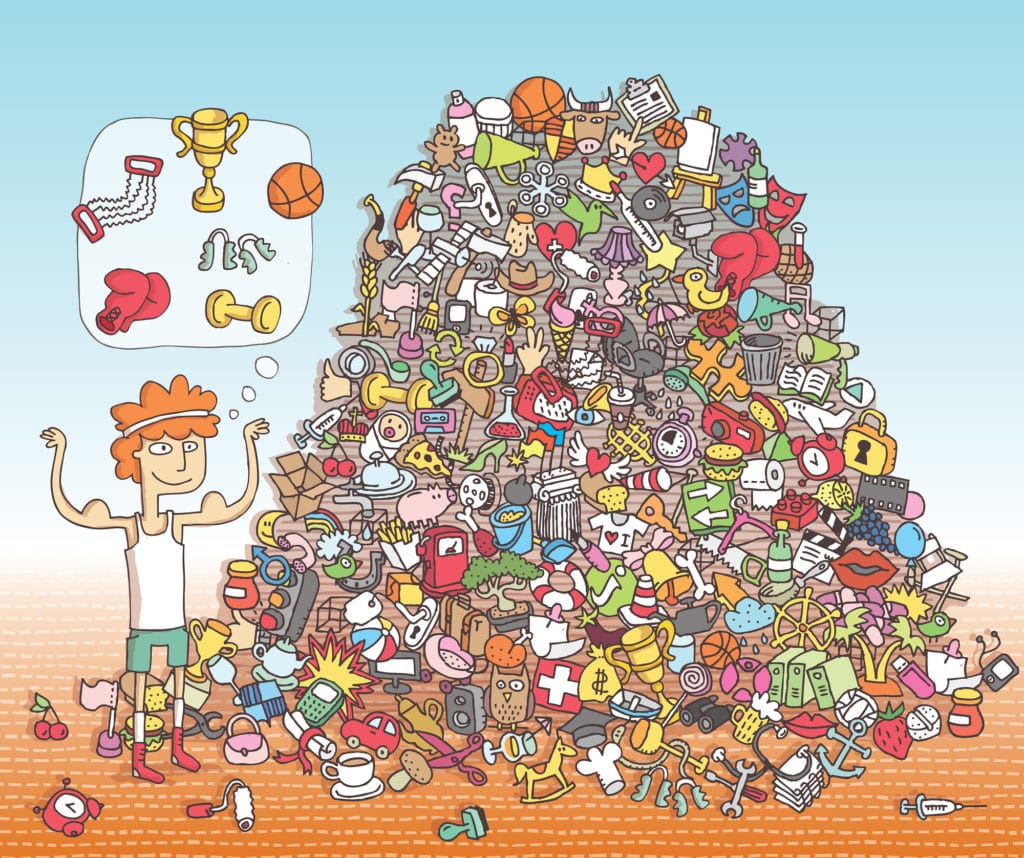
At first glance, this image feels like pure chaos—in the best possible way. A towering pile of everyday objects rises high, packed with colors, shapes, and tiny details. Sports gear, food, tools, symbols, toys, and random items all collide into one massive visual mountain. On the side stands a character, arms raised, clearly overwhelmed yet curious.
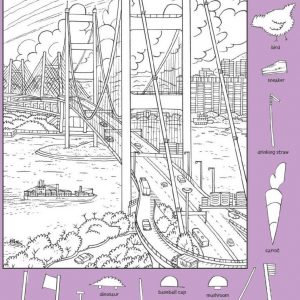
This isn’t just a fun illustration. It’s a cleverly designed hidden objects puzzle that turns visual overload into an engaging mental workout. The longer you look, the more your brain lights up.
And that’s exactly the point.
Why Hidden Object Illustrations Are So Irresistible
Hidden object puzzles tap into something deeply human. We love order inside chaos. We enjoy the challenge of finding meaning when everything looks messy. This image gives you just enough confusion to keep you searching—but not enough to make you quit.
Your eyes bounce from object to object, trying to make sense of it all. Somewhere in that colorful pile, specific items are waiting to be found. The thrill comes from spotting something familiar in a sea of distractions.
It’s like searching for your keys in a cluttered room—frustrating at first, then deeply satisfying when you finally see them.
A Visual Puzzle That Trains the Brain Without Feeling Like Work
What makes this type of image so powerful is how effortlessly it trains your mind. You’re not reading instructions or solving equations. You’re simply looking.
Yet as you scan the illustration, your brain practices:
- Visual scanning
- Selective attention
- Pattern recognition
- Mental filtering
You begin ignoring irrelevant shapes and zoning in on specific forms. That’s real cognitive training, disguised as play. It’s the kind of brain exercise that doesn’t feel like exercise at all.
The Psychology Behind Visual Overload and Focus
At first, the image feels overwhelming. That’s intentional. Visual overload forces your brain to slow down and choose what matters.
Once you stop trying to see everything, you start seeing specific things. That shift—from chaos to clarity—is where focus is born. It’s a powerful mental skill, especially in a world full of constant distractions.
This puzzle gently teaches your brain how to focus again.
Why Everyday Objects Make the Best Hidden Puzzles
One of the smartest design choices in this illustration is the use of familiar items. Balls, food, tools, symbols, and household objects blend together because you already recognize them.
That familiarity works against you at first. Your brain assumes it has already “seen” everything. But when you look again, details jump out. A shape you ignored suddenly matters. A color leads you to an outline you missed.
The puzzle doesn’t trick you—it invites you to look deeper.
Perfect for Kids, Adults, and Anyone Who Loves a Challenge
This kind of hidden object illustration works across age groups effortlessly.
Kids love the bright colors and playful chaos. Adults enjoy the challenge and the mental reset. Older viewers appreciate the clear outlines and the satisfaction of spotting details.
It can be enjoyed solo or shared. Parents and kids can search together. Friends can compete casually. Teachers can use it as a quiet classroom activity. It turns focus into a social experience.
How Hidden Object Images Encourage Mindful Attention
Unlike fast-paced games, this puzzle rewards patience. There’s no timer. No pressure. No “wrong” way to play.
You move at your own pace. You pause. You return. You notice new things each time. That gentle rhythm encourages mindfulness without ever saying the word.
It’s like meditation—but with cartoons and color.
Why These Images Keep Viewers Engaged Longer
From a content perspective, hidden object illustrations are engagement magnets. People don’t just glance and scroll away. They stop. They zoom in. They search.
That extended interaction creates a positive user experience. When content feels fun instead of demanding, people stay longer and explore more. That’s why visual puzzles perform so well across platforms.
Curiosity always beats urgency.
The Smart Art Design Behind the Chaos
Despite how chaotic it looks, this illustration is carefully balanced. Colors repeat to guide the eye. Shapes overlap intentionally. No single object dominates the scene.
Every item serves a purpose—either as a target to find or as visual camouflage. That balance between clarity and clutter is what makes the puzzle challenging but fair.
When you finally spot an object you’ve been searching for, it feels obvious in hindsight. And that moment is pure reward.
Why Visual Puzzles Feel So Rewarding Emotionally
Finding a hidden object triggers a small dopamine hit. Your brain loves that “aha” moment. It reinforces curiosity and keeps you engaged.
That emotional reward is why people return to puzzles like this again and again. Each discovery feels earned. Each success feels personal.
You’re not just looking—you’re accomplishing something.
Conclusion: Chaos That Turns Into Clarity
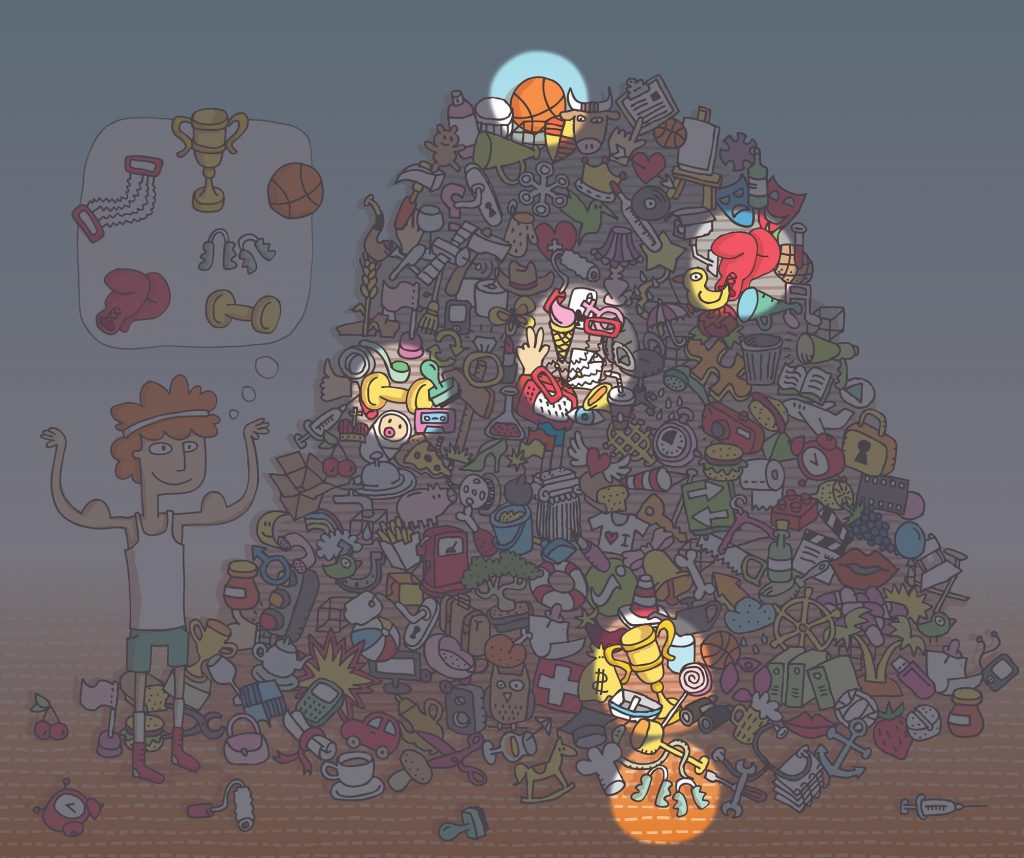
This hidden objects puzzle illustration proves that even the most chaotic visuals can become meaningful with the right perspective. What starts as an overwhelming pile of colorful items slowly transforms into an engaging mental challenge that sharpens focus, builds patience, and rewards curiosity.
By blending familiar objects with clever design, the image invites viewers to slow down, look closer, and enjoy the process of discovery. Every object found brings a moment of satisfaction. Every missed detail encourages another look.
Sometimes, the best way to clear your mind isn’t to escape the clutter—but to explore it one detail at a time.