Overslept! A Hidden-Object Morning Puzzle That Turns Chaos Into Fun
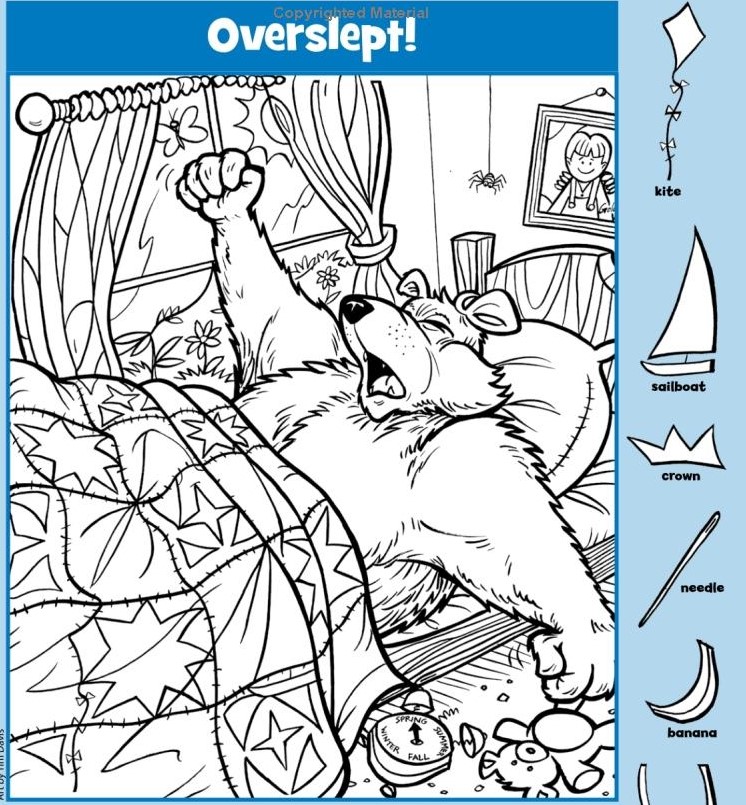
Waking up late is stressful in real life—but in this illustration, it’s pure entertainment. The image titled “Overslept!” transforms a familiar morning panic into a clever hidden-object puzzle that invites you to slow down, look closely, and enjoy the mess instead of rushing through it.
At the center of the scene, a sleepy bear stretches dramatically in bed, mouth wide open in a yawn that practically echoes through the room. Around it, the bedroom feels alive with tiny details, misplaced items, and playful clues waiting to be discovered. What looks like a simple cartoon quickly becomes a visual challenge that pulls you in deeper with every glance.
Why the ‘Overslept’ Scene Instantly Grabs Attention
This illustration works because it tells a story before you even start searching.
You instantly understand the moment:
The bear overslept. The alarm didn’t help. The morning is already off track.
That emotional connection hooks you. Instead of staring at a static puzzle, you’re stepping into a relatable situation—one we’ve all lived through. And once you’re emotionally invested, your curiosity naturally kicks in.
What’s hidden? Where is it? How did things get this messy?
A Cozy Bedroom Packed With Clever Visual Distractions
The setting is deceptively simple: a bed, a window, curtains, a few decorations. But every inch of the scene is intentionally designed to distract your eyes.
Patterns overlap. Textures repeat. Lines blend together.
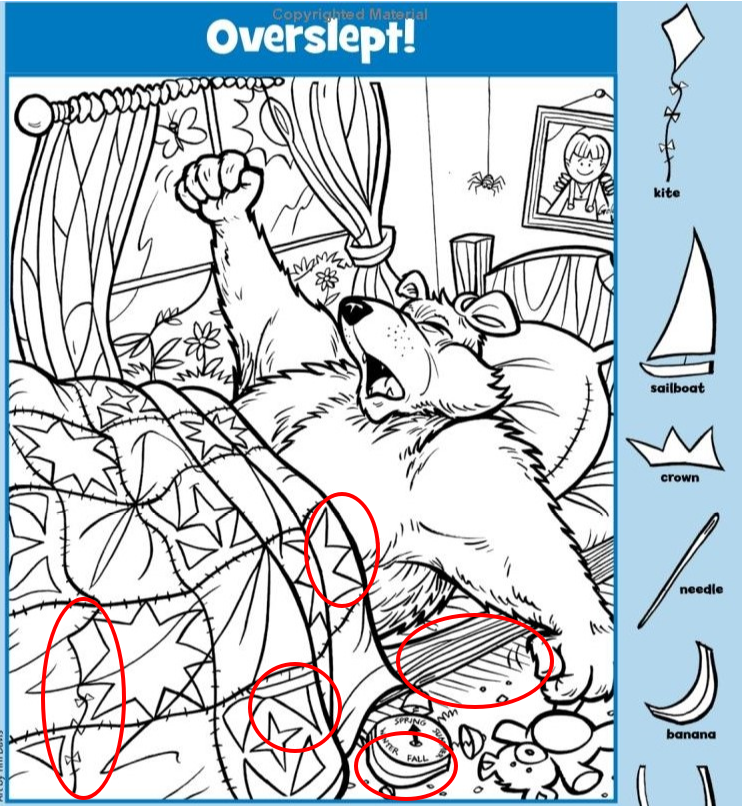
The quilt alone is a maze of shapes and angles, making it the perfect hiding place. Curtains curve and fold, mimicking outlines of unrelated objects. Even the bear’s fur creates visual noise that masks small items hiding in plain sight.
This kind of design forces your brain to work harder—and that’s exactly what makes it fun.
The Hidden Objects Challenge: Simple List, Tricky Execution
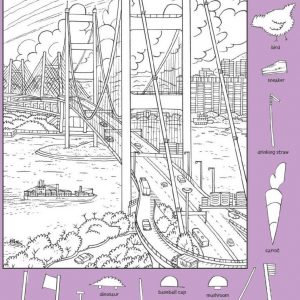
On the side of the image, a small list of objects waits patiently to be found. At first glance, they seem easy. Familiar shapes. Everyday items.
But once you begin searching, you realize the trick:
Nothing looks the way you expect it to.
Objects might be:
- Rotated
- Partially hidden
- Blended into patterns
- Disguised as background details
Your brain keeps saying, “That should be easy.”
Your eyes keep proving otherwise.
Why Your Brain Struggles (Even When You’re Sure You’re Right)
This puzzle plays with perception.
Your brain relies on shortcuts—quick shape recognition, color matching, and familiar outlines. The illustration breaks those shortcuts on purpose.
Suddenly, a needle doesn’t look like a needle.
A crown doesn’t look royal.
A banana hides in curves you’d normally ignore.
That mental tug-of-war is what keeps you engaged. You’re not just looking—you’re recalibrating how you see.
The Humor That Keeps the Puzzle Light and Enjoyable
Let’s be honest: the yawning bear steals the show.
Its exaggerated pose adds humor and warmth, making the challenge feel playful instead of frustrating. Even when you miss an object five times in a row, the scene feels forgiving—almost encouraging.
It’s like the image is saying, “Relax. Take your time. Mornings are messy.”
That emotional tone is powerful. It keeps people smiling while they search.
Why Hidden-Object Puzzles Like This Are Perfect for All Ages
Kids love the cartoon style and friendly characters. Adults appreciate the clever design and mental challenge.
This puzzle doesn’t rely on speed or advanced skills. It rewards patience, curiosity, and observation. Anyone can enjoy it—no instructions needed beyond “look closer.”
That universal accessibility is exactly why hidden-object puzzles remain popular across generations.
How This Image Encourages Mindful Focus
In a world full of notifications and fast scrolling, this image quietly asks you to pause.
To slow down.
To look carefully.
To notice small details you’d normally skip.
That’s mindfulness disguised as fun.
You’re not multitasking. You’re not rushing. You’re fully present with the image—and that’s surprisingly refreshing.
A Visual Lesson in Embracing Imperfect Mornings
Beyond the puzzle itself, the image delivers a subtle message: mornings don’t have to be perfect to be enjoyable.
The bed is messy. The bear is late. The room is chaotic. And yet, the scene feels warm, safe, and humorous.
There’s comfort in that. It reminds us that even when we oversleep, life doesn’t fall apart—it just becomes a little more interesting.
Conclusion: A Cozy Puzzle That Turns Oversleeping Into Joy
The “Overslept!” hidden-object image proves that the best puzzles do more than challenge your eyes—they tell a story. With its charming character, layered design, and clever visual tricks, this illustration transforms a rushed morning into a calm, engaging experience.
You don’t just search for objects—you explore a moment. And by the time you find the last hidden item, you’ll realize something unexpected happened along the way.
You slowed down. You focused. You smiled.
And that makes this puzzle worth every second.