The Hidden Faces of Nature: Decoding the Symbolism in a Surreal Tree and Crane Illustration
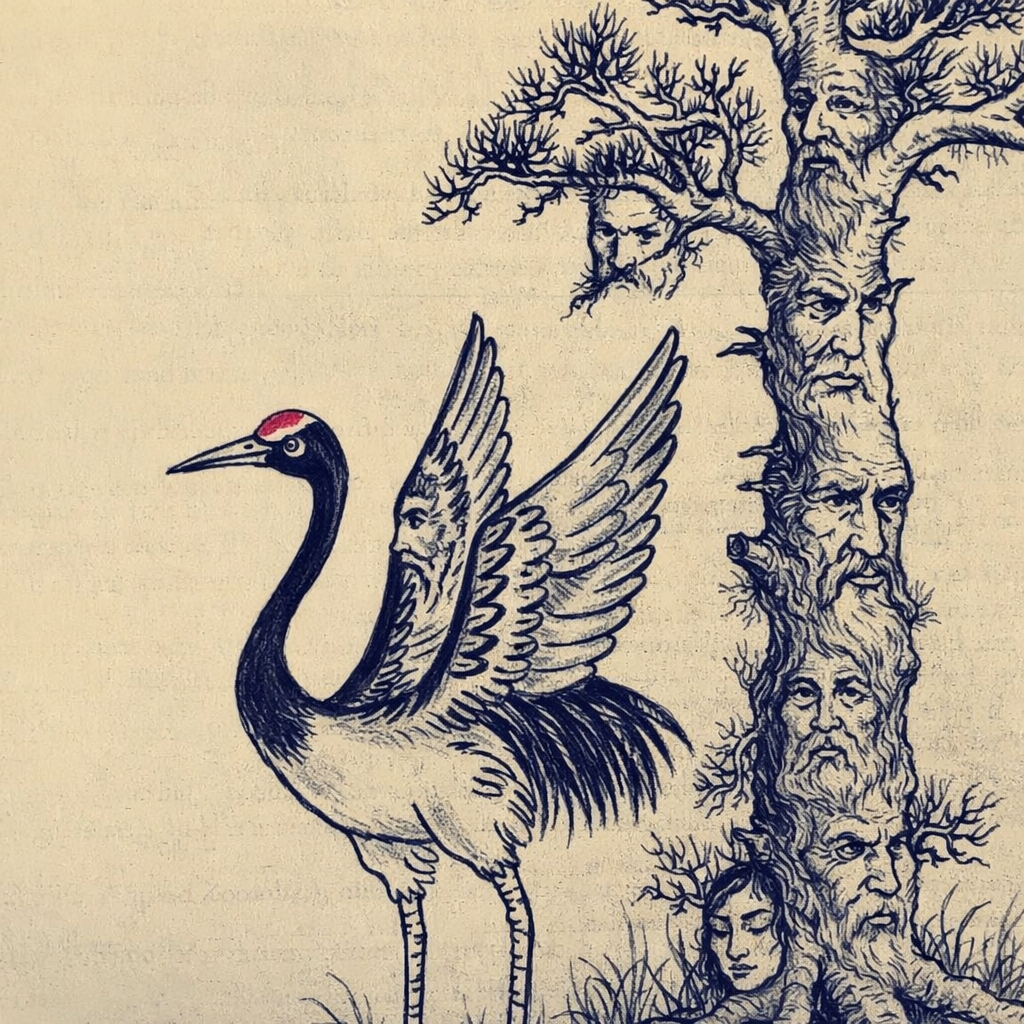
At first glance, this image feels like something pulled straight from a dream. A graceful crane spreads its wings, frozen in a moment of quiet power. Beside it stands an ancient tree—but this is no ordinary tree. Its bark twists into human faces, each expression carved into the trunk like memories etched into time.
This artwork isn’t just visually striking. It’s layered, symbolic, and deeply thought-provoking. Let’s unpack what makes this image so captivating and why it resonates so strongly with the human mind.
A Surreal Artwork That Demands a Second Look
Some images shout for attention. This one whispers.
You don’t immediately notice everything it contains—and that’s the point. The longer you look, the more it reveals. Faces emerge from the tree. Emotions surface. Meanings multiply.
This is the essence of surreal illustration: art that doesn’t explain itself, but invites interpretation. It pulls you in slowly, like fog rolling across a quiet field.
The Crane as a Symbol of Grace and Awareness
The crane stands tall, elegant, and alert. Across cultures, cranes often symbolize longevity, wisdom, and balance. Here, its wings are raised—not in flight, but in readiness.
That posture matters.
It feels like a pause between moments. A breath held. A decision forming. The crane isn’t escaping, and it isn’t attacking. It’s simply aware.
In visual storytelling, that awareness mirrors the viewer’s role. Just like the crane, you’re invited to stand still and observe.
The Tree of Faces: Nature as a Keeper of Memory
Now look at the tree.
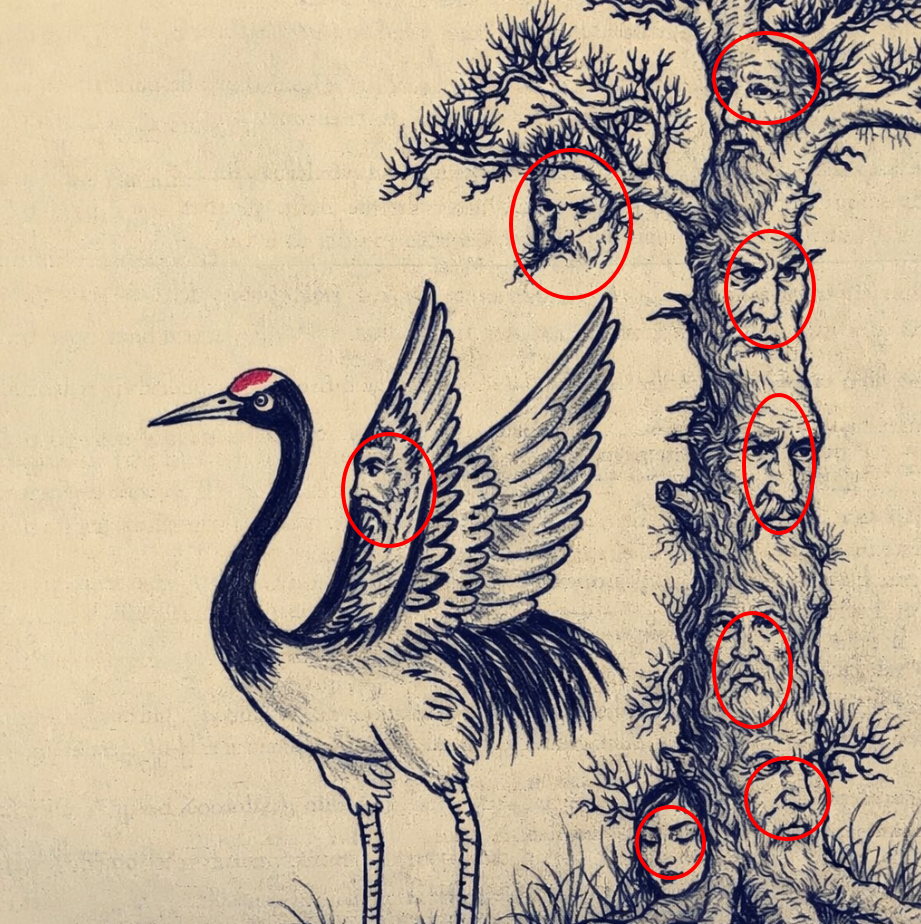
Its trunk isn’t smooth or silent. Faces appear everywhere—some old, some calm, some weary. They feel human, almost ancestral, as if the tree has absorbed generations of stories.
This turns the tree into more than a plant. It becomes a witness.
Like rings inside a tree marking years gone by, these faces suggest time layered upon time. Joy. Pain. Experience. Wisdom. All living together in one form.
Why Human Faces in Nature Feel So Powerful
There’s something unsettling—but fascinating—about seeing human features in natural elements. It blurs boundaries.
Are we part of nature, or is nature part of us?
This artwork leans into that question. The faces don’t look trapped. They look embedded, as if humanity and nature are inseparable at a deeper level.
It’s a visual metaphor that sticks with you long after you stop looking.
The Contrast Between Motion and Stillness
The crane suggests movement. Wings lifted. Muscles engaged.
The tree suggests permanence. Roots deep. Trunk unmoving.
That contrast creates tension—and balance.
Life moves forward, moment by moment, like the crane. Memory stays rooted, like the tree. Together, they tell a complete story: progress without forgetting.
Minimal Color, Maximum Impact
Notice the restrained color palette. Mostly soft neutrals, deep blues, and subtle highlights.
The limited color forces your attention onto shape and detail. You don’t get distracted by brightness. Instead, your eyes trace lines, curves, and expressions.
This artistic choice amplifies the emotional depth. It’s quiet—but powerful.
Surreal Art That Rewards Patience
This image doesn’t give instant gratification. It rewards slow looking.
Each face in the tree feels like a hidden message. Each branch twists in a way that invites interpretation. It’s the kind of artwork that changes depending on your mood.
One day, it feels peaceful. Another day, it feels haunting. That flexibility is the mark of strong visual storytelling.
Metaphors Hidden in Plain Sight
Think of the tree as history. The crane as the present.
The past watches silently as the present prepares to move forward. Neither dominates the other. They coexist.
That metaphor hits close to home. We all carry layers of experience, even as we try to stay light enough to move on.
Why This Image Feels Timeless
There’s no modern technology here. No specific era. No cultural timestamp.
That timelessness makes the image universal. Anyone, anywhere, can connect to it. It speaks in symbols rather than words, which makes it cross boundaries effortlessly.
That’s also why surreal art like this performs so well across platforms—it invites curiosity without demanding explanation.
The Psychological Pull of Hidden Imagery
Images with hidden faces activate the brain differently. The mind loves patterns. It loves discovery.
Each time you spot another face, your brain gets a small reward. It’s subtle, but addictive. You want to keep looking—just in case there’s one more you missed.
This keeps viewers engaged longer, which is exactly why such imagery feels so compelling.
A Visual Meditation on Identity and Nature
At its core, this artwork asks a quiet question:
Where do we end, and where does nature begin?
The answer isn’t given. And that’s what makes it powerful.
It allows space for reflection. For interpretation. For personal meaning.
Conclusion: An Image That Lives Beyond the Frame
This surreal illustration of a crane and a tree filled with faces isn’t just something you look at—it’s something you experience. It blends motion and stillness, humanity and nature, memory and awareness into a single, striking composition.
The longer you spend with it, the deeper it becomes. And like the faces hidden in the bark, its meaning reveals itself slowly—one thoughtful moment at a time.