Dog City Adventures: A Whimsical Hidden-Object Puzzle in a Fashion-Forward Canine World
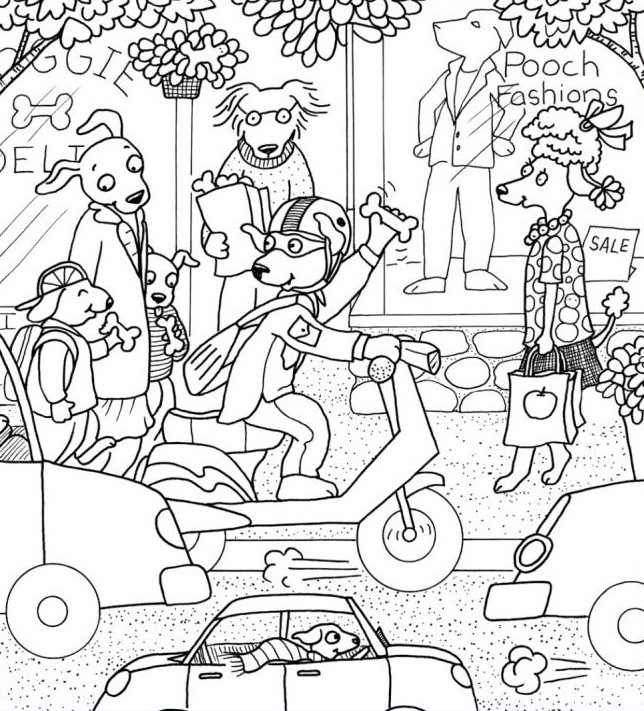
At first glance, this illustration feels like a playful daydream. Dogs stroll through a busy city street, dressed in stylish outfits, carrying shopping bags, chatting with friends, and even riding scooters like seasoned commuters. It’s charming, funny, and full of personality. You can almost hear the chatter, the honk of traffic, and the excited energy of a weekend shopping spree.
But look a little closer—and then a little closer again. This isn’t just a cute cartoon. It’s a hidden-object puzzle wrapped inside a lively urban story, designed to test your focus, spark curiosity, and keep your eyes moving across every corner of the page.
A Bustling Dog-Friendly City Full of Character
This scene comes alive because every dog has a role. Some browse shop windows. Others carry bags marked “SALE.” One confident pup zips by on a scooter, scarf flying like a superhero’s cape. Cars pass, trees line the street, and fashion posters hint at a world where dogs clearly run the city.
The illustration feels busy—but not overwhelming. That balance matters. It invites you to relax and enjoy the scene, which is exactly when hidden objects become hardest to spot. Your brain labels the setting as “fun city chaos” and stops questioning the details.
That’s when the puzzle quietly begins.
The Hidden-Object Challenge Disguised as Street Fun
Hidden-object puzzles work best when they don’t look like puzzles at all. This one nails it. Objects blend into signs, vehicles, clothing, and background details so naturally that your eyes glide right over them.
You might notice something odd—a shape that feels familiar, a line that doesn’t quite belong—but then the action pulls you away again. That push and pull keeps you engaged. You’re not hunting aggressively; you’re discovering.
Each find feels like uncovering a secret tucked into the city’s rhythm.
Why Urban Cartoon Scenes Make Perfect Hidden-Object Puzzles
City scenes are layered by nature. Streets overlap with sidewalks. Cars block views. Signs stack on walls. Characters cross paths. That visual density creates endless hiding spots.
In this dog-themed city, the artist uses:
- Repeated shapes and lines
- Overlapping characters and props
- Motion cues like wheels, scarves, and bags
Your brain fills in gaps automatically, which makes it easier to miss small details hiding in plain sight. The result? A puzzle that feels fair, clever, and surprisingly addictive.
How This Puzzle Trains Focus Without Feeling Like Work
This illustration may look like pure entertainment, but it quietly sharpens important skills.
Hidden-object activities help build:
- Visual scanning and attention to detail
- Concentration over longer periods
- Pattern recognition
- Patience and persistence
And the best part? None of it feels forced. You’re not solving math. You’re not memorizing facts. You’re simply looking closely—and that’s a skill worth practicing at any age.
The Art of Hiding Objects in Plain Sight
What makes this puzzle satisfying instead of frustrating is thoughtful design. The hidden elements don’t interrupt the scene. They belong to it.
A shape might echo the curve of a scooter wheel.
A line could blend into a shop sign.
An object may disguise itself as part of a car or accessory.
Your eyes see everything—but your brain decides what matters. This puzzle gently challenges that decision-making process, rewarding curiosity over speed.
Why Kids and Adults Love This Puzzle Equally
Kids love the silliness. Dogs in clothes? Instant win. The playful expressions, funny poses, and exaggerated fashion make the scene inviting and easy to enjoy.
Adults love the cleverness. The subtle hiding, the visual jokes, the layered storytelling—it feels smart without being serious. Searching becomes a calming break, like people-watching at a café, except everyone has a tail.
It’s one of those rare activities that truly spans generations.
A Coloring Page That Doubles as a Brain Game
This illustration works beautifully as a coloring page. The clean outlines invite creativity, while the hidden-object challenge adds depth and replay value.
Color first, then search—or search while you color. Many people switch back and forth naturally. Coloring relaxes the mind. Searching sharpens it. Together, they create a balanced, screen-free activity that holds attention longer than expected.
Parents appreciate the focus. Teachers appreciate the skill-building. Kids just have fun.
The Story Hidden Between the Lines
Beyond the puzzle, there’s a full story unfolding. Dogs shop. Dogs commute. Dogs socialize. It’s a playful mirror of human life, told through wagging tails and expressive faces.
As you search for hidden objects, you absorb these details naturally. You start noticing relationships, movement, and humor. The scene becomes richer the longer you look, turning a simple puzzle into a miniature world.
That storytelling layer is what makes the image memorable.
Why This Type of Content Performs So Well Online
From an engagement perspective, hidden-object puzzles like this are incredibly effective.
They:
- Increase time on page
- Encourage comments and sharing
- Invite friendly competition (“Did you find it yet?”)
- Appeal to a broad, family-friendly audience
Because the content is lighthearted, non-controversial, and visually engaging, it creates a comfortable environment where readers linger—and that’s exactly what high-quality websites aim for.
Perfect for Homes, Classrooms, and Kid-Friendly Sites
This dog-city puzzle fits effortlessly into many spaces. At home, it’s ideal for quiet play. In classrooms, it supports observation and focus. On websites, it boosts engagement and dwell time.
It doesn’t rely on trends or seasons. It doesn’t age quickly. And it appeals to both kids and adults, making it a versatile, evergreen piece of content.
Conclusion: A Dog-Powered City Puzzle Worth Slowing Down For
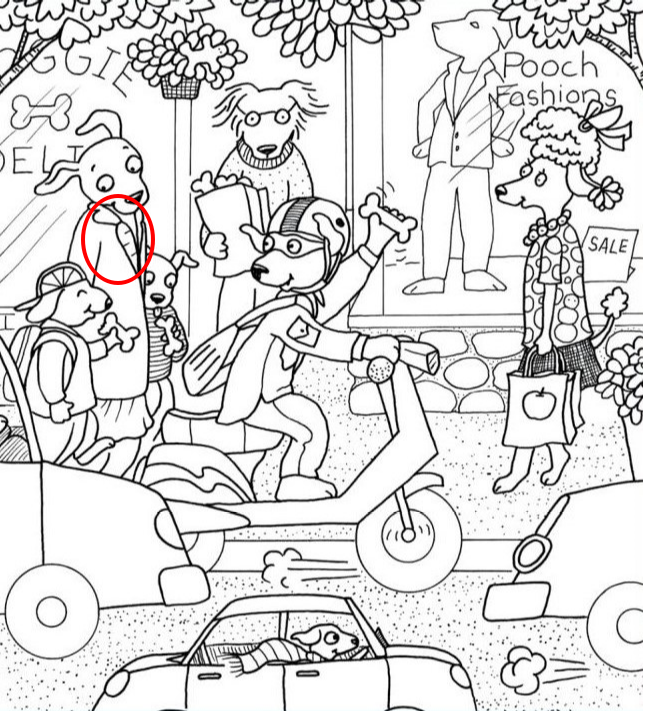
This whimsical dog-city hidden-object illustration proves that puzzles don’t have to be serious to be smart. With playful characters, a lively urban setting, and cleverly disguised details, it turns a charming cartoon into an engaging mental challenge.
It rewards patience, curiosity, and careful looking—all while making you smile. Whether you’re coloring, searching, or simply enjoying the canine fashion parade, this puzzle invites you to slow down and notice the little things.
Because sometimes, the most delightful discoveries aren’t hidden far away. They’re right there—waiting in the middle of a busy street, wearing a scarf, and riding a scooter.