School Cafeteria Challenge: Find the Hidden Objects in a Busy Lunchroom Scene
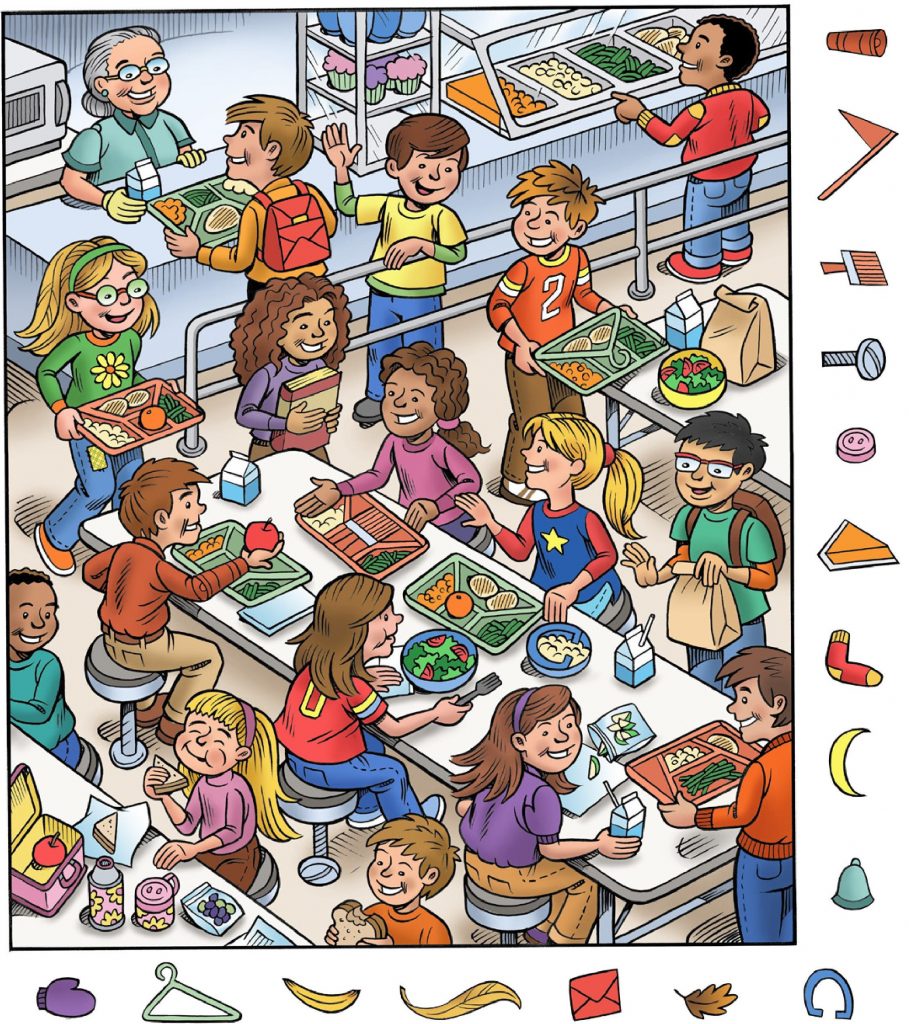
At first glance, this picture feels familiar in the best way. A lively school cafeteria buzzes with energy. Kids laugh, chat, trade snacks, and carry lunch trays piled high with food. Milk cartons line the tables, backpacks hang from shoulders, and the lunch line snakes through the room. It’s noisy, cheerful, and wonderfully chaotic—just like a real lunchroom.
But this image isn’t just a snapshot of school life. It’s a hidden object puzzle cleverly disguised as everyday fun. Look closer, and you’ll realize this cafeteria holds secrets. Ordinary objects hide in plain sight, blending into trays, clothes, furniture, and movement. Your challenge? Slow down, sharpen your focus, and find what everyone else misses.
A Classic School Lunchroom Packed With Personality
What makes this illustration instantly engaging is how real it feels. Every child has a different expression. Some wave to friends. Others concentrate on their food. A cafeteria worker smiles from behind the counter, while kids juggle trays, books, and conversations all at once.
The scene feels alive. That realism draws you in and makes your brain relax—exactly what a great hidden object puzzle wants. When your mind feels comfortable, it stops questioning details. And that’s when hidden items quietly disappear into the background.
The Hidden Object Game That Turns Chaos Into a Challenge
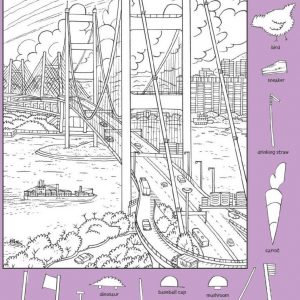
Once you notice the list of objects tucked around the image, the scene transforms. Suddenly, you’re not just looking at kids eating lunch—you’re hunting for specific shapes hidden among the action.
These objects aren’t floating or outlined. They’re disguised. A shape might mirror a lunch tray divider. A small item could hide in the curve of clothing or the angle of a table. Some objects appear obvious only after your eyes adjust to the visual noise.
Each discovery feels like cracking a tiny code.
Why Cafeteria Scenes Make Perfect Hidden Object Puzzles
Cafeterias are visually dense by nature. Tables overlap. Arms cross. Trays, cartons, food, and backpacks create layers of shapes and colors. That complexity is a playground for hidden object design.
Your eyes constantly move, but your brain filters aggressively just to keep up. The puzzle exploits that filter. It hides objects where your brain expects “normal cafeteria clutter,” making them easy to overlook and deeply satisfying to find.
It’s controlled chaos—and that’s what makes it fun.
How Hidden Object Puzzles Build Focus Without Feeling Like Homework
This puzzle doesn’t feel educational, but it absolutely is.
Hidden object activities help develop:
- Visual scanning and tracking
- Attention to detail
- Patience and sustained focus
- Problem-solving confidence
Kids stay engaged because the activity feels like a game, not a lesson. Adults enjoy it because it offers a calm mental challenge without pressure. No timers. No scores. Just curiosity and careful looking.
Learning happens quietly, like background music.
The Clever Art of Hiding Objects in Plain Sight
What makes this cafeteria puzzle so effective is how naturally the objects blend into the scene. Nothing looks out of place. Lines, colors, and shapes match the environment perfectly.
A small object may echo the angle of a lunch tray. Another might mimic the shape of food or clothing. Some hide right where your eyes land first, relying on your assumptions to stay invisible.
The puzzle doesn’t trick your eyes—it tricks your expectations.
Why Your Brain Keeps Missing the Same Object
If you find yourself scanning the same area repeatedly, you’re not alone. That’s a classic hidden object effect.
Your brain creates a mental map of the scene quickly. Once it labels an area as “already checked,” it stops truly seeing it. The object you’re missing often lives right inside that mental blind spot.
The solution isn’t looking harder—it’s looking differently.
Perfect as a Puzzle, Activity Page, or Classroom Tool
This illustration works beautifully in multiple settings. At home, it keeps kids engaged during quiet time. In classrooms, it supports observation skills and focus. On websites, it boosts time-on-page and interaction.
Because it’s non-violent, non-controversial, and universally relatable, it fits almost anywhere. Kids recognize the setting immediately. Adults feel nostalgic. Everyone understands the rules without explanation.
That simplicity is powerful.
Why Adults Get Just as Hooked as Kids
Let’s be honest—adults don’t “just help” with these puzzles. They get invested.
Hidden object challenges provide a rare mental reset. The brain focuses fully on one task, pushing distractions aside. It’s calming, almost meditative. The busy cafeteria scene paradoxically creates mental quiet as you concentrate.
It’s like tuning out background noise by focusing on one clear voice.
The Social Side of Hidden Object Puzzles
This puzzle naturally invites interaction.
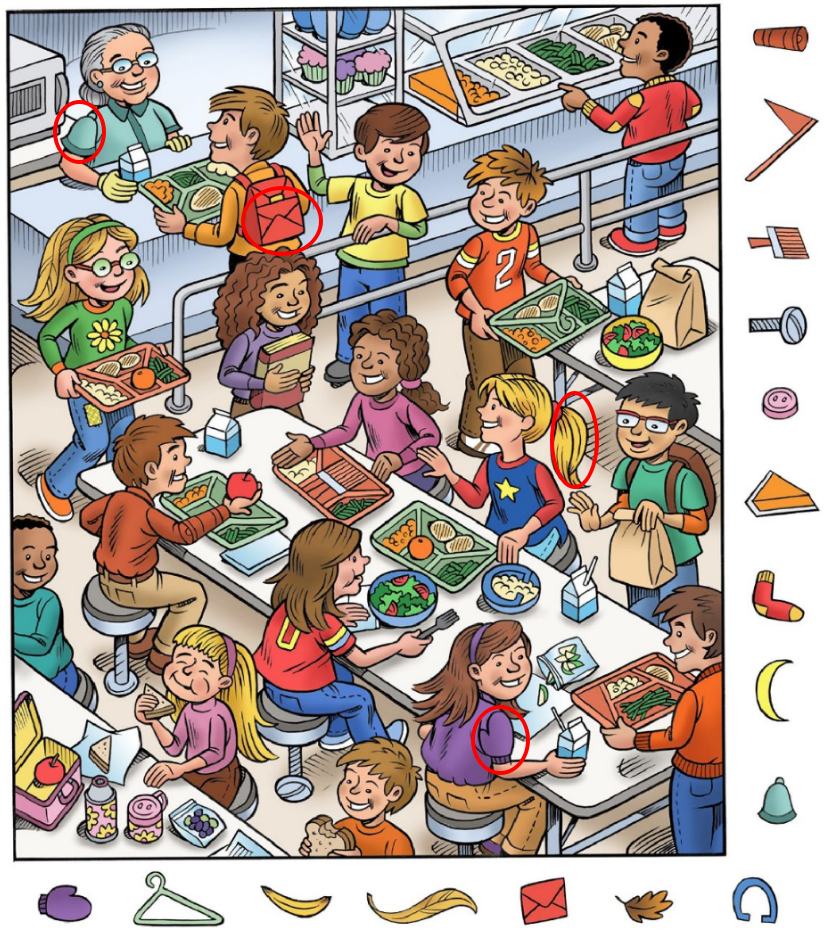
“Did you find the sock yet?”
“No, but I found the envelope!”
“Wait—that was there the whole time?”
People love comparing results. That shared discovery turns a solo activity into a group experience, making it perfect for families, classrooms, and online sharing.
Why This Type of Content Performs Exceptionally Well Online
From an engagement and monetization perspective, hidden object puzzles are incredibly effective.
They keep users scrolling, scanning, and revisiting the image. Comments fill with hints and friendly debates. Time-on-page increases naturally, creating an ideal environment for high-performing ads.
Because the content is:
- Family-friendly
- Evergreen
- Visually engaging
- Emotionally positive
…it attracts broad audiences and encourages repeat visits.
A Story Hidden Between Lunch Trays and Milk Cartons
Beyond the puzzle, the image tells a story of everyday school life. Friendships. Small moments. Shared tables. Casual joy. As you search for hidden objects, you absorb those details without trying.
The longer you look, the richer the scene becomes. That layered experience makes the puzzle memorable, not disposable.
Conclusion: A Cafeteria Puzzle That Rewards Patience and Curiosity
This school cafeteria hidden object illustration proves that ordinary scenes can hide extraordinary engagement. With lively characters, realistic details, and cleverly disguised objects, it turns a familiar lunchroom into a playful mental challenge.
It sharpens focus, builds patience, and invites curiosity—all while feeling lighthearted and fun. Whether you’re searching alone or competing with friends, this puzzle reminds you of something simple and powerful.
Sometimes, the most interesting discoveries aren’t hidden far away.
They’re right in front of you—waiting for you to really look.