The Hidden Faces of Nature: Discovering the Art of Optical Illusion
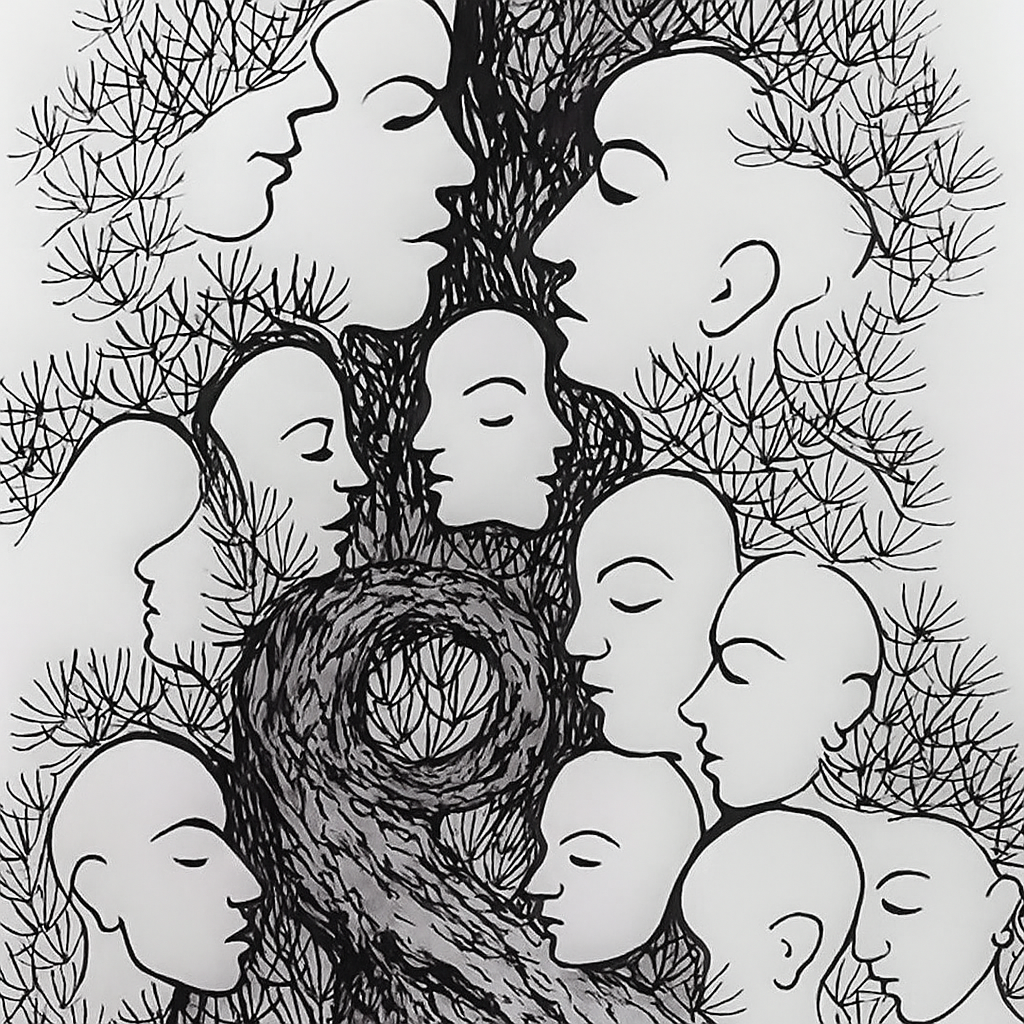
Art has always been a mirror of human imagination, but sometimes it does more than reflect—it challenges the way we see. The image before you is not just a simple drawing; it’s a powerful blend of illusion, creativity, and symbolism. Look closely, and you’ll notice how the shapes of tree branches and bark intertwine to form human faces. It’s nature and humanity, seamlessly connected in a mesmerizing dance of perception. Let’s explore the deeper meaning behind this artwork and uncover why optical illusions like this fascinate our minds and souls.
The Beauty of Illusion: When Art Plays With Perception
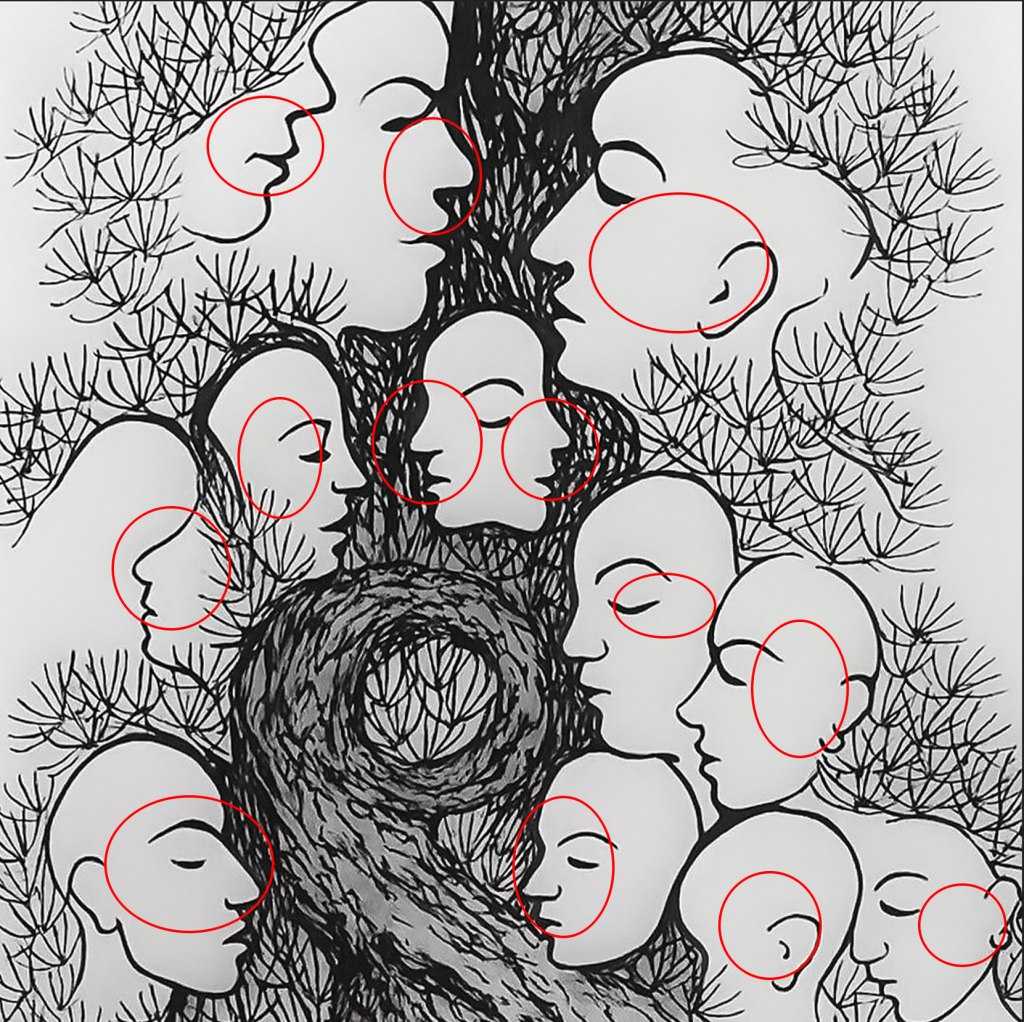
At first glance, you might see a tree with twisting branches and intricate lines. But within moments, faces begin to emerge—eyes, lips, profiles—all hidden within the organic flow of nature. This type of artwork is known as illusion art, where the artist uses visual tricks to engage both the conscious and subconscious mind.
The brilliance of this design lies in its duality. It’s both simple and complex, clear yet mysterious. The human brain naturally seeks patterns, and illusion art taps into that instinct. Every viewer sees something slightly different—some focus on the faces, others on the tree. That’s what makes it magical.
Nature and Humanity: A Symbolic Connection
The fusion of human faces and tree branches isn’t random. It symbolizes the profound relationship between people and nature. Just like trees, humans grow, evolve, and branch out through life. The trunk represents our foundation—our roots—while the branches reflect the many paths we take.
By integrating human faces into the tree, the artist reminds us that we are not separate from nature but part of it. Our emotions, voices, and even our collective wisdom are intertwined with the earth’s rhythm. The faces could be whispering spirits of the forest, ancestors, or reflections of our inner selves. Every line tells a story about unity, growth, and the balance between humanity and the natural world.
Why Optical Illusion Art Captivates the Mind
Ever wondered why illusion art pulls you in so effortlessly? It’s because your brain loves a challenge. The human mind constantly tries to make sense of visual chaos by searching for meaning and structure. Optical illusions play with that process, forcing you to shift perspectives until the hidden message clicks.
In this image, your perception flips between seeing a tree and seeing people. That mental switch releases dopamine—a small burst of pleasure your brain feels when solving puzzles. It’s the same satisfaction you get from finishing a maze, solving a riddle, or finding a hidden object.
So, in a way, optical illusion art is a visual workout for the brain—a playful test of attention, focus, and imagination.
The Hidden Meaning Behind the Faces
Each face in the artwork carries its own emotion and direction. Some are calm, others thoughtful, a few turned toward one another as if engaged in silent conversation. This could represent the different voices of nature—or the many sides of the human spirit.
The tree’s knot at the center almost resembles an eye, acting as the heart or soul of the entire composition. It draws you in, symbolizing awareness, wisdom, and the eternal connection between life and consciousness.
It’s as if the artist wants us to pause and reflect—not just on what we see, but on what we often overlook. How many “faces” of nature do we ignore every day? The whisper of the wind, the creak of a branch, or the rustle of leaves—all carry voices if we choose to listen.
The Psychology of Seeing Faces in Patterns
There’s a fascinating psychological term for the phenomenon this artwork triggers—pareidolia. It’s the tendency of the human brain to see familiar shapes, especially faces, in random patterns. It’s why you might see a face in the clouds, a figure on the moon, or expressions in tree bark.
This instinct is deeply rooted in evolution. Recognizing faces quickly helped our ancestors survive—it was crucial to identify friend or foe at a glance. In art, pareidolia turns into an emotional experience. We find comfort and curiosity in recognizing ourselves within the world around us. That’s why illusion art feels both intimate and universal—it connects our inner world with the external one.
The Artistic Techniques That Create the Illusion
Creating such an image takes more than talent; it requires a deep understanding of visual balance and contrast. The artist uses fine lines to mimic tree branches while shaping them into the curves of human features. The interplay between light and shadow helps the faces emerge subtly, ensuring they blend naturally into the environment.
Black and white tones are especially effective for illusions like this. Without the distraction of color, the viewer focuses purely on form and structure. The minimalism draws you in, forcing your brain to work harder—and making the discovery even more rewarding.
Finding Yourself in the Art
Here’s the interesting part: what you notice first in this artwork says something about you. If you immediately see the faces, you’re probably detail-oriented and intuitive. If the tree stands out first, you might have a broader, more holistic way of viewing the world.
Art like this acts as a mirror to your personality. It doesn’t just show an image—it reveals how your mind interprets reality. And that’s what makes it so endlessly fascinating. Every time you look, you might notice something new—a face you missed, a new expression, or even a different emotion in the same scene.
Conclusion: The Art of Seeing Beyond the Surface
This striking illustration of faces hidden within a tree isn’t just clever—it’s deeply symbolic. It challenges us to look closer, think deeper, and remember our connection to nature and to each other.
Optical illusion art teaches a simple but powerful lesson: perspective changes everything. What we see on the surface is rarely the full story. Sometimes, the beauty of life lies in what’s hidden—in the quiet details waiting to be discovered.
So next time you gaze at a piece of art, a tree, or even the clouds above, take a moment to look twice. You might be surprised by what’s looking back at you.