The Faces of Time: Discovering Hidden Lives in the Tree of Wisdom
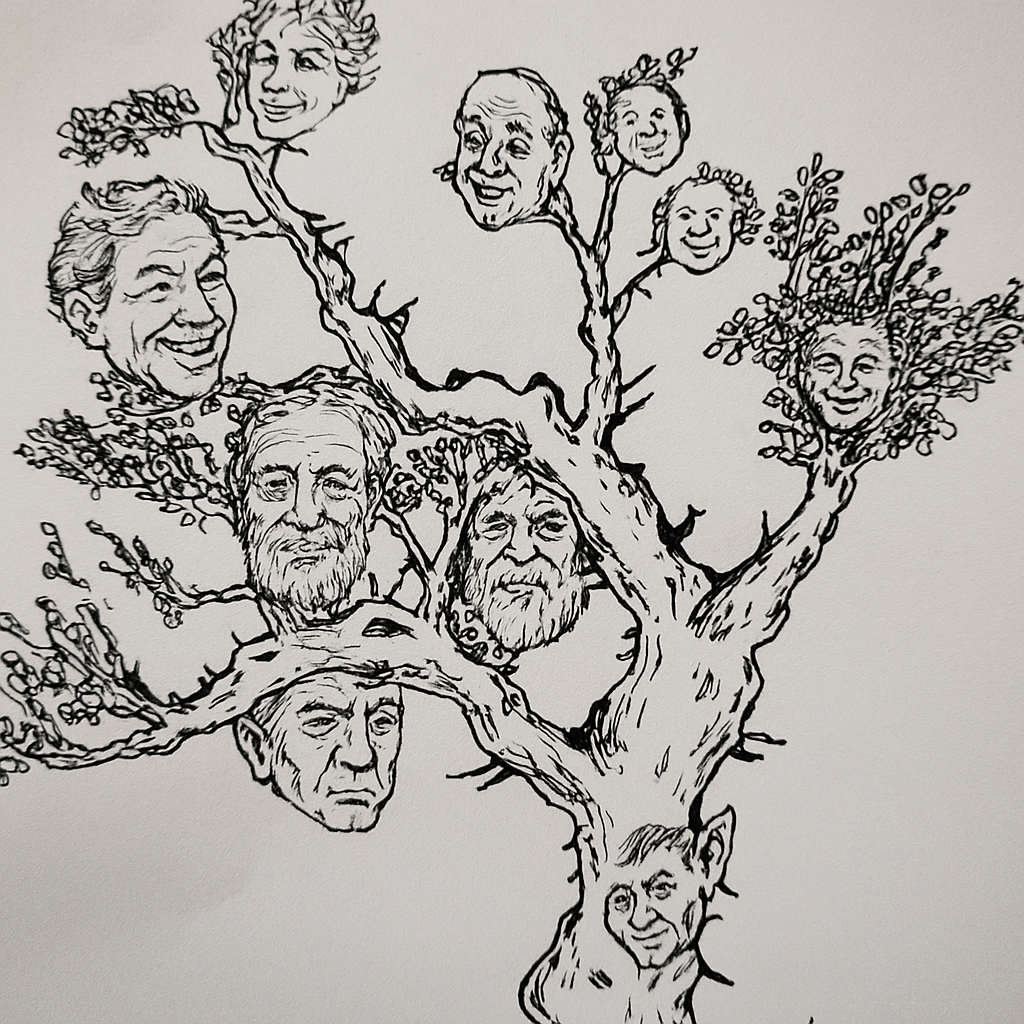
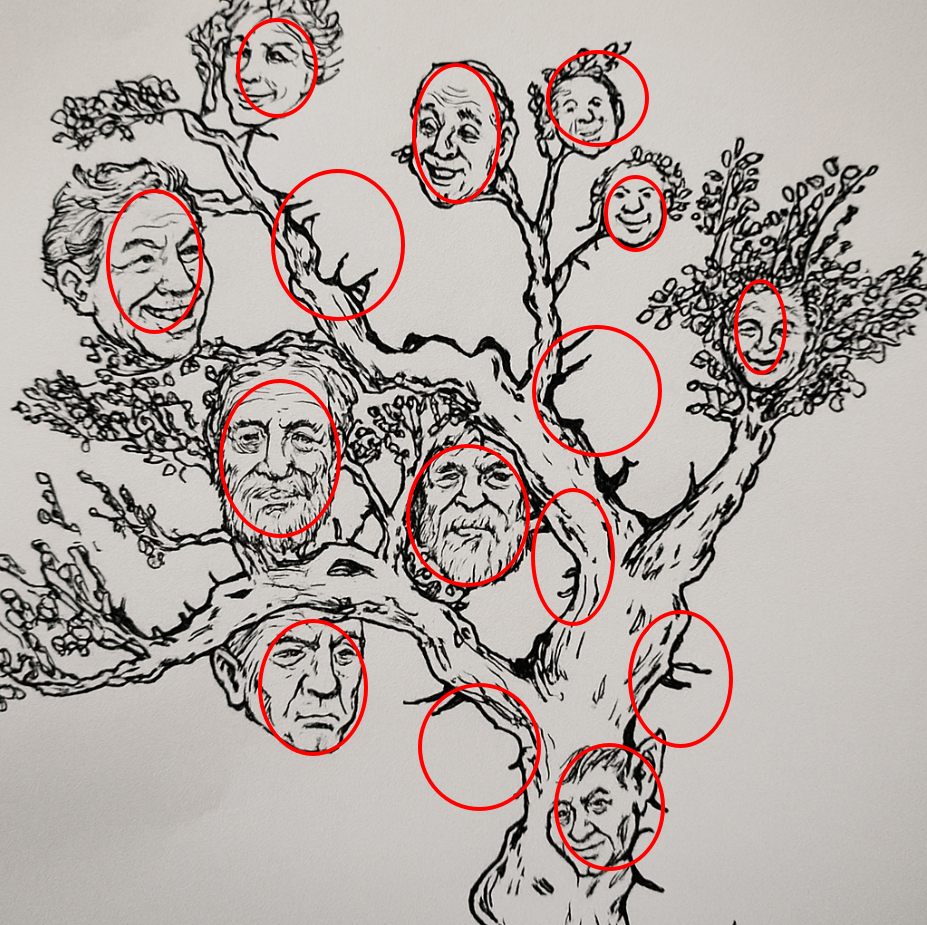
At first glance, this mesmerizing drawing looks like a simple tree — its branches stretching wide, dotted with leaves and curves of bark. But look closer, and something extraordinary reveals itself. The tree isn’t just alive with leaves — it’s alive with faces. Smiling, thoughtful, aged, and wise, each face seems to grow naturally from the branches, forming a tapestry of human expression that blurs the line between nature and identity.
This captivating image — often referred to as a Tree of Wisdom — isn’t just a piece of art. It’s a metaphor. A visual representation of generations, growth, and the passage of time. Let’s explore the deeper meaning behind this illustration and uncover the beauty hidden within its twisting lines.
The Symbolism of the Tree: Life, Growth, and Connection
Throughout history, trees have been powerful symbols. They represent life, strength, and continuity — standing tall through seasons of change. In this artwork, however, the tree takes on an even deeper role. The artist has replaced its leaves and knots with human faces, suggesting that life itself grows through connection — through people, their memories, and the wisdom they pass down.
Each face appears unique: some are smiling warmly, others are solemn and reflective. Together, they create a mosaic of human experience, showing how every generation contributes to the canopy of life. The branches weave between them like invisible threads, symbolizing family ties, friendship, and the shared roots of humanity.
It’s as if the tree itself remembers — holding the faces of those who once were, and those who shaped what came next.
Hidden Object Art: More Than Meets the Eye
What makes this image especially fascinating is its hidden object design. It’s a visual puzzle — the more you look, the more faces you find. Some are instantly recognizable, others seem to emerge only when your eyes adjust to the intricate lines.
The artist’s technique is both clever and meditative. The tree’s bark twists and curls in ways that trick the eye, turning branches into foreheads, knots into eyes, and leaves into the soft curls of hair. It’s a perfect example of how art can play with perception — reminding us that what we see often depends on how deeply we look.
This kind of artwork also challenges the mind. It trains observation, patience, and focus — three qualities that connect beautifully to the symbolism of wisdom.
The Human Element: Faces as Symbols of Emotion and Legacy
Every face on this tree seems to tell its own story. The wrinkles, smiles, and expressions suggest lives lived fully — perhaps generations of a family or representations of humanity itself. Together, they echo one universal truth: we are all branches of the same tree.
Think about it — our ancestors’ experiences shape our roots. Their lessons, struggles, and triumphs grow into the foundation from which we, too, sprout. This idea transforms the artwork into more than an optical illusion — it becomes a visual family tree, one where every expression carries meaning.
There’s joy in some faces, fatigue in others, and quiet reflection in many. They mirror the stages of life — youth, adulthood, and old age — blending seamlessly into the natural flow of the branches. The message is clear: no stage of life exists in isolation. Each generation nourishes the next, just as each branch draws strength from the trunk.
The Psychology Behind Seeing Faces in Nature
Why do we find faces in trees, clouds, and patterns? The answer lies in a fascinating psychological phenomenon called pareidolia — the human brain’s tendency to perceive familiar shapes, especially faces, in random images.
This instinct isn’t accidental. Our brains are wired to recognize faces quickly, a survival skill that dates back to early humanity. We’re naturally drawn to human expression — it helps us understand emotion and connect with others.
In this artwork, pareidolia isn’t accidental — it’s intentional. The artist taps into this deep-seated human instinct to make us look twice. The more we stare, the more we see, and the more personal the connection feels. It’s not just about faces hidden in wood; it’s about recognizing ourselves within the design.
Branches of Meaning: The Deeper Interpretation
This drawing can be interpreted in many ways, depending on how you view it. Some might see it as a tribute to ancestry — a literal “family tree” that connects generations. Others might interpret it as a reflection on wisdom — each face representing a different kind of knowledge gained through life.
Still, others may view it spiritually — as a reminder that life is cyclical, that our energy and essence live on in the people and world we touch. The way the faces seamlessly blend with the branches suggests that we never truly disappear; we transform and continue through others.
This theme resonates with anyone who’s ever felt connected to their heritage, mentors, or loved ones. The artwork becomes a visual reminder that life is not linear but beautifully intertwined.
The Artistic Mastery: Turning Lines into Life
From a technical perspective, the artist’s skill lies in the balance between realism and abstraction. The faces are expressive and detailed, yet they flow naturally from the tree’s organic structure. Every curve and texture feels intentional, creating harmony between human and nature.
The minimalist color palette — simple black ink on white paper — adds to the piece’s power. It forces us to focus on form and expression rather than distraction. The lack of color enhances the timeless quality of the piece, allowing it to speak across generations and cultures.
It’s art that doesn’t just depict life — it embodies it.
Hidden Object Art as a Meditation on Life
Hidden object illustrations like this one do more than entertain the eye — they calm the mind. The act of searching for each face is almost meditative, a slow and thoughtful process that mirrors the patience required in both art and life.
As you trace each branch, finding one face after another, it’s easy to lose yourself in the rhythm. It’s a reminder that beauty often reveals itself through time and attention — a lesson that extends beyond the page.
This makes the Tree of Wisdom not only visually stunning but emotionally grounding. It reminds us to pause, observe, and appreciate the connections that make life rich.
Conclusion: The Tree That Teaches Without Words
The drawing of faces growing from a tree is far more than an illusion — it’s a conversation between art, nature, and humanity. It symbolizes growth, legacy, and the wisdom passed through generations. Each face is a story, each branch a pathway, and together they form the intricate network we call life.
In a world that often moves too fast, this image asks us to slow down and see. To look beyond the obvious. To notice the lives and lessons rooted within us all.
So the next time you gaze at a tree, remember — maybe it’s not just branches and bark you’re seeing. Maybe, just maybe, it’s the faces of those who came before, whispering their stories through the rustle of the leaves.