The Hidden Faces in the Forest: Discovering Optical Illusions in Nature-Inspired Art
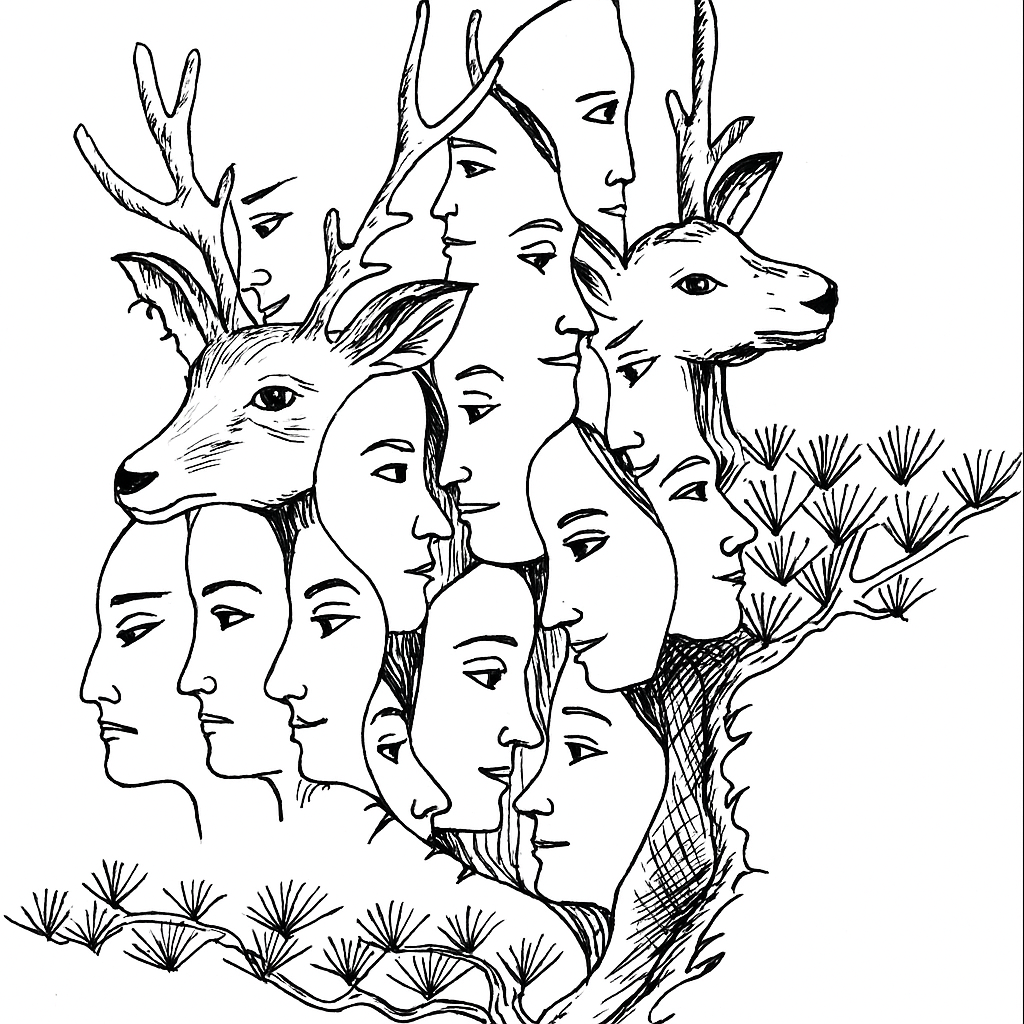
Art has always been a mirror of perception—what you see depends on how you look. In this fascinating hidden object puzzle, the image draws you into a mysterious forest where deer and human faces blend seamlessly into one another. At first glance, you might only spot the majestic deer, their antlers rising like branches. But look again—within the curves of the trees and shadows of the forest, countless human profiles emerge, each face sharing space with the natural world. This isn’t just a picture—it’s an invitation to explore how art plays with your mind, your focus, and your imagination.
Let’s dive into this optical illusion and uncover how it challenges your perception, sharpens your mind, and reveals the beauty of looking beyond the obvious.
The Mysterious Illusion: When Nature and Humanity Become One
At first sight, the image seems like a drawing of deer resting beside trees. But as your eyes trace the lines, something extraordinary happens—faces begin to appear. Dozens of them. Some large and clear, others subtle and hidden in the folds of branches or the shape of antlers.
This artwork isn’t just about illusion—it’s about connection. The blending of animal and human forms symbolizes the harmony between people and nature. The deer represent gentleness and awareness, while the faces hidden within them suggest reflection, empathy, and inner vision. It’s as though the forest itself is alive, watching back.
This duality—the animal and the human—reminds us that perception is layered. What you see first might not be the full story.
Why Optical Illusions Like This Fascinate the Human Brain
Ever wonder why images like this hold your attention so long? It’s because your brain loves a challenge. Hidden object and illusion puzzles tap into a natural curiosity to make sense of complexity.
They Trick Your Vision (and Train It Too)
Your brain constantly tries to organize chaos. When you first see the deer, your mind creates a clear image. But as you keep looking, it discovers faces and must rebuild the story. This process strengthens visual flexibility—your ability to interpret multiple meanings from one scene.
They Activate Pattern Recognition
Humans are wired to see faces, even where none exist—a psychological effect called pareidolia. This is why we find faces in clouds, rock formations, or tree bark. In this artwork, that instinct works overtime, pushing you to uncover every hidden figure.
They Sharpen Focus and Patience
Looking for hidden faces requires patience and concentration. You train your brain to slow down, scan methodically, and interpret fine details. Over time, this kind of mindful searching improves focus in everyday life too.
What to Look for in This Mesmerizing Puzzle
If you’re ready to test your perception, here’s a guide to finding the secrets in this piece. Remember, each discovery changes how you see the entire picture.
1. The Majestic Deer
Start with the obvious—the two deer that anchor the image. Their antlers stretch upward, almost resembling the branches of trees. But notice how their outlines blend with nearby shapes. Do the curves of their bodies form faces? Look closely—you’ll find multiple human profiles nested along their sides.
2. The Overlapping Faces
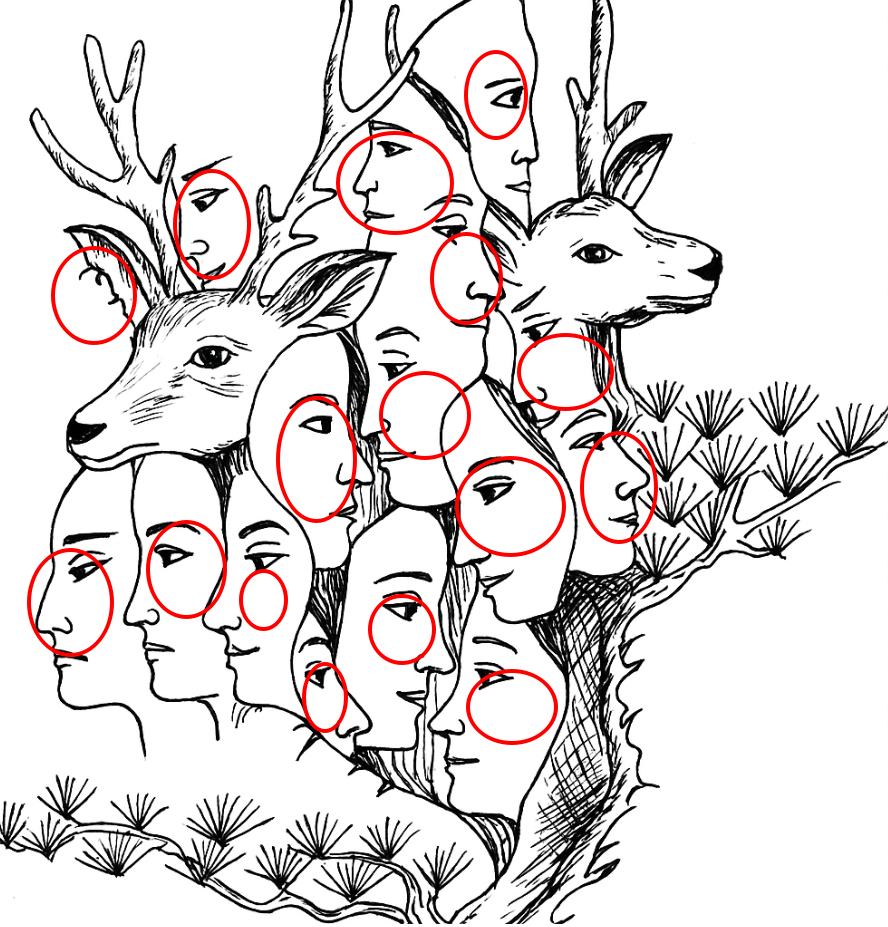
Count how many faces you can spot. Some share the same lines; one person’s nose becomes another’s chin. These overlapping illusions show how cleverly the artist manipulates negative space. It’s a dance of perception—once you see one, more appear as if from nowhere.
3. The Tree Branches and Foliage
The branches on the right side of the image are not just decoration—they hide subtle shapes that resemble profiles or animals. Study the direction of the twigs and leaves. The natural forms might conceal outlines that mimic the human face or hint at hidden creatures.
4. The Flow Between Human and Animal Forms
The most impressive part of this artwork is the seamless blend between humans and deer. Each form complements the other without breaking the harmony of the image. It’s a visual metaphor for coexistence—humans as part of nature, not separate from it.
How Hidden Object Art Enhances Cognitive and Creative Skills
This kind of intricate art isn’t just for fun—it’s a form of mental training. Searching for patterns and illusions exercises both sides of your brain, improving analytical and creative thinking.
For the Analytical Mind: Focus and Logic
Finding hidden faces requires logical scanning, visual memory, and pattern matching. It teaches your brain to track details, improving spatial awareness and problem-solving skills.
For the Creative Mind: Imagination and Intuition
At the same time, you engage imagination. You begin to interpret shapes in unconventional ways—seeing animals in faces, or vice versa. This strengthens intuitive thinking, an essential skill for artists, designers, and anyone who thrives on creative insight.
The Psychology Behind Seeing More Than One Image
Why do some people see all the faces immediately, while others spot only the deer? It comes down to how your brain prioritizes information.
Our minds favor the simplest interpretation first—a survival trait that helps us process the world quickly. But once your attention shifts, your brain begins to reinterpret, uncovering hidden layers. This is why illusions like this feel so rewarding; they show us how perception evolves with focus.
It’s a reminder that what we see in life—like in art—is shaped by how long we’re willing to look.
Tips for Enjoying Optical Illusion Art to the Fullest
If you love this kind of hidden puzzle art, here’s how to get the most out of it:
- Take your time. Don’t rush. The longer you look, the more you’ll uncover.
- Change your viewing angle. Sometimes turning the image slightly reveals new shapes.
- Step back and refocus. Your brain may need a reset to catch what it missed.
- Share with others. Everyone perceives differently—comparing what others see is part of the fun.
Each new discovery rewires your brain just a little, enhancing visual acuity and creative thought.
Conclusion: Seeing the Hidden Beauty in Every Layer
This extraordinary image of deer and faces is more than an optical illusion—it’s a reflection of perception itself. It challenges you to look beyond what’s obvious and discover the harmony hidden within complexity. Each face you find, each line you interpret differently, teaches you to slow down, observe deeply, and appreciate how art and nature intertwine.
In a way, it mirrors life: the truth often hides in plain sight, waiting for patient eyes and an open mind to see it.
So next time you encounter a hidden object puzzle or illusion like this, don’t just glance—linger. Because sometimes, the more you look, the more you truly see.