A Day in the Classroom: The Joy of Learning Together
There’s something truly magical about a classroom — a place where curiosity blossoms, friendships form, and every day brings a new opportunity to learn and grow. This delightful illustration captures that very magic: a cheerful teacher guiding her eager students through a fun lesson, where pencils scribble, books open wide, and little minds light up with understanding. It’s a picture that reminds us that education isn’t just about numbers and letters — it’s about creating a space where learning feels like an adventure.
A Warm Welcome to the Classroom
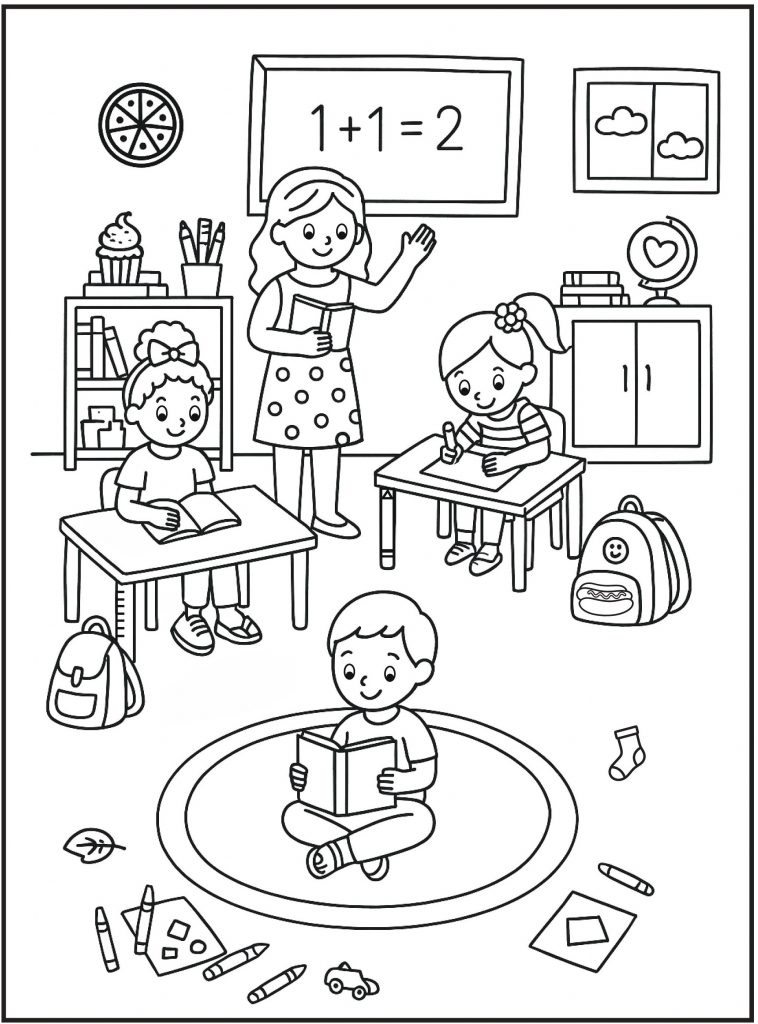
In this cozy classroom scene, the teacher stands before her students, smiling as she holds an open book. On the chalkboard behind her, the simple equation “1 + 1 = 2” shines like a badge of discovery — the first step in a lifelong journey of learning. The children, sitting at their desks or reading on the rug, radiate excitement and focus. Each one is absorbed in their own little world of study, surrounded by the comforting familiarity of backpacks, books, and crayons.
The environment feels alive — tidy yet playful, organized yet inviting. From the cheerful decorations on the walls to the sun peeking through the window, everything in this image whispers: This is a place where learning feels safe and fun.
The Teacher: The Heart of the Classroom
Every great classroom begins with a great teacher. The woman at the front of the room isn’t just teaching math; she’s building confidence, sparking curiosity, and planting seeds of knowledge that will grow for years to come. Her warm smile and open posture create a sense of trust. The way she engages with her students shows that she believes in them — every question, every scribble, every mistake is a step toward understanding.
Teachers like her do more than explain lessons. They inspire. They know that learning is about discovery, not perfection. A simple equation like “1 + 1 = 2” might seem small, but for young learners, it’s a gateway into the world of logic and numbers. And that first sense of achievement — that “I did it!” moment — can stay with a child forever.
Little Learners at Work: Curiosity in Action
Look closer at the students, and you’ll see three different learning moments beautifully illustrated. Two children sit at their desks, one writing diligently while the other reads with delight. Their faces show concentration, curiosity, and joy — the pure essence of early learning.
Meanwhile, another child sits cross-legged on a soft rug, holding a book that seems to have transported him to another world. Maybe he’s reading about animals, space, or faraway lands. Whatever it is, his imagination has taken flight.
This diversity of learning styles — some writing, some reading, some observing — reflects how every child learns differently. Some absorb knowledge through books, others through doing, and others through storytelling or art. A good classroom nurtures all of these styles, ensuring that no child feels left behind.
The Classroom Environment: A World of Exploration
One of the most heartwarming aspects of this illustration is the environment itself. The room is filled with little details that make it come alive — a globe sitting on the cabinet, a shelf full of books and supplies, a clock that keeps time, and even a picture of cupcakes that adds a touch of sweetness.
These details matter more than they seem. A classroom like this isn’t just a space for academics; it’s a world of discovery. The books represent new knowledge waiting to be opened. The art supplies lying around suggest creativity and play. Even the equation on the board — so simple, yet foundational — hints at how learning builds step by step, layer by layer.
And let’s not overlook the backpacks resting nearby, each one unique and colorful. They symbolize readiness — the excitement of arriving at school each morning, carrying not just pencils and paper, but hopes, ideas, and dreams.
The Beauty of Early Learning
There’s a reason early childhood education is often called the foundation of all learning. It’s during these formative years that children develop the habits, confidence, and curiosity that shape their future. Lessons like “1 + 1 = 2” may appear simple, but they teach far more than math — they teach logic, patience, and the joy of problem-solving.
Children at this age also learn through play, storytelling, and hands-on activities. When they color, they’re not just making art — they’re practicing motor skills and creativity. When they share crayons or books, they’re learning empathy and teamwork. Every tiny action in the classroom contributes to a bigger picture of growth.
This image captures that spirit perfectly: learning isn’t rigid or repetitive. It’s playful, joyful, and full of discovery.
The Role of Imagination and Creativity
Notice how the floor is scattered with crayons, papers, and a tiny toy car. These little details tell a bigger story — that imagination and creativity are just as important as academics. In this classroom, children aren’t afraid to explore, to draw outside the lines, to dream big.
Creativity builds problem-solving skills and resilience. When a child draws or invents a story, they’re learning how to express themselves, how to think beyond what’s visible, and how to see possibilities instead of limitations. That’s the kind of learning that builds innovators, artists, and thinkers — the ones who grow up to change the world.
The Power of Togetherness
Beyond the books and math lessons, this illustration also celebrates community. Each student is focused, but they’re also part of something bigger — a shared learning experience. The teacher guides, the students support one another, and everyone contributes to the positive energy of the room.
That sense of togetherness is what makes classrooms so special. It’s where children learn their first lessons in cooperation, respect, and friendship. They discover that learning is not a competition, but a journey best taken together.
A Lesson That Lasts a Lifetime
In the end, this classroom scene isn’t just about numbers or reading — it’s about growth, curiosity, and connection. It’s about those tiny, everyday moments that shape a child’s heart and mind. The teacher’s encouragement, the children’s smiles, the scattered crayons on the floor — they all tell a story of learning that goes beyond the textbook.
Every great mind starts somewhere — in a room like this, where a teacher’s patience meets a child’s wonder. The equation on the board, 1 + 1 = 2, becomes more than just math. It becomes a symbol of unity, showing that when we come together — teacher and student, mind and imagination — learning multiplies.
Conclusion: The Magic Within the Classroom Walls
This picture captures the essence of education — a gentle, inspiring balance of discipline, creativity, and joy. It reminds us that learning doesn’t just happen in books or tests; it happens in laughter, mistakes, and small triumphs. Every crayon mark, every curious question, every “Aha!” moment adds to the beautiful tapestry of growth.
A classroom like this isn’t just a place — it’s a world of possibility. It’s where young minds learn to count, read, dream, and believe. And that’s the true magic of education — turning ordinary days into extraordinary beginnings.